 Save
Save The first time I tasted koshari, I was standing at a cramped Cairo street stall at dusk, watching a vendor expertly layer rice, lentils, and pasta into a paper cone with the precision of someone who'd done it ten thousand times. The aroma of cumin and fried onions hit me before I even took a bite, and I remember thinking this couldn't possibly work—how could something so humble and mismatched be so utterly perfect? Now whenever I make it at home, I chase that exact feeling of discovering something that shouldn't be delicious but absolutely is.
I made this for my roommate on a rainy Tuesday when she came home exhausted from work, and watching her face change from tired to genuinely happy over a bowl of layered grains was worth every minute at the stove. She asked for seconds before finishing her first serving, and I realized that's when you know a recipe is worth keeping.
Ingredients
- Medium-grain rice (1 cup): The starch that binds everything together; rinsing it removes excess starch so each grain stays separate and distinct.
- Brown or green lentils (1 cup): These hold their shape through cooking, unlike red lentils which turn to mush, giving you actual texture in every spoonful.
- Elbow macaroni or ditalini pasta (1 cup): The small tubes trap sauce and seasonings inside, making each bite intentional.
- Crushed tomatoes (15 oz can): Fresh tomato sauce is lovely, but canned gives you reliability and natural sweetness that balances the spices.
- Ground cumin and coriander (1 teaspoon each): These two work like partners in crime; cumin brings warmth while coriander adds subtle brightness.
- Crispy fried onions: The textural crown jewel—flour-coated and fried until they shatter between your teeth, a textural contrast that makes everything sing.
- Garlic vinegar: This optional drizzle is honestly not optional if you want the real thing; it cuts through richness with a sharp, garlicky punch.
Tired of Takeout? 🥡
Get 10 meals you can make faster than delivery arrives. Seriously.
One email. No spam. Unsubscribe anytime.
Instructions
- Simmer the lentils low and slow:
- Cover your rinsed lentils with 3 cups of water and bring to a gentle boil, then drop the heat down and let them bubble quietly for 20–25 minutes until they're tender but still holding their shape. You'll know they're ready when a single lentil breaks easily between your teeth but hasn't collapsed into the water.
- Cook the rice until it's fluffy:
- Combine your rinsed rice with 2 cups of water and a pinch of salt, bring it to a boil, cover, drop to a simmer, and let it sit undisturbed for 15–18 minutes. The steam does the work here; when you uncover it, you should hear a little sizzle and smell the gentle nuttiness of perfectly cooked rice.
- Boil the pasta to al dente:
- Get a large pot of salted water rolling and cook your macaroni until it still has a tiny bit of resistance when you bite it; it'll keep cooking from residual heat even after draining. Undercooked is better than mushy here.
- Build the tomato sauce with patience:
- Sauté your chopped onion in olive oil until it turns translucent and sweet, then add garlic and cook just until fragrant—don't let it brown or it'll turn bitter. Stir in your tomatoes, paste, spices, and sugar, then let everything bubble away uncovered for 15–20 minutes, stirring occasionally, until the sauce darkens and thickens.
- Fry the onions until they shatter:
- Toss your thinly sliced onions with flour and salt, then fry them in batches in hot oil until they're deep golden brown and completely crispy, about 5–7 minutes per batch. The sizzle should be loud; drain them on paper towels the moment they're done so they stay crunchy.
- Make the garlic vinegar if you're doing it right:
- Combine vinegar, minced garlic, and chili flakes in a small bowl and let it sit for 10 minutes so the garlic mellows slightly while the flavors marry together.
- Layer everything into existence:
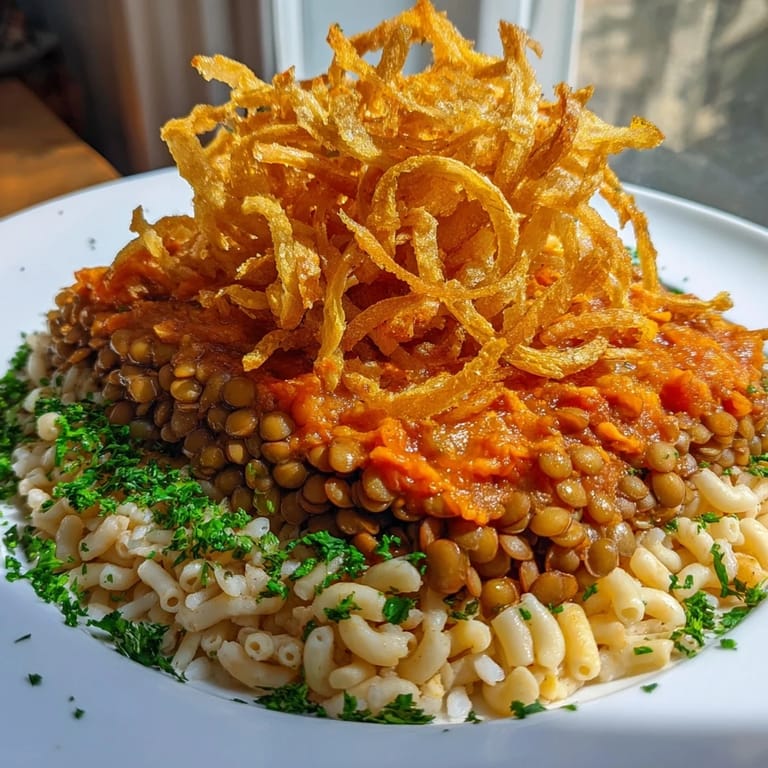
- In a bowl or on a platter, create loose layers of rice, then lentils, then pasta—don't press down, let them stay separate. Spoon your warm sauce generously over the top, scatter the crispy onions like they're treasure, and drizzle with garlic vinegar.
 Save
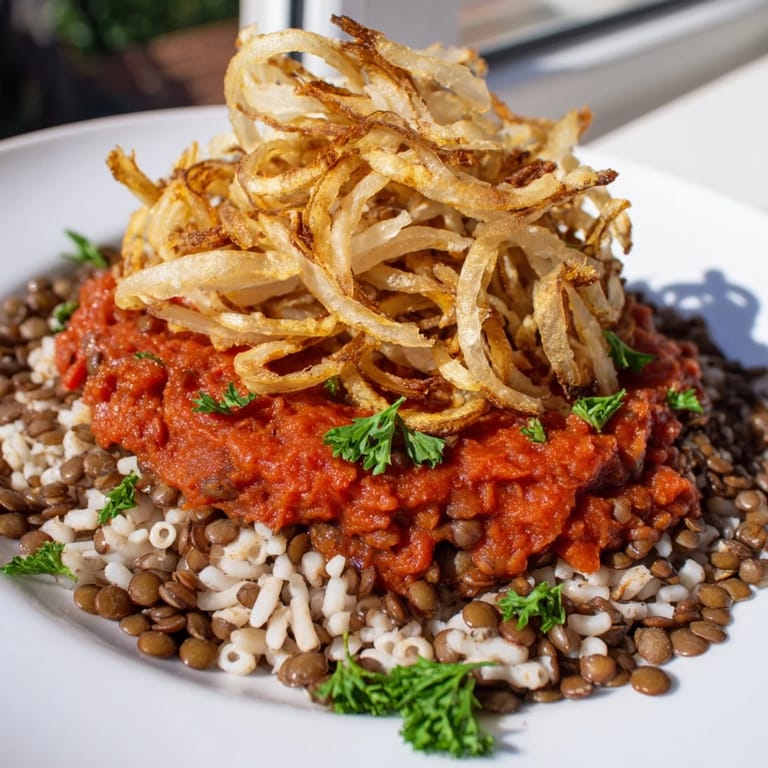
Save I learned to respect each component separately when a friend's version fell flat because she'd cooked everything together in one pot like some kind of stew. That's when I understood that koshari's magic lives in the contrast—the way warm spiced sauce meets cool lentils, crispy onions against soft pasta, and the sharp vinegar cutting through it all.
Why This Dish Never Gets Old
Koshari is what I call a forgiving canvas—you can play with spice levels, pasta shapes, or even substitute different legumes, and it still becomes itself. The structure holds strong enough that variations feel like personal expression rather than failures, which is rare in cooking.
Building Layers Like You Mean It
The assembly moment matters more than people think; don't treat it as a afterthought where you dump everything in a bowl. Each layer should be visible and distinct, creating little pockets where sauce pools and onions nest. This isn't just about presentation—it changes how the dish eats and tastes.
Making This Vegan Without Apology
One of the unexpected joys of koshari is that it's naturally vegan without tasting like it's made sacrifice for ideology; the richness comes from technique and spicing, not butter or cream. I've served it to meat-eaters and plant-based people alike, and everyone comes back to the bowl the same way.
- Use vegetable broth instead of water for cooking the rice or lentils if you want deeper, more savory flavor.
- Substitute orzo or vermicelli pasta for different textures if elbow macaroni feels too predictable.
- Adjust chili flakes to your heat tolerance, but don't skip them entirely—they bridge all the flavors together.
 Save
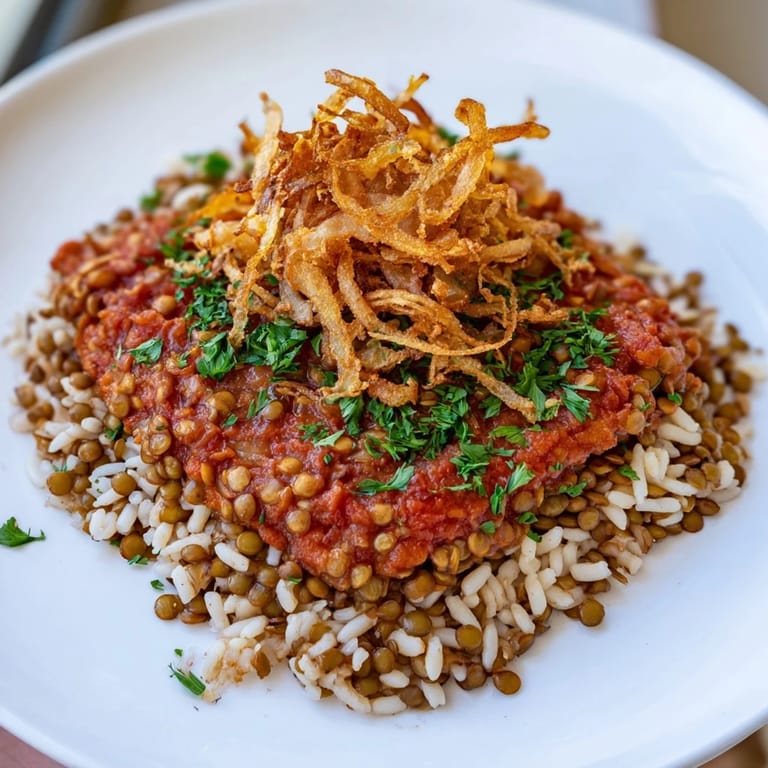
Save Koshari taught me that the most beloved dishes are often the ones that don't try too hard to impress you, the ones that just show up and nourish you completely. Make it once and you'll understand why it's been feeding people on Cairo streets for generations.
Recipe FAQ
- → What grains are used in this Egyptian dish?
Medium-grain rice, lentils, and small elbow macaroni or ditalini pasta are combined to create the layered base.
- → How is the tomato sauce flavored?
The sauce is simmered with crushed tomatoes, tomato paste, cumin, coriander, chili flakes, and a touch of sugar for balance.
- → What gives the dish its crispy texture?
Thinly sliced onions are coated in flour and fried until golden and crisp, adding a delightful crunch on top.
- → Can the cooking liquids be substituted for more flavor?
Yes, vegetable broth can replace water for cooking rice and lentils to enhance depth of flavor.
- → Is there an optional garnish to add brightness?
A garlic-infused vinegar drizzle can be added to brighten the layers with a tangy, aromatic finish.
- → What dietary considerations does this dish accommodate?
It is naturally vegan and can be adapted for gluten-free diets by using gluten-free pasta varieties.