 Save
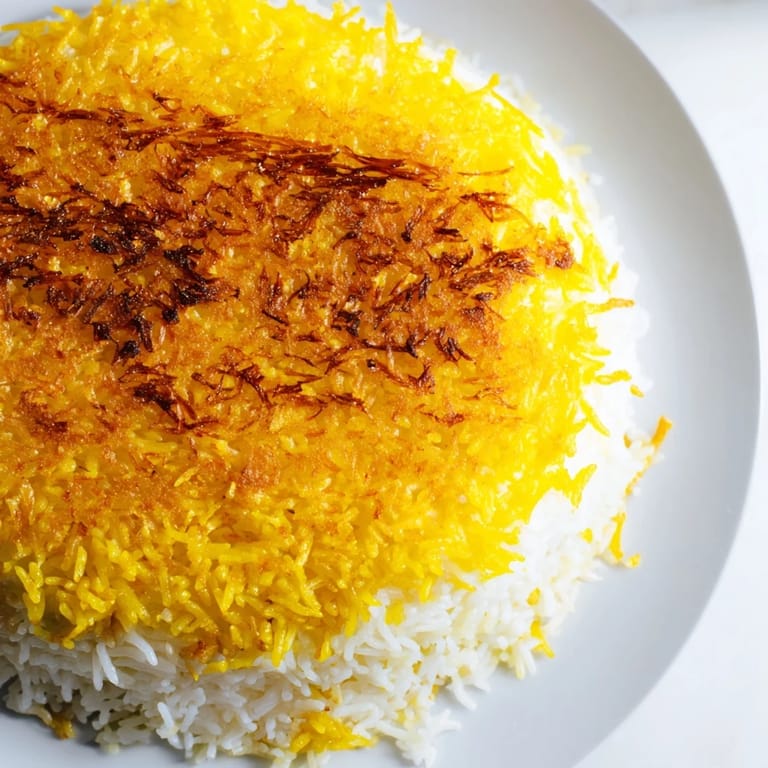
Save The first time I understood tahdig wasn't just rice, it was when my neighbor invited me over and cracked open a pot to reveal this gleaming golden crust, caramelized and crispy like nothing I'd ever seen before. She caught me staring and laughed, saying the sound of it shattering under a spoon was half the magic. That moment changed how I thought about rice entirely, transforming it from a side dish into something worth planning a whole meal around.
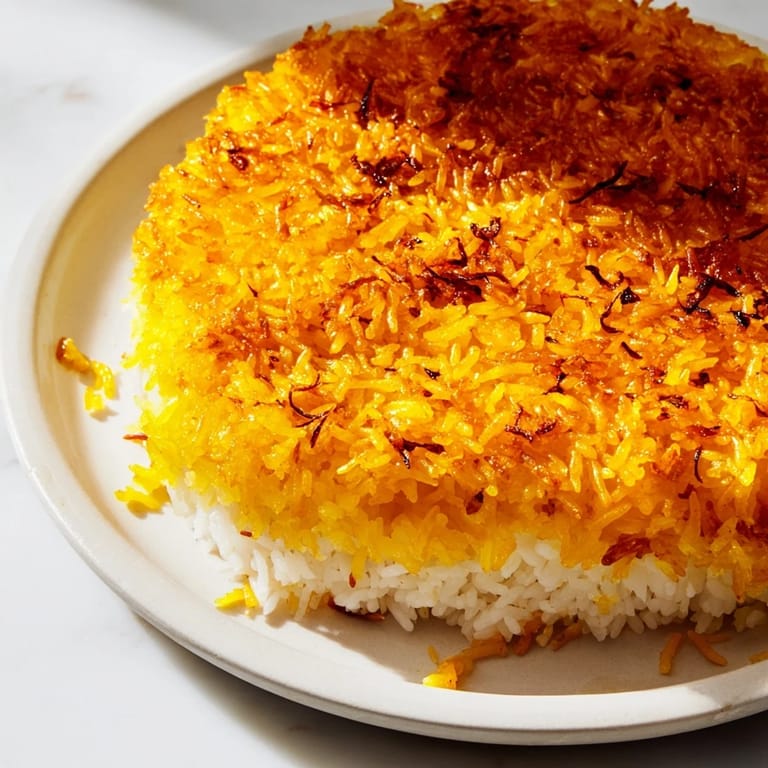
I remember the first time I actually got the tahdig to release from the pan without breaking, my hands were shaking a little as I inverted it onto the plate. My daughter peered over and said "Wow, you made that?" and somehow that simple question made all those failed attempts worth it.
Ingredients
- Basmati rice, 2 cups: This isn't just preference; basmati's longer grains stay separate and fluffy rather than clumping, which is essential for tahdig to form properly.
- Salt for soaking, 1 tablespoon: Soaking with salt isn't just tradition; it helps the grains absorb moisture evenly so they cook at the same rate.
- Saffron threads, 1/4 teaspoon: Real saffron gives that distinctive floral note and deep color; don't skip it or use powder, the threads are worth every penny.
- Hot water for saffron, 2 tablespoons: Steeping saffron in hot water unlocks its flavor and color in ways cold water never can.
- Plain Greek yogurt, 4 tablespoons: Greek yogurt's thickness and tang create the perfect base for your crust; regular yogurt will make it watery and weak.
- Vegetable oil and unsalted butter, 2 tablespoons each: The combination gives you crispy edges without burning; butter alone would scorch before you get the crust.
- Ground turmeric, 1/2 teaspoon: Optional but adds warmth and a subtle earthiness that makes people wonder what you did differently.
- Black pepper, 1/2 teaspoon: A little pepper against the saffron's floral notes keeps everything balanced.
Tired of Takeout? 🥡
Get 10 meals you can make faster than delivery arrives. Seriously.
One email. No spam. Unsubscribe anytime.
Instructions
- Rinse and soak your rice:
- Run cold water over the rice until it runs clear, removing that starchy coating that makes grains stick together. Soak it in a bowl with salt and water for at least thirty minutes; this hydration step is what makes the final rice so tender.
- Parboil until just tender:
- Boil in a large pot for five to six minutes until the grain is soft on the outside but still has a tiny bit of firmness inside. The rice finishes cooking in the pot with dry heat, so don't cook it all the way.
- Steep your saffron:
- Prepare the tahdig base:
- Mix yogurt with a tablespoon of that precious saffron water, add turmeric if you're using it, and fold in about a cup of the parboiled rice until everything is evenly colored and coated. This mixture is what turns into your golden crust.
- Heat your oil and butter:
- In your heavy-bottomed pot over medium heat, warm the oil and butter together until it shimmers slightly. The pot needs to be hot enough to start crisping the tahdig immediately, but not so hot it burns.
- Layer the yogurt mixture:
- Spread that yogurt-rice mixture evenly across the bottom of the pot in an even layer. This is your foundation for everything that comes next.
- Mound the remaining rice:
- Gently spoon the rest of the rice over the yogurt layer, building it toward the center so steam circulates around it. Drizzle the remaining saffron water over the top and use a wooden spoon handle to poke a few holes for steam to escape.
- Cover and cook slowly:
- Wrap your lid in a clean kitchen towel (the towel catches steam and keeps moisture from dripping back onto your rice), then cover the pot tightly. Cook over medium heat for ten minutes to get things started, then drop the heat to low and let it go for thirty-five to forty minutes while the bottom develops that crackling, golden crust.
- Invert onto the platter:
- After a five-minute rest, place your serving platter over the pot and flip the whole thing over in one confident motion. The tahdig should come away from the pan in one gorgeous piece.
 Save
Save There's a moment right before you invert the pot when you can actually hear the tahdig crackling faintly, that whisper of crust forming. It's oddly meditative, standing there listening to rice transform into something special.
The Secret Behind the Crust
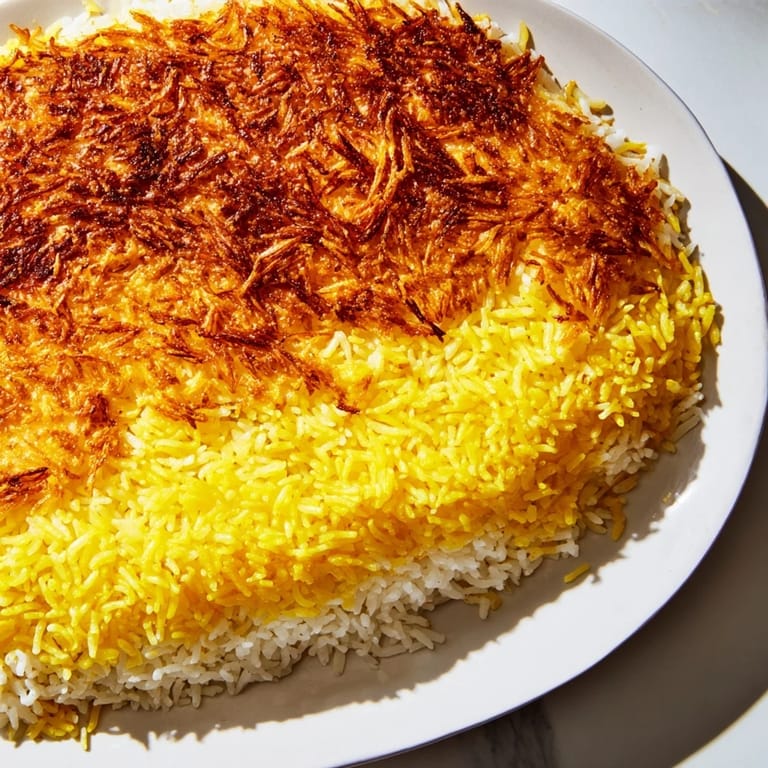
Tahdig isn't made by accident; it's the entire point of this cooking method. The yogurt-oil-butter mixture at the bottom creates a barrier between the rice and the direct heat, which crisps it slowly rather than burning it. The saffron water drizzled over everything adds flavor that seeps down, so even your crispiest bottom layer tastes intentional, not charred.
Variations to Play With
Once you've nailed the classic version, the real fun begins. Thinly sliced potatoes soaked in oil make a crispier, more dramatic crust that actually shatters like glass. Flatbread torn into pieces creates a different texture entirely, almost like a savory bread pudding underneath. The yogurt base is forgiving though; even if you swap in a few tablespoons of any fat-based mixture, the principle stays the same.
Serving and Storage
Tahdig is best served fresh and warm, right after you invert it, because the crust loses some of its magic as it cools. If you have leftovers, refrigerate them and reheat gently in a covered pan on low heat with just a touch of oil to refresh the crust. A scatter of barberries or fresh herbs on top adds brightness and looks beautiful, but the rice alone is stunning enough.
- Serve this alongside kebabs, stews, or even simple roasted vegetables for a complete meal.
- The crispy bottom is shareable, so resist the urge to hoard it all for yourself.
- Leftover rice freezes well if you separate it from the tahdig crust first.
 Save
Save This dish transforms ordinary basmati into something your guests will ask about for months. Once you've made it once, you'll understand why Persian cooks take this technique so seriously.
Recipe FAQ
- → What is tahdig?
Tahdig refers to the golden, crispy crust formed at the bottom of the pot when cooking Persian rice, prized for its rich texture and flavor.
- → How do you get the tahdig crispy?
Cooking over medium heat at first, then lowering the heat for a slow, even crust development ensures a golden, crunchy tahdig without burning.
- → Can I use other ingredients for the crust?
Yes, thinly sliced potatoes or flatbread can substitute the yogurt-rice mixture, providing different textures and flavors.
- → Why soak the rice before boiling?
Soaking removes excess starch and helps achieve separate, fluffy grains after cooking.
- → What role does saffron play?
Saffron imparts vibrant color and subtle aromatic notes, enhancing both visual appeal and flavor complexity.
- → How do you serve tahdig rice?
After cooking and resting, invert the pot onto a serving dish so the crispy tahdig is on top, then serve immediately.