 Save
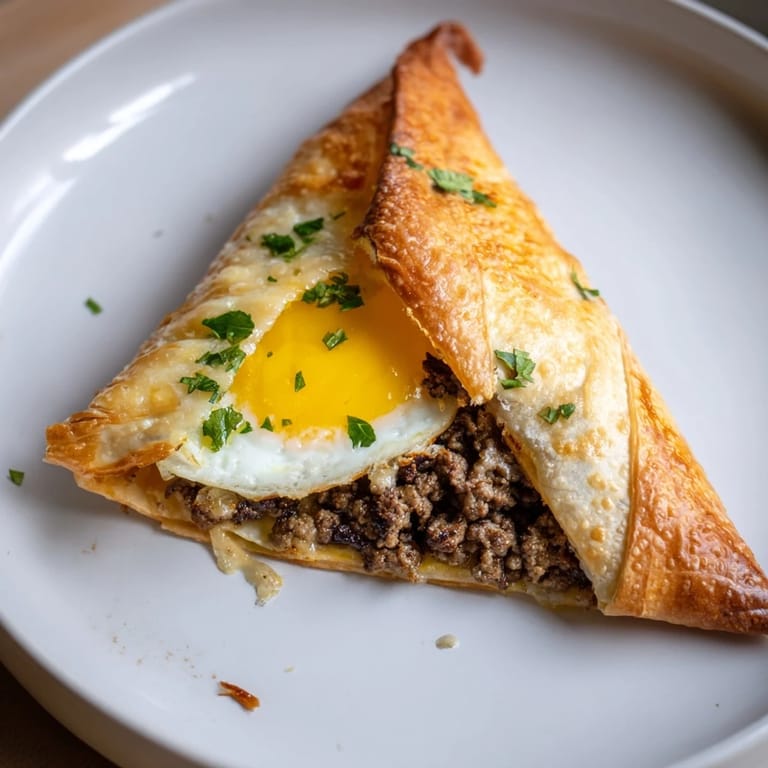
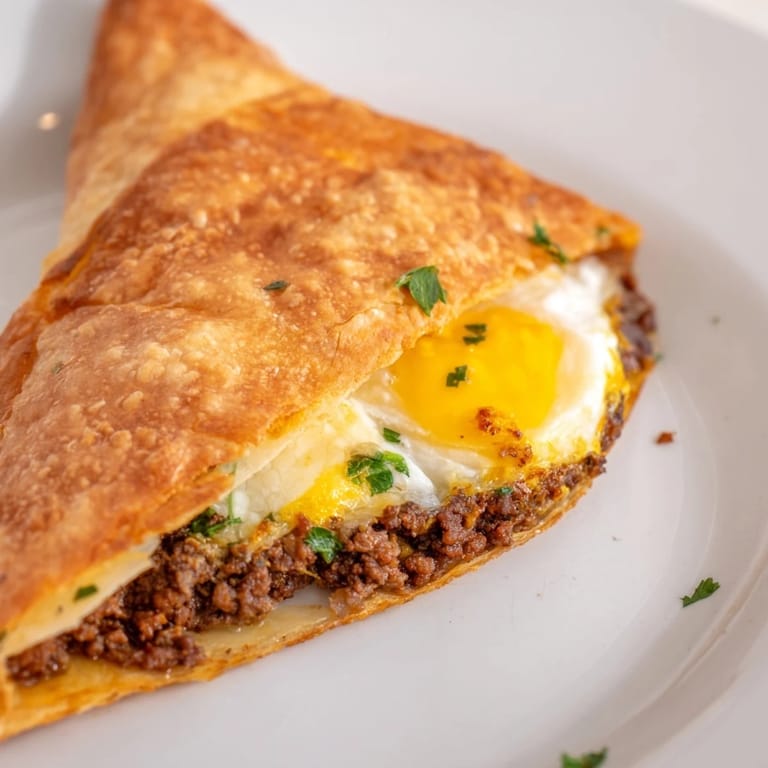
Save The first time I bit into a brik on a dusty Tunis street corner, I understood why this pastry is so beloved—the phyllo shattered between my teeth like spun glass, giving way to a warm, runny egg yolk and savory meat that tasted like memories I didn't have. My Tunisian friend laughed at my surprise, saying every cook makes them slightly differently, but the magic is always the same: crispy outside, soft and molten inside. Now when I make them at home, that moment comes rushing back—the sound of phyllo crackling in hot oil, the smell of cumin and fried pastry filling the kitchen. It's become one of my favorite things to cook for people who've never had one before, watching their faces light up at that first bite.
I brought these to a dinner party where someone skeptically asked if phyllo would hold up to frying, and when I pulled the golden, crispy triangles from the oil, even the skeptic went quiet. That's when I realized brik isn't just food—it's a conversation starter, a moment when people slow down and pay attention. Everyone at that table asked for the recipe, and now I make them constantly, always getting the same reaction.
Ingredients
- Ground beef or lamb (120g): Use whichever you have, but lamb feels more authentic and adds a deeper flavor—the meat is a vehicle for spice rather than the star, so don't worry about finding premium cuts.
- Small onion, finely chopped: This becomes your flavor base, so chop it small enough that it disappears into the meat and releases its sweetness as it cooks.
- Fresh parsley (1 tbsp): Add this at the end so it stays bright and doesn't taste cooked—it's what gives the filling life.
- Ground cumin (1 tsp): Toast it in the pan with the meat so it blooms and becomes fragrant, not dusty.
- Ground coriander (1/2 tsp): This is subtle but essential—it adds warmth without announcing itself.
- Salt and black pepper: Taste as you go, because once the egg is in there, you can't adjust anymore.
- Phyllo pastry sheets (4 large): Keep the stack covered with a damp towel while you work so they don't dry out and crack—this is the one thing that will frustrate you if you ignore it.
- Large eggs (4): These need to be truly large, and room temperature if possible so they cook gently without turning rubbery.
- Gruyère or mozzarella cheese (4 tbsp, optional): The traditional version sometimes includes this for richness, but it's genuinely optional—the egg carries the creaminess.
- Sunflower or vegetable oil for frying: You need enough to make a shallow bath, and it should be hot enough that the pastry sizzles immediately when it hits the pan.
Tired of Takeout? 🥡
Get 10 meals you can make faster than delivery arrives. Seriously.
One email. No spam. Unsubscribe anytime.
Instructions
- Build your filling base:
- Heat a skillet over medium heat with a little oil, then add the onion and let it soften and turn pale gold—this takes about 3 minutes and is worth waiting for because it releases its sweetness. Add the ground meat, cumin, coriander, salt, and pepper, stirring often until the meat loses its pink color and the whole mixture becomes fragrant. Stir in the parsley at the very end, then slide everything onto a plate to cool for a few minutes while you prep the pastry.
- Assemble the first layers:
- Lay a phyllo sheet on a clean, dry surface and keep the rest covered with a damp kitchen towel so they don't turn brittle. If your sheets are gossamer-thin, you can stack two together for more structure.
- Add the filling and egg:
- Spoon 2–3 tablespoons of the meat mixture into the center of the phyllo, leaving space around the edges. Make a small well in the meat with the back of a spoon, then crack an egg into it—try to keep the yolk whole so you have that molten center later. Add a tablespoon of grated cheese if you're using it.
- Seal it all in:
- Fold the phyllo over the filling in whatever shape feels natural—a triangle, a rectangle, a tidy bundle—whatever corners meet, brush them lightly with water so they seal and stay crispy, not soggy.
- Get the oil ready:
- Pour 3–4 centimeters of oil into a large frying pan and heat it over medium-high until a tiny piece of phyllo sizzles aggressively when it touches the surface. You want it hot but not smoking.
- Fry until golden:
- Carefully slide the pastry into the hot oil and watch it immediately—it fries fast, about 2–3 minutes per side until the phyllo is deep golden and sounds crackling when you tap it with a spoon. Use a slotted spoon to flip it carefully so the egg doesn't jiggle out, then fry the other side.
- Rest and serve:
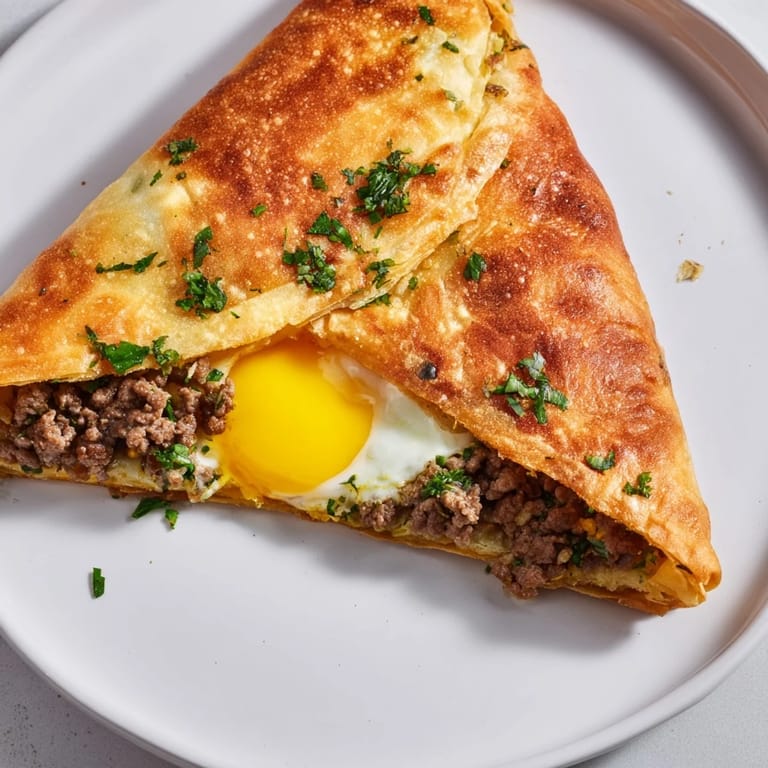
- Lift the brik from the oil and let it drain on paper towels for just a minute, then serve immediately while the pastry is still shatteringly crisp and the yolk is still warm inside.
 Save
Save There was a moment when I pulled a brik from the oil and it was so perfect—crackling, golden, with steam just beginning to rise—that I set it on a plate and just looked at it for a few seconds before tasting it. That's when I realized these aren't just appetizers; they're small edible moments that demand your full attention, and that's exactly why people come back for more.
The Secret of Phyllo
Phyllo is dramatic and finicky, but only if you let it dry out—it's actually forgiving if you respect its one rule: keep it covered. I once wrapped mine in plastic instead of a damp towel and watched it shatter like autumn leaves, wasting an entire package and teaching me a hard lesson. Now I keep a wet paper towel nearby and work with calm confidence, knowing that as long as the phyllo stays pliable, the rest will follow. The frying itself is the easy part; it's the prep that separates the graceful from the frustrated.
Playing with the Filling
Once you nail the basic beef and egg version, the filling becomes your playground—I've made these with ground lamb for earthier depth, with spicy harissa stirred through for heat, and even with tinned tuna for a lighter variation that's just as satisfying. Some Tunisian cooks add a pinch of caraway seed or a tiny amount of preserved lemon for complexity, and these additions whisper rather than shout. The beauty of brik is that it's a canvas; the phyllo and the egg are the structure, but the filling is where you can be creative without breaking anything.
Serving and Timing
These are at their absolute best in the 30 seconds after they leave the oil, so time your frying to when people are ready to eat, not before—a reheated brik is a sad pastry. I serve them with lemon wedges to cut the richness and a simple green salad to balance the warmth, though honestly, some people eat them plain because they're addictive enough on their own. This is also why they're perfect for cooking at the table or right before guests sit down; it forces you to be present and makes everyone feel attended to.
- Squeeze fresh lemon over each brik just before eating to add brightness and cut the richness of the egg.
- A simple green salad with olive oil and salt becomes the perfect companion, giving your palate something cool and crisp between bites.
- Make your filling ahead and keep it covered in the fridge, but assemble and fry right before serving for maximum crispness.
 Save
Save Every time I make brik, I think about that street corner in Tunis and how something so simple—egg, meat, pastry—can taste like a place and a memory all at once. It's one of those recipes that reminds me why I cook: not for perfection, but for those small moments of joy and connection that happen around food.
Recipe FAQ
- → How do I keep the phyllo pastry from tearing?
Handle phyllo sheets gently and cover them with a damp cloth while working to prevent drying. Use two sheets stacked for extra strength when needed.
- → Can I substitute the meat filling?
Yes, alternatives like tuna or mashed potato can be used to create different variations while maintaining the crisp pastry texture.
- → What oil is best for frying?
Use sunflower or vegetable oil for frying to achieve a golden, crispy crust without overpowering flavors.
- → Is it necessary to add cheese inside?
Cheese is optional but adds a mild creaminess; Gruyère or mozzarella works well if you choose to include it.
- → How do I ensure the egg stays intact inside the pastry?
Create a small well in the meat filling for the egg and fold the pastry carefully to seal edges with a bit of water to prevent leaks during frying.