 Save
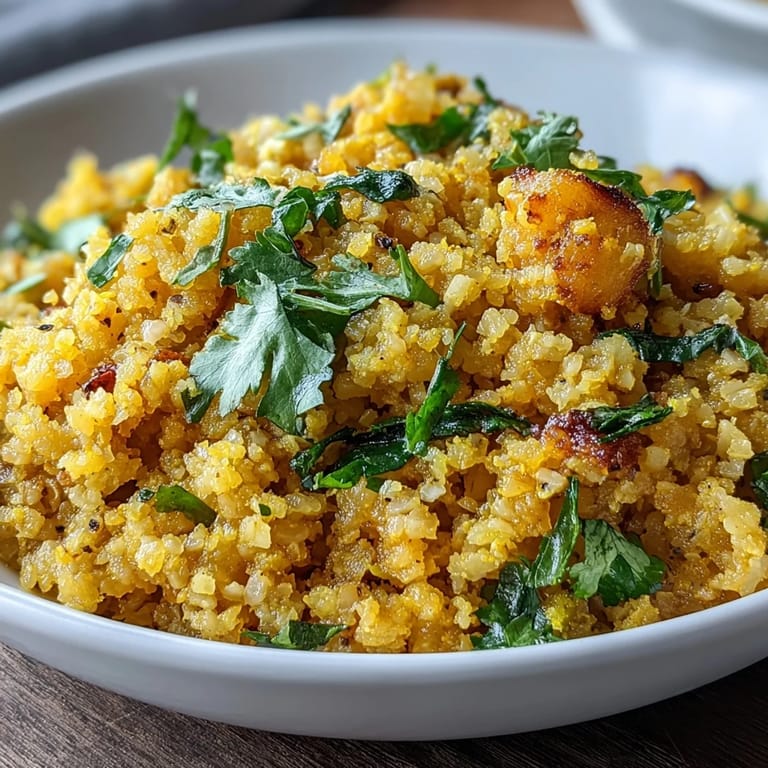
Save Last Tuesday, my partner came home from work complaining about feeling sluggish, and I found myself reaching for a head of cauliflower instead of the usual rice. There's something almost meditative about pulsing florets into tiny grains, watching them transform under the blade. The kitchen filled with that earthy, slightly sweet smell of raw cauliflower, and by the time I'd toasted the turmeric in hot oil, the whole space smelled like something healing. That simple bowl became proof that food doesn't have to be complicated to feel nourishing, and now it's the first thing I make when I want something that tastes indulgent while treating my body well.
I made this for a dinner party once where someone mentioned they'd given up rice, and I watched their face light up when they realized they could go back for seconds guilt-free. There's quiet magic in feeding people something that feels indulgent but leaves them feeling clear-headed afterward. That night taught me that the best dishes aren't the ones that show off your skills, they're the ones that make people feel seen.
Ingredients
- 1 medium head cauliflower (about 600 g), cut into florets: The backbone of this dish, and honestly, freshness matters more than size—look for florets that feel dense and creamy-white, not yellowed or soft.
- 1 small onion, finely chopped: This creates a subtle sweetness that rounds out the spices, so don't skip it even if you think you're onion-fatigued.
- 2 cloves garlic, minced: Fresh garlic makes all the difference; jarred will work if that's what you have, but the real thing gives you that punch of flavor that lingers in the best way.
- 1 tablespoon olive oil or coconut oil: Use whichever you have on hand, though coconut oil brings a touch of richness that makes the spices sing.
- 1 teaspoon ground turmeric: This is the star, and while it stains everything (including your fingers), that golden color is exactly what you want to see coating every grain.
- 1/2 teaspoon ground cumin: Cumin adds a warmth that stops the turmeric from tasting medicinal, creating balance instead.
- 1/4 teaspoon ground black pepper and 1/2 teaspoon sea salt: These seem small, but they're the difference between flat and alive—taste as you go and trust your instincts.
- Pinch of red chili flakes (optional): Only add this if you like heat; I usually skip it unless I'm serving people who reach for hot sauce anyway.
- 2 tablespoons chopped fresh cilantro or parsley: The brightness at the end pulls everything together, so don't treat this as optional even though it says you can use either herb.
- Juice of 1/2 lemon: This is what prevents the whole thing from tasting heavy; the acidity wakes up your mouth in ways you won't expect.
Tired of Takeout? 🥡
Get 10 meals you can make faster than delivery arrives. Seriously.
One email. No spam. Unsubscribe anytime.
Instructions
- Pulse your cauliflower into rice:
- Cut your florets into manageable chunks and work in batches if your food processor is on the smaller side—you're looking for pieces that look like actual grains of rice, not powdered cauliflower. If you don't have a processor, a box grater works too, just takes a little longer and your knuckles will remind you why the appliance exists.
- Warm your oil and soften the onion:
- Medium heat is your friend here because you're building flavor, not rushing; watch for the onion to turn translucent and sweet-smelling around the two-minute mark, and if you go too fast you'll have raw bite instead of softness.
- Add garlic and bloom those spices:
- Once the garlic hits the pan you've got maybe 30 seconds before it goes from fragrant to bitter, so have your turmeric and cumin ready to go immediately. This toasting step is where the magic happens—the spices release their oils and stop tasting like a supplement bottle.
- Toss in the riced cauliflower:
- Stir everything together so the spices coat every piece, and then let it do its thing for 5 to 7 minutes, stirring every minute or so to prevent sticking. You want it tender but with a tiny bit of texture left, not mushed into submission.
- Finish with brightness:
- Squeeze that lemon juice in while the pan is still warm so it releases all its oils into the dish, then scatter your herbs on top and taste before serving. This final step takes something good and makes it unforgettable.
 Save
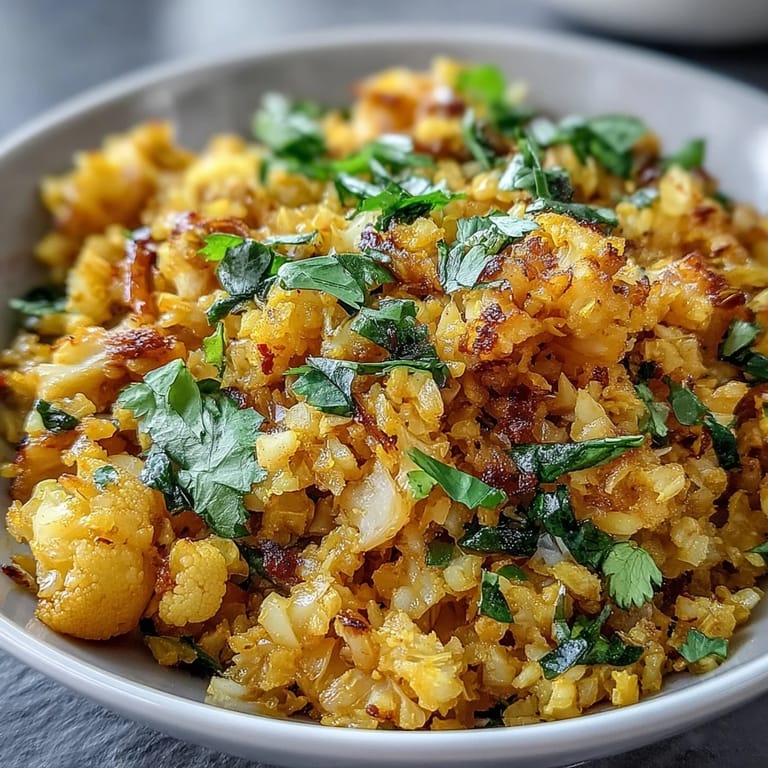
Save There was a moment when I served this to someone who'd never tried cauliflower rice before, and they said it tasted nothing like rabbit food. I realized then that the turmeric wasn't just anti-inflammatory, it was permission—permission to eat something good for your body without sacrificing flavor or joy.
When to Add Extra Vegetables
If you want to turn this into something more substantial, frozen peas go in during the last minute of cooking, and diced bell pepper or baby spinach should join the garlic at the beginning so they soften into the base. I've also thrown in shredded carrots and sliced green onions, and each time the dish becomes more of a complete meal and less of a side pretending to be one. The beauty is that nothing fights with the turmeric—it's the diplomatic host that welcomes all these additions without losing its voice.
Toasted Almonds and Other Finishes
A handful of slivered almonds toasted in a dry skillet before you add them brings out their nuttiness and gives the whole dish a textural surprise. I've also finished bowls with a drizzle of tahini mixed with lemon juice, a sprinkle of pomegranate seeds, or even crispy chickpeas if I'm feeling like turning snack into substance. These finishes aren't about complication, they're about customization—each one changes the story of what's in your bowl without changing the foundation.
The Best Ways to Serve It
This works as a canvas for almost anything, so I rarely make it without knowing what it's propping up or beneath. Under a curry it becomes the grain that soaks up sauce without disappearing, beside grilled fish it's the lightness that lets the main event shine, and with roasted vegetables it's proof that healthy eating doesn't require compromise.
- Make it the night before and reheat gently with a splash of water so you're not cooking when people arrive.
- Try it cold the next day in a grain bowl situation where it becomes more salad than side.
- Pack it for lunch because it travels better than regular rice and tastes just as good at room temperature.
 Save
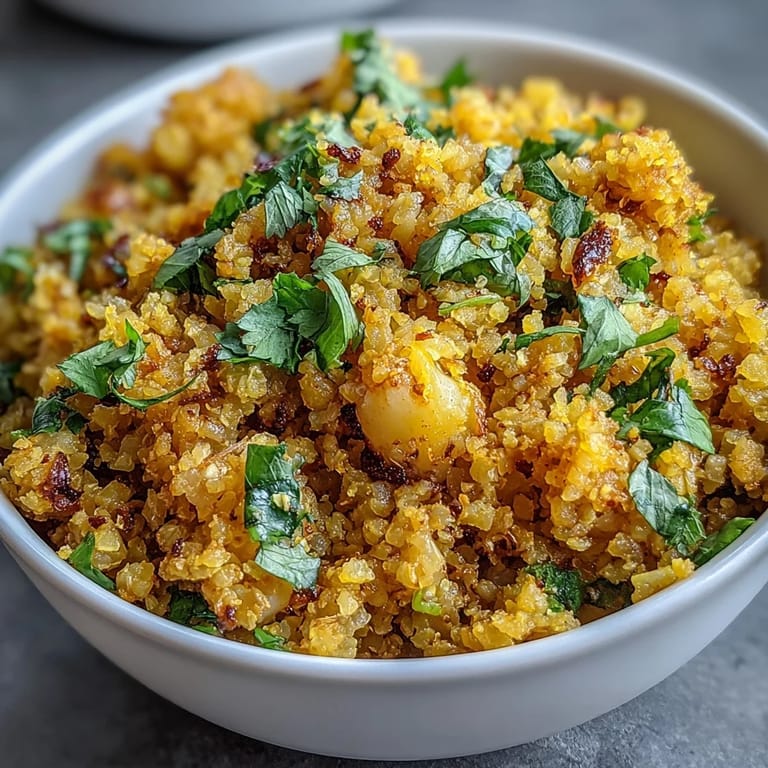
Save This is the recipe I return to when I want to feed myself well without overthinking it, when someone needs nourishment dressed up as flavor, and when I want to remember that the simplest dishes often teach us the most. It's become the kind of thing I make without checking the recipe now, which is exactly when food stops being technique and becomes language.
Recipe FAQ
- → How do I rice cauliflower without a food processor?
Use a box grater with the medium holes to grate cauliflower florets into rice-sized pieces. Alternatively, chop finely with a sharp knife, working in small batches for even results.
- → Can I make this ahead of time?
Yes, prepare the riced cauliflower up to 3 days in advance and store refrigerated. Cook just before serving for the best texture, though leftovers reheat well in a skillet or microwave.
- → What spices work well as substitutions?
Coriander, garam masala, or curry powder can replace or complement the cumin and turmeric. Fresh ginger adds brightness, while a pinch of cayenne increases heat if desired.
- → Is this suitable for freezing?
Freshly cooked cauliflower rice freezes well for up to 1 month. Thaw overnight in the refrigerator and reheat in a skillet to restore texture before serving.
- → How can I add more protein?
Stir in cooked chickpeas, lentils, or diced tofu during the last few minutes of cooking. Toasted nuts or seeds also provide protein and a satisfying crunch.
- → What dishes pair best with this?
Serve alongside Indian curries, grilled chicken or fish, roasted vegetables, or use as a base for Buddha bowls. The mild flavors complement bold, spiced main dishes exceptionally well.