Vegetable Broth From Scraps

Featured in: Veggie Plates & Grain Bowls

Create a nourishing, flavorful broth using vegetable trimmings that would otherwise go to waste. This simple method transforms carrot peels, onion skins, celery ends, and herb stems into liquid gold that elevates soups, stews, and grains. Simmer scraps with bay leaves, peppercorns, and fresh herbs for an hour, then strain to reveal a rich, aromatic stock. Store in the refrigerator for up to five days or freeze for months, ensuring you always have homemade base on hand.

Updated on Sun, 25 Jan 2026 00:08:16 GMT
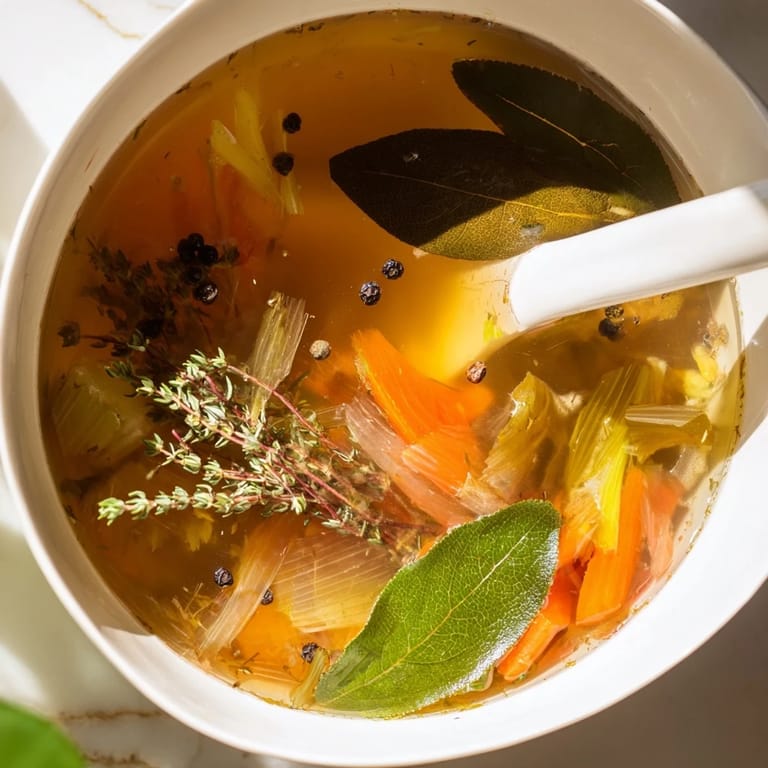
Homemade Vegetable Broth from Scraps simmering in a large pot with aromatic herbs and bay leaves. Save
Homemade Vegetable Broth from Scraps simmering in a large pot with aromatic herbs and bay leaves. | pixelforks.com

A nourishing, flavorful homemade broth crafted from vegetable trimmings and aromatic herbs. Perfect as a soup base or for sipping, this zero-waste recipe transforms kitchen scraps into liquid gold.

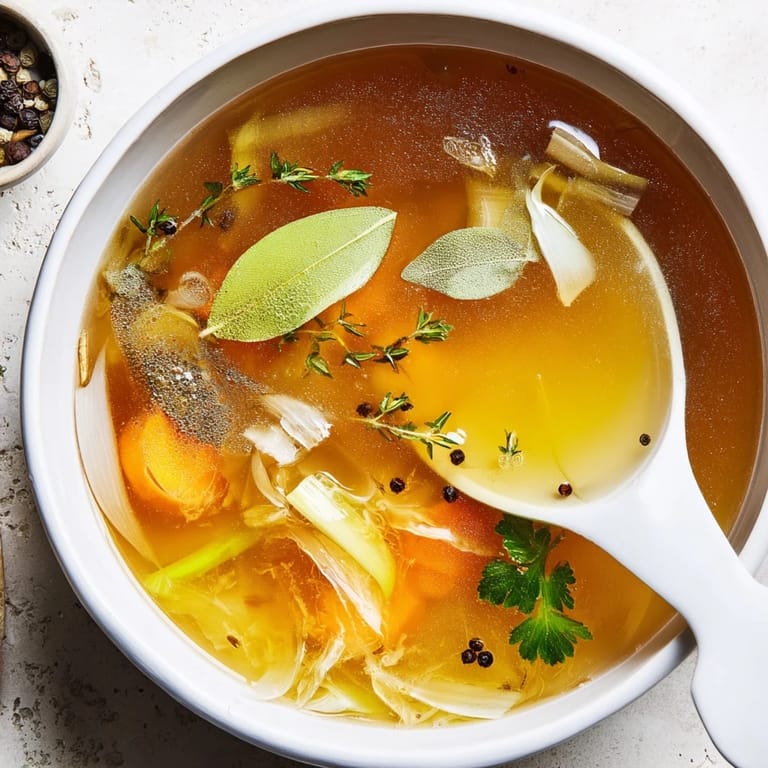
Homemade Vegetable Broth from Scraps simmering in a large pot with aromatic herbs and bay leaves. Save
Homemade Vegetable Broth from Scraps simmering in a large pot with aromatic herbs and bay leaves. | pixelforks.com

Making your own broth is an incredibly satisfying way to ensure your kitchen is run efficiently while providing a nutrient-dense base for countless recipes.

Ingredients

  • Vegetable Scraps: 5–6 cups assorted vegetable trimmings (carrot peels, onion skins, celery ends, leek tops, mushroom stems, garlic skins, parsley stems, etc.)
  • Aromatics & Seasoning: 2 bay leaves, 8–10 whole black peppercorns, 2 cloves garlic (optional, smashed), 1 small handful fresh parsley or thyme sprigs (optional), 1–2 teaspoons salt (to taste)
  • Water: 2 liters (8 cups) cold water
Product image
Perfect for simmering soups, baking casseroles, and serving cozy one-pot meals straight from oven to table.
Check price on Amazon

Instructions

Step 1
Gather clean, fresh vegetable scraps. Avoid bitter vegetables like broccoli, Brussels sprouts, or large amounts of cabbage.
Step 2
Place the scraps, aromatics, and salt into a large stockpot. Pour in the cold water.
Step 3
Bring to a gentle boil over medium-high heat, then reduce to a simmer.
Step 4
Simmer uncovered for 1 hour, occasionally skimming foam from the surface.
Step 5
Taste and adjust salt if needed.
Step 6
Strain the broth through a fine-mesh sieve or cheesecloth, discarding solids.
Step 7
Cool and store in airtight containers in the refrigerator for up to 5 days, or freeze for up to 3 months.

Zusatztipps für die Zubereitung

Use scraps from carrots, onions, leeks, celery, garlic, mushrooms, herbs, and potatoes (peeled). It is best to avoid cruciferous veggies like broccoli, cauliflower, or cabbage for a cleaner flavor.

Varianten und Anpassungen

For a deeper umami note, you can add kombu or dried shiitakes to the pot before simmering.

Serviervorschläge

This homemade broth is perfect as a soup base or for sipping directly from a mug as a nourishing warm drink.
A glass jar of golden Vegetable Broth from Scraps beside fresh vegetable trimmings and parsley sprigs. Save
A glass jar of golden Vegetable Broth from Scraps beside fresh vegetable trimmings and parsley sprigs. | pixelforks.com

By transforming simple kitchen scraps into liquid gold, you are adding a layer of wholesome, homemade flavor to every meal you create.

Product image
Keeps spices within easy reach while cooking, helping you season dishes quickly during everyday meal prep.
Check price on Amazon

Recipe FAQ

What vegetables work best for homemade broth?

Carrot peels, onion skins, celery ends, leek tops, mushroom stems, garlic skins, and parsley stems create the most balanced flavor. Potatoes (peeled) add body, while fresh herb sprigs infuse aromatic notes.

Which vegetables should I avoid when making broth?

Skip cruciferous vegetables like broccoli, cauliflower, Brussels sprouts, and large amounts of cabbage. These can impart bitter flavors that overpower the broth. Also avoid moldy or spoiled trimmings.

How long can I store homemade vegetable broth?

Keep strained broth in airtight containers in the refrigerator for up to 5 days. For longer storage, freeze in portions for up to 3 months. Thaw overnight in the refrigerator before using.

Can I customize the flavor profile of my broth?

Absolutely. Add kombu seaweed or dried shiitake mushrooms for deeper umami. Include ginger slices for warmth, or fennel tops for a subtle anise note. Adjust salt levels to your taste.

Should I collect scraps before making broth?

Yes. Store clean vegetable trimmings in a freezer bag until you accumulate 5–6 cups. This ensures you have enough scraps for a flavorful batch and makes the process efficient.


Vegetable Broth From Scraps

Transform vegetable trimmings into rich, flavorful broth perfect for soups or sipping. A simple zero-waste approach to homemade stock.

Prep Time
10 minutes
Cooking Duration
60 minutes
Overall Time
70 minutes
Recipe by Ethan Bell


Skill Level Easy

Cuisine Global

Makes 8 Portions

Diet Preferences Plant-Based, No Dairy, Wheat-Free

What You Need

Vegetable Scraps

01 5–6 cups assorted vegetable trimmings (carrot peels, onion skins, celery ends, leek tops, mushroom stems, garlic skins, parsley stems)

Aromatics & Seasoning

01 2 bay leaves
02 8–10 whole black peppercorns
03 2 cloves garlic, smashed
04 1 small handful fresh parsley or thyme sprigs
05 1–2 teaspoons salt

Water

01 8 cups cold water

How-to Steps

Step 01

Prepare Vegetable Scraps: Gather clean, fresh vegetable trimmings. Select carrot peels, onion skins, celery ends, leek tops, mushroom stems, garlic skins, and parsley stems. Avoid bitter vegetables including broccoli, Brussels sprouts, or large quantities of cabbage to maintain a clean flavor profile.

Step 02

Combine Ingredients in Stockpot: Place the vegetable scraps, bay leaves, peppercorns, smashed garlic, fresh herbs, and salt into a large stockpot. Pour in 8 cups of cold water, ensuring all ingredients are fully submerged.

Step 03

Bring to Initial Boil: Set the stockpot over medium-high heat and bring the mixture to a gentle boil. Watch carefully to prevent boiling over.

Step 04

Simmer the Broth: Reduce heat to maintain a steady simmer. Cook uncovered for 1 hour, occasionally skimming any foam or impurities that rise to the surface for a clearer broth.

Step 05

Season and Adjust: Taste the broth and add additional salt if needed. The flavor should be well-balanced and savory.

Step 06

Strain the Broth: Pour the broth through a fine-mesh sieve or cheesecloth into a large bowl or container. Press down on solids gently to extract maximum liquid, then discard all vegetable matter and aromatics.

Step 07

Cool and Store: Allow the broth to cool completely before transferring to airtight containers. Refrigerate for up to 5 days or freeze for up to 3 months.

Gear Needed

  • Large stockpot
  • Fine-mesh sieve or cheesecloth
  • Large bowl or container
  • Ladle

Allergy Details

Go over each item for allergens and speak with your healthcare provider if you’re unsure.
  • Naturally free from common allergens including gluten, dairy, nuts, and soy
  • Verify allergen status when using store-bought or processed vegetable scraps

Nutrition Details (each serving)

This data is for your info and isn't meant as health advice.
  • Calories: 15
  • Fats: 0 grams
  • Carbohydrates: 3 grams
  • Proteins: 0.5 grams