 Save
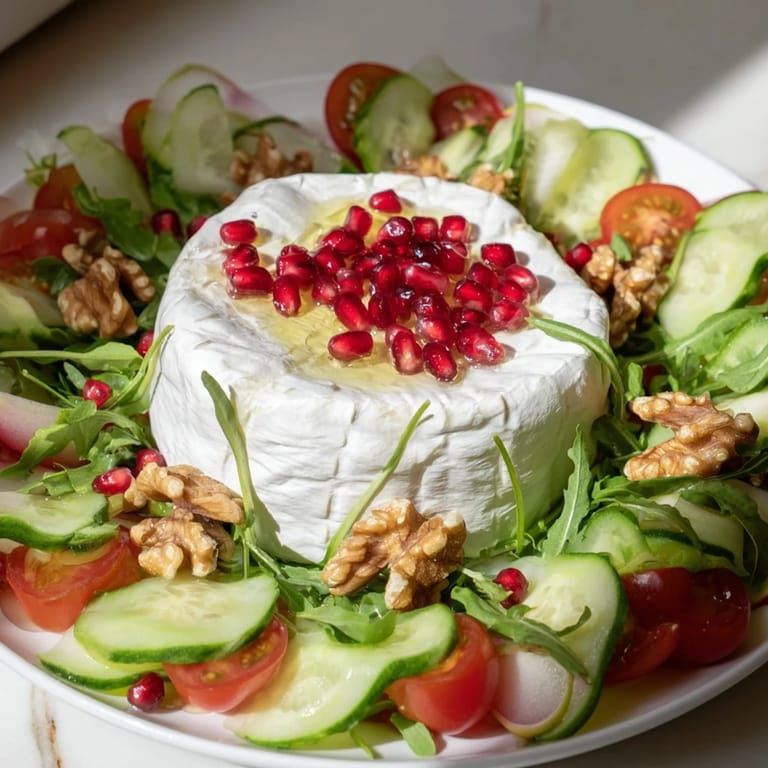
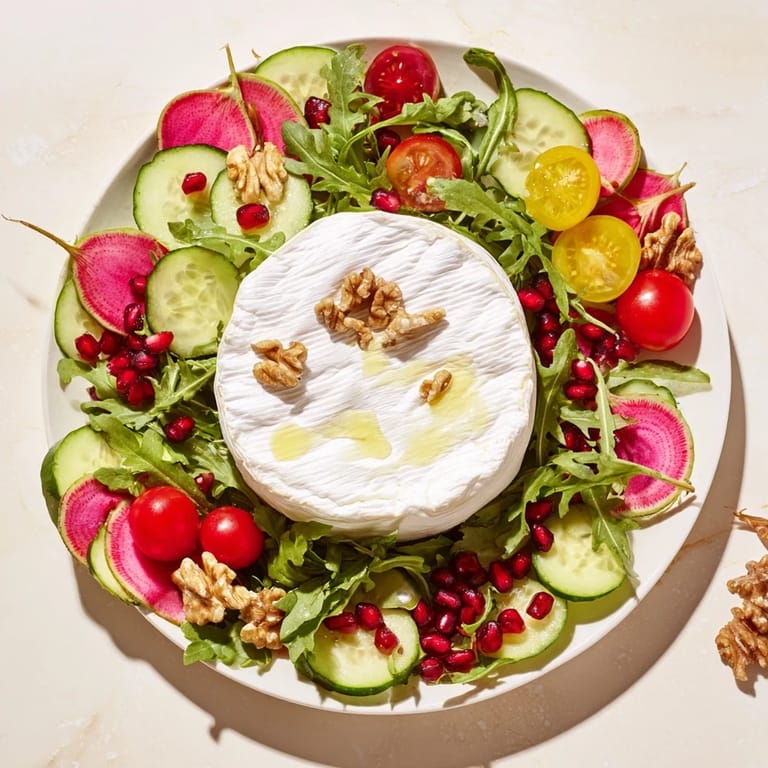
Save I discovered this salad by accident while arranging a board for friends, suddenly realizing that the way I'd spiraled everything toward the cheese looked intentional, almost architectural. What started as instinctive ingredient placement became a game of visual storytelling, where each component pointed inward like lines drawn on a map. My friends leaned in before they even tasted it, mesmerized by the geometric precision. It felt like serving art on a plate, and I've been refining the arrangement ever since.
The first time I plated this for a small gathering, my partner watched me fuss over the angle of each radish slice and laughed, asking if I'd lost my mind over a salad. But when everyone arrived and saw the wheel of cheese nestled at the center with all those jewel-toned ingredients radiating outward, the room went quiet for a moment. That pause—before the compliments and the reaching—reminded me that food isn't just about taste; it's about how it makes people feel when they see it.
Ingredients
- Fresh baby arugula: Choose tender, peppery arugula rather than mature leaves, which can be tough and bitter.
- Cherry tomatoes: Halve them just before serving to preserve their juice and keep them from rolling around the platter.
- Cucumber: Slice thin enough to be delicate but sturdy enough to hold its shape on the board.
- Watermelon radish: Those fuchsia rings are what make this salad visually striking; thinness here is everything.
- Pomegranate seeds: Fresh seeds add brightness and a juicy burst; buy them pre-seeded if you're short on patience.
- Toasted walnuts: Toast them yourself in a dry pan for 3–4 minutes to deepen their flavor and make them crunch audibly.
- Extra-virgin olive oil: A good one matters here because the dressing is simple and unadorned.
- White balsamic vinegar: Its subtle sweetness won't overpower delicate greens like dark balsamic would.
- Honey and Dijon mustard: These create emulsion and balance, preventing the dressing from pooling.
- Artisanal cheese wheel: Seek out a local soft-ripened variety; it's the star, so choose something you genuinely love eating.
Tired of Takeout? 🥡
Get 10 meals you can make faster than delivery arrives. Seriously.
One email. No spam. Unsubscribe anytime.
Instructions
- Set your anchor:
- Place the cheese wheel on a small pedestal or plate, positioning it toward one corner or the center of your large serving board. This is your gravitational point; everything else will radiate from here.
- Create the first arc:
- Arrange the baby arugula in a sweeping curve that seems to pull toward the cheese, like iron filings drawn to a magnet. Don't crowd it—let the green breathe.
- Layer with intention:
- Arrange tomatoes, cucumber slices, and radish in orderly rows, angling each piece as if it's been caught in that same invisible pull toward the cheese wheel. The precision here is what makes it feel designed rather than random.
- Add the jewels:
- Scatter pomegranate seeds and toasted walnuts along the rows, maintaining that directional flow. Think of them as punctuation marks in a sentence that always points inward.
- Make the dressing:
- In a small bowl, whisk olive oil, white balsamic, honey, and Dijon mustard until it's cohesive and pale. Season with salt and pepper—taste it, adjust it, own it.
- Finish with restraint:
- Drizzle the dressing lightly over the vegetables, deliberately avoiding the cheese wheel. You want the cheese to remain pristine and inviting, not glistening.
- Serve with intention:
- Bring the platter to the table and invite your guests to cut a wedge of cheese, then gather ingredients around it. Let them build their own bites and become part of the experience.
 Save
Save I once made this for my mother on her birthday, and watching her hesitate before cutting into the cheese—as if breaking the spell—made me realize how much a beautiful table can mean. She said it looked too perfect to eat, then ate three plates anyway. That moment felt like the whole point of cooking for people you love.
The Art of Arrangement
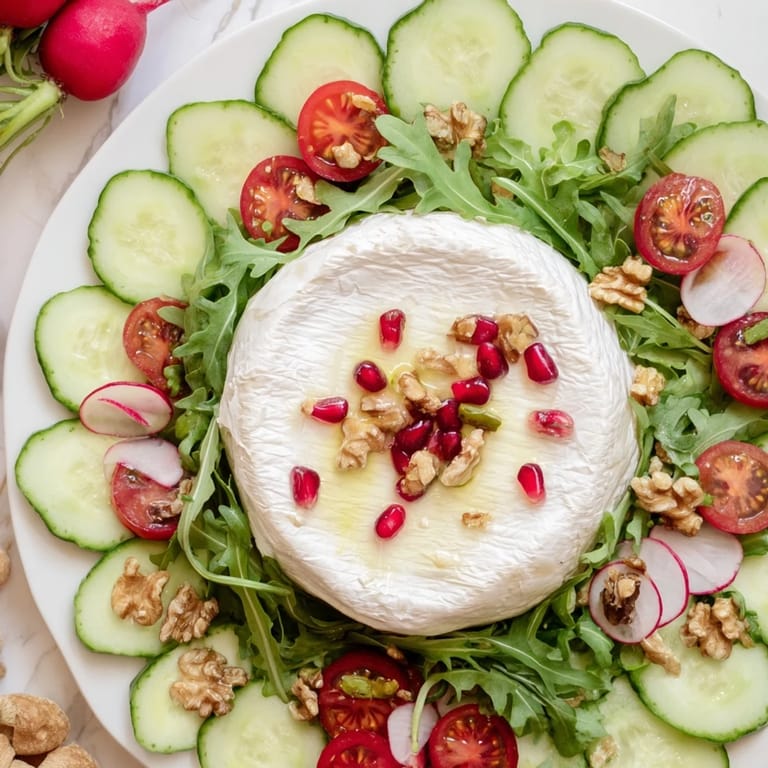
Precision here is your friend, but it shouldn't feel stiff or overwrought. Think of it as gentle geometry—controlled enough to be intentional, loose enough to feel organic. Use a large board or platter with plenty of negative space; cramping everything together defeats the visual purpose. The empty space between ingredients is as important as the food itself, creating rhythm and making the eye travel toward the cheese.
Cheese Selection and Pairing
The cheese is non-negotiable as your centerpiece, so choose something that represents your taste and the occasion. A creamy Brie melts beautifully when guests cut into it, while a earthier Saint-Marcellin brings funkiness and complexity. Local cheeses add a story—you can tell your guests where it came from, turning the salad into a moment of discovery. Match it with the rest of your menu; this works equally well as an impressive starter or a refined lunch main.
Serving Strategies and Timing
This salad thrives on the tension between preparation and presentation. You can arrange everything an hour ahead, cover it loosely, and finish with dressing five minutes before serving. The delicate ingredients won't wilt if treated gently, and you'll minimize last-minute stress. Cold plates and cold ingredients make all the difference—a warm salad loses its intention.
- Prepare arugula and harder vegetables first; add delicate items like tomatoes and pomegranate seeds last.
- Drizzle dressing only when guests are about to eat, preserving the textural contrast between fresh greens and crisp vegetables.
- Pair with a dry white wine or rosé that echoes the salad's elegance without overpowering the subtle flavors.
 Save
Save This salad taught me that sometimes the most memorable meals aren't about complicated techniques or rare ingredients—they're about paying attention to how you present what you have. It's a reminder that cooking with intention, whether plating or seasoning, changes everything.
Recipe FAQ
- → What cheese varieties work best for this dish?
Soft-ripened cheeses like Saint-Marcellin, Brie, Camembert, or Humboldt Fog complement the fresh ingredients and create a creamy center.
- → Can I add protein options to this salad?
Yes, thinly sliced prosciutto or smoked salmon can be added for a non-vegetarian variation with additional savory notes.
- → How should the ingredients be arranged?
Arrange the arugula in sweeping arcs radiating from the cheese wheel, layering tomatoes, cucumber, and radish slices in rows angled toward the cheese for a dramatic presentation.
- → What dressing complements these ingredients?
A light vinaigrette with extra-virgin olive oil, white balsamic vinegar, honey, Dijon mustard, salt, and pepper gently enhances the fresh produce without overwhelming the cheese.
- → Are there any allergen considerations?
This dish contains dairy from cheese and tree nuts from toasted walnuts. Mustard in the dressing may also be an allergen to keep in mind.