 Save
Save The smell hit me before I even opened the door, that unmistakable aroma of roux cooking low and slow, nutty and almost burnt but not quite. My neighbor in the narrow shotgun house next door was making étouffée, and the scent drifted through the humid New Orleans air like an invitation. I knocked, she let me watch, and I scribbled notes on the back of a grocery receipt while she stirred that dark, glossy roux with the patience of someone who'd done it a thousand times. That evening changed how I thought about cooking entirely.
I made this for a small dinner party once, nervous because half the guests had Louisiana roots and I was certain they'd taste right through any shortcuts. But when the first spoonful went around the table, the room went quiet in that good way, the kind where everyone's too busy eating to talk. One friend, whose grandmother was from Baton Rouge, looked up and said it tasted like home, and I nearly cried into my own bowl.
Ingredients
- Vegetable oil: Neutral and stable at high heat, it lets the roux develop without burning as easily as butter would.
- All purpose flour: The foundation of the roux, it thickens and adds that toasted, nutty backbone to the whole dish.
- Onion, bell pepper, celery: The holy trinity of Cajun cooking, these three vegetables create the aromatic base that defines the region's cuisine.
- Garlic: Added near the end of sautéing so it perfumes the dish without turning bitter or acrid.
- Shrimp: Sweet, tender, and quick cooking, they soak up the spiced sauce beautifully and make the dish feel indulgent.
- Seafood stock: Reinforces the briny depth, though chicken stock works in a pinch if that's what you have on hand.
- Worcestershire sauce: A small splash adds umami and a hint of tang that rounds out the flavors.
- Cajun seasoning and cayenne: These bring the warmth and complexity, but you control the heat level to suit your table.
- Bay leaf: Lends a subtle herbal note that ties everything together as it simmers.
- White rice: The perfect blank canvas to soak up every drop of that rich, silky sauce.
- Green onions and parsley: Fresh, bright, and a little sharp, they cut through the richness and add color to the bowl.
Tired of Takeout? 🥡
Get 10 meals you can make faster than delivery arrives. Seriously.
One email. No spam. Unsubscribe anytime.
Instructions
- Start the roux:
- Heat the oil in a heavy pot over medium heat, then whisk in the flour until smooth. Stir constantly, scraping the bottom and edges, until the mixture turns the color of melted chocolate, watching carefully so it doesn't scorch.
- Cook the holy trinity:
- Add the onion, bell pepper, and celery to the roux, stirring until they soften and start to meld into the dark base, about 5 to 7 minutes. Toss in the garlic and let it bloom for just a minute until the kitchen smells incredible.
- Build the sauce:
- Slowly pour in the seafood stock, whisking as you go to blend it into the roux without lumps. Stir in the Worcestershire, Cajun seasoning, cayenne, bay leaf, salt, and pepper.
- Simmer with the shrimp:
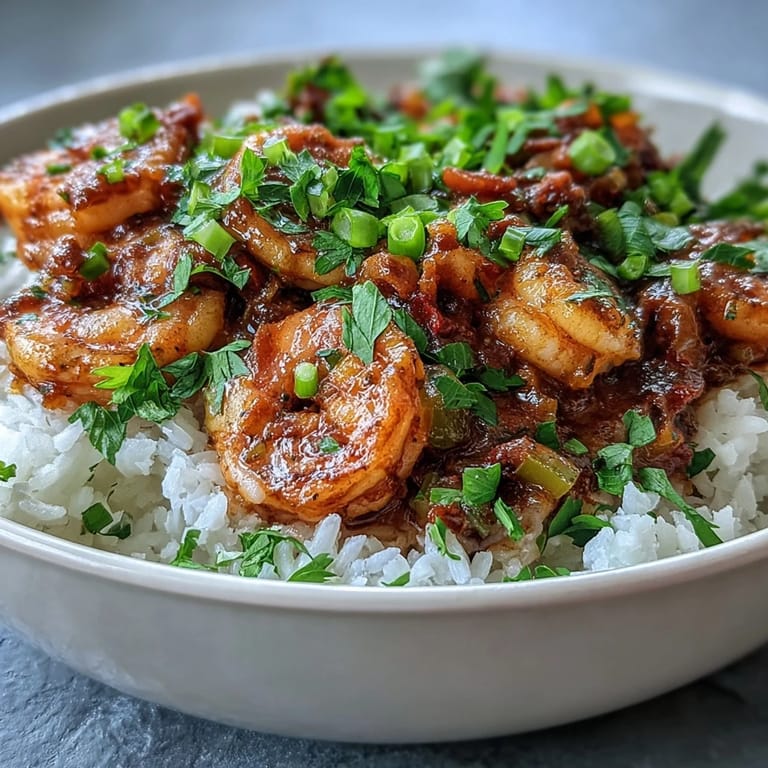
- Add the shrimp, bring everything to a gentle simmer, then lower the heat and let it cook uncovered for 20 to 30 minutes. The sauce will thicken, the shrimp will turn pink and tender, and the flavors will deepen into something truly special.
- Finish and serve:
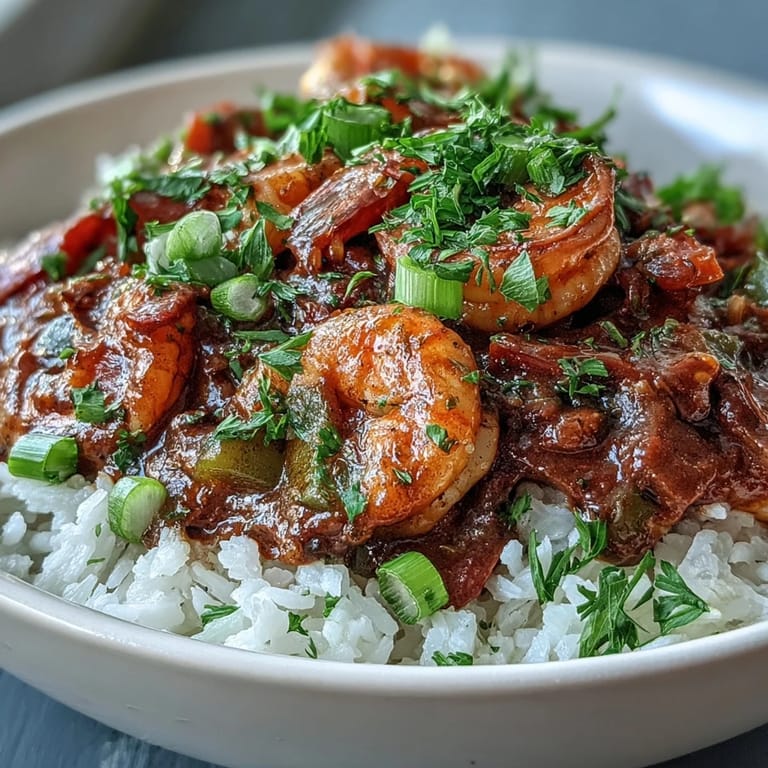
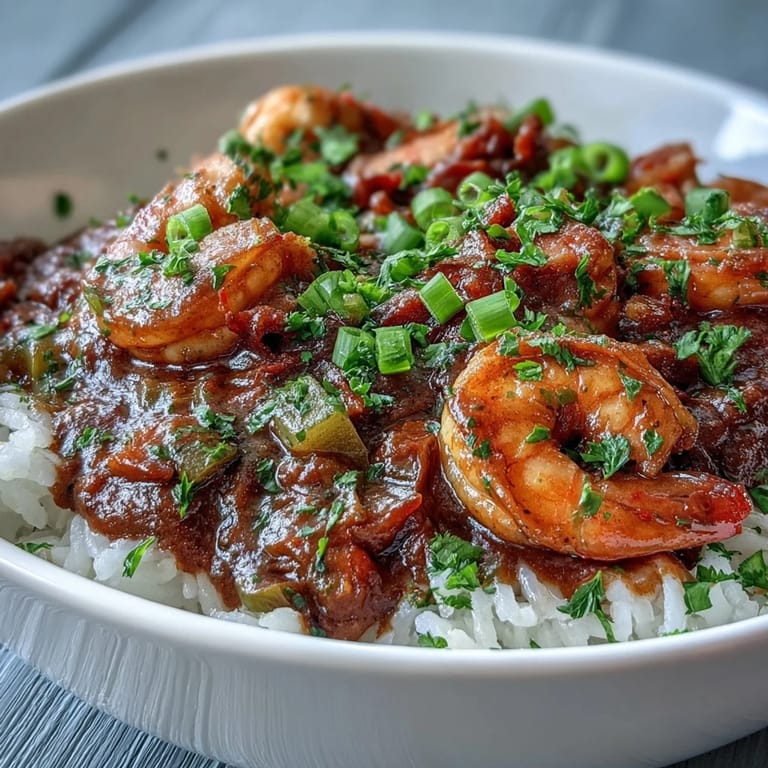
- Taste and tweak the seasoning, fish out the bay leaf, then spoon the étouffée over mounds of fluffy white rice. Scatter green onions and parsley on top for a fresh, vibrant finish.
 Save
Save There was a rainy Saturday afternoon when I had nothing planned and a pound of shrimp in the fridge, so I made this just for myself. I ate it slowly at the kitchen counter, rain drumming on the window, and realized that some dishes don't need an occasion, they create one.
Making It Your Own
This recipe loves adaptation, so if shrimp isn't your thing or you can't find crawfish, try chunks of chicken thighs, sliced andouille sausage, or even thick slabs of mushroom for a vegetarian version. Each swap changes the character slightly but keeps that deep, saucy soul intact. I've made it with leftover rotisserie chicken on a weeknight and it still tasted like I'd put in hours of work.
Storing and Reheating
Étouffée keeps beautifully in the fridge for up to three days, and honestly, the flavors get even more intertwined after a night of rest. Reheat it gently on the stove over low heat, adding a splash of stock or water if it's thickened too much. I've never had leftovers last longer than two days in my house, but if you freeze it in an airtight container, it holds for about two months.
Serving Suggestions
While rice is traditional and soaks up the sauce like a dream, I've also spooned this over creamy grits or even torn pieces of crusty French bread when I wanted something more casual. A cold beer, a simple green salad with a sharp vinaigrette, and maybe some hot sauce on the side for those who want extra kick round out the meal perfectly.
- Serve with an ice cold Abita or your favorite lager to balance the heat.
- Add a side of cornbread or hushpuppies for extra comfort.
- Keep extra green onions and parsley at the table so everyone can adjust their garnish.
 Save
Save This dish taught me that patience in the kitchen isn't about waiting, it's about being present for every stir, every shift in color, every moment the flavors deepen. I hope it brings you as much warmth and satisfaction as it's brought me over the years.
Recipe FAQ
- → What makes an authentic étouffée?
Authentic étouffée starts with a dark roux cooked to the color of chocolate, which provides the rich base and signature flavor. The holy trinity of diced onions, bell peppers, and celery is essential, along with quality seafood stock and fresh shrimp. Traditional Cajun seasoning ties everything together.
- → How dark should the roux be?
The roux needs to be cooked to a deep chocolate brown color, which typically takes 15-20 minutes of constant stirring. This dark color develops a nutty, complex flavor that's essential to authentic étouffée. Be patient and don't rush this step—it's the foundation of the entire dish.
- → Can I use crawfish instead of shrimp?
Absolutely! Crawfish are traditional in many Louisiana étouffée recipes. You can substitute them pound-for-pound for shrimp. You can also use a combination of both seafoods, or try chicken, sausage, or mushrooms for different variations.
- → Is étouffée supposed to be spicy?
Traditional étouffée has a gentle heat from Cajun seasoning and cayenne, but it shouldn't be overwhelmingly spicy. The heat should complement the flavors rather than dominate them. Adjust the cayenne to your preference, and remember that flavors meld overnight if you make it ahead.
- → What's the difference between étouffée and gumbo?
While both use a roux base and the holy trinity of vegetables, étouffée typically has a thicker sauce and focuses on one main protein like shrimp or crawfish. Gumbo usually has a thinner, soupier consistency and often includes multiple proteins, okra, or filé powder as a thickener.
- → Can I make étouffée gluten-free?
Yes! Substitute the all-purpose flour with a gluten-free flour blend for the roux. Many blends work well for roux, though the cooking time may vary slightly. Just ensure your seafood stock and other ingredients are certified gluten-free as well.