 Save
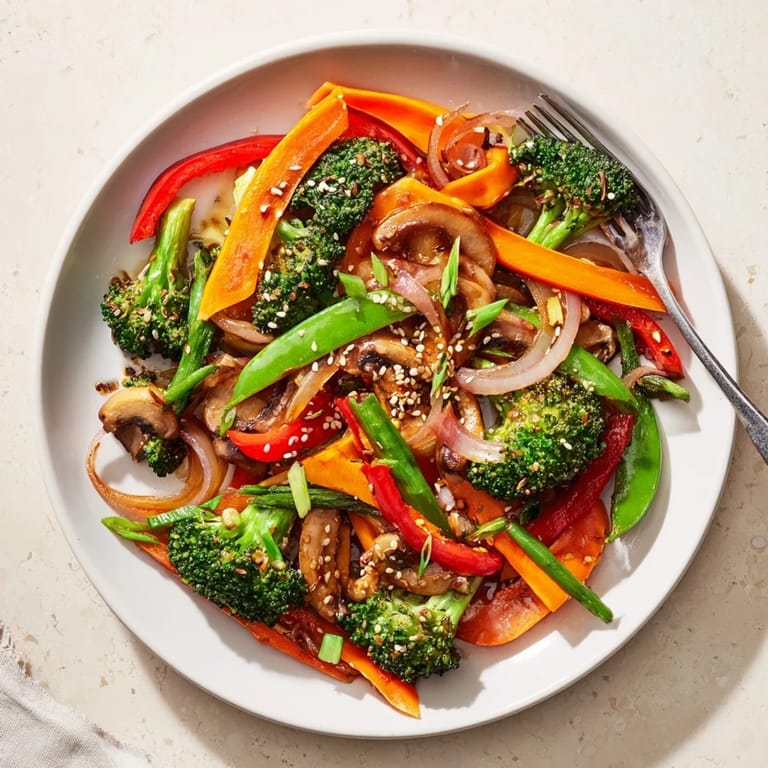
Save This Ginger Stir-Fried Vegetables dish is a vibrant, aromatic stir-fry featuring crisp vegetables tossed with fresh ginger and savory soy sauce—perfect for a quick, healthy meal. Ready in just 25 minutes, this recipe brings together colorful broccoli, carrots, and snap peas for a satisfying Asian-inspired feast.
Save With a savory sauce made from sesame oil, rice vinegar, and a hint of sweetness from maple syrup or honey, every bite of this stir-fry is balanced and flavorful. The aromatic combination of finely grated ginger and minced garlic adds warmth and depth to the crisp-tender vegetables.
Ingredients
Tired of Takeout? 🥡
Get 10 meals you can make faster than delivery arrives. Seriously.
One email. No spam. Unsubscribe anytime.
- Vegetables: 1 cup broccoli florets, 1 cup sliced carrots, 1 red bell pepper (sliced), 1 cup snap peas (trimmed), 1 small yellow onion (thinly sliced), 1 cup sliced mushrooms.
- Aromatics & Sauce: 2 tablespoons fresh ginger (finely grated), 3 cloves garlic (minced), 3 tablespoons soy sauce (use tamari for gluten-free), 1 tablespoon sesame oil, 1 tablespoon vegetable oil, 1 tablespoon rice vinegar, 1 teaspoon maple syrup or honey, 1/4 teaspoon crushed red pepper flakes (optional).
- Finishing: 2 green onions (sliced), 1 tablespoon toasted sesame seeds.
Instructions
- Step 1
- In a small bowl, whisk together soy sauce, rice vinegar, maple syrup (or honey), and red pepper flakes. Set aside.
- Step 2
- Heat vegetable oil and sesame oil in a large skillet or wok over medium-high heat.
- Step 3
- Add ginger and garlic; stir-fry for 30 seconds until fragrant.
- Step 4
- Add onion, carrots, and broccoli. Stir-fry for 2–3 minutes.
- Step 5
- Add bell pepper, snap peas, and mushrooms. Continue stir-frying for another 3–4 minutes until vegetables are crisp-tender.
- Step 6
- Pour in the prepared sauce. Toss well to coat all vegetables. Cook for another 1–2 minutes until heated through.
- Step 7
- Remove from heat. Sprinkle with green onions and toasted sesame seeds before serving.
Zusatztipps für die Zubereitung
To make the process seamless, ensure you have your large skillet or wok, mixing bowl, cutting board, and knife ready before starting. This dish contains soy and sesame; if needed, use gluten-free tamari instead of regular soy sauce and omit sesame oil or seeds if you have an allergy. Always check labels for hidden allergens.
Varianten und Anpassungen
This recipe is highly versatile. You can substitute any of your favorite vegetables as desired or add extra protein like tofu or tempeh for a heartier meal. For those following a gluten-free diet, tamari is a perfect substitute for soy sauce.
Serviervorschläge
Serve this vibrant stir-fry hot over steamed jasmine rice, brown rice, or your favorite noodles. Each serving provides approximately 120 calories, 5g of total fat, 16g of carbohydrates, and 4g of protein.
 Save
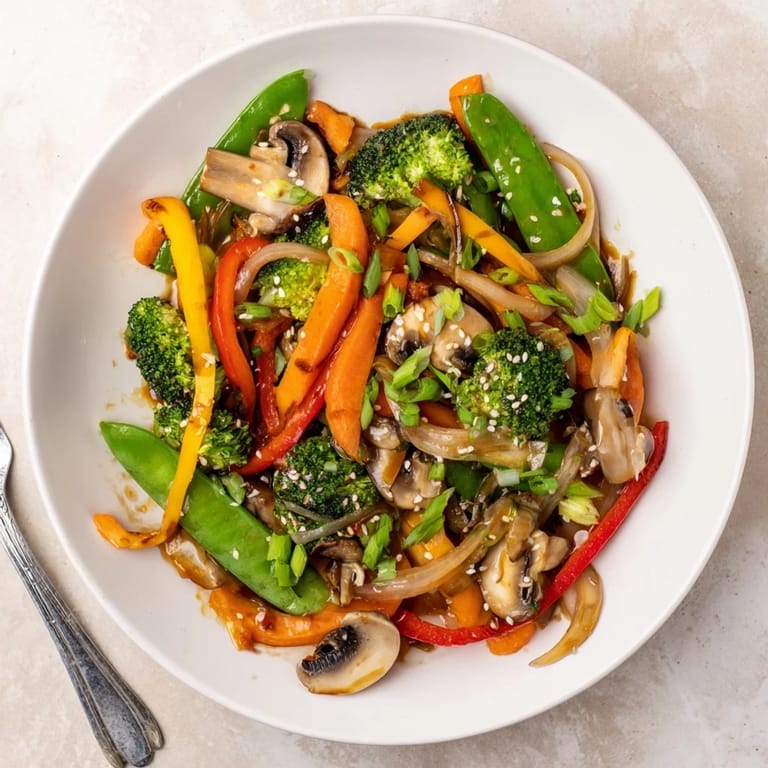
Save Whether enjoyed on its own or as a side dish, these Ginger Stir-Fried Vegetables are a delicious way to incorporate more plant-based variety into your diet with ease and style.
Recipe FAQ
- → What vegetables work best in this stir-fry?
Broccoli, carrots, bell peppers, snap peas, and mushrooms are excellent choices as they maintain their crisp-tender texture during high-heat cooking. You can easily substitute with your favorites like baby corn, water chestnuts, or bok choy.
- → Can I add protein to make it more filling?
Yes, cubed tofu or tempeh work wonderfully. Add them during step 4 after the onions and carrots have started cooking, giving them about 4-5 minutes to brown and absorb the flavors.
- → How do I prevent vegetables from becoming soggy?
Keep the heat at medium-high and avoid overcrowding the pan. Cook in batches if necessary. The vegetables should be crisp-tender, not soft, which usually takes 5-7 minutes total.
- → Is this dish gluten-free?
Simply replace regular soy sauce with tamari to make it completely gluten-free. All other ingredients including fresh ginger, garlic, and vegetables are naturally gluten-free.
- → What should I serve with this stir-fry?
Steamed jasmine rice, brown rice, or rice noodles make perfect accompaniments. The sauce lightly coats the grains, making each bite flavorful. For a low-carb option, serve over cauliflower rice or enjoy on its own.