 Save
Save I discovered the magic of color while setting up for my sister's garden party one June afternoon. Her long wooden table was bare and waiting, and I found myself standing at the kitchen counter surrounded by berries and cheese blocks, suddenly struck by an idea: what if I arranged everything like a mandala? Two hours later, guests arrived to gasps instead of polite nods, and I realized that sometimes the most memorable dishes aren't about complicated techniques, but about making people pause and really look.
My friend Sarah brought her new partner to dinner, and he spent the entire aperitif studying the platter like it was at a gallery. That's when I knew the kaleidoscope was doing its job—it wasn't just food, it was conversation, it was an invitation to slow down and notice the simple beauty of fresh things arranged with intention.
Ingredients
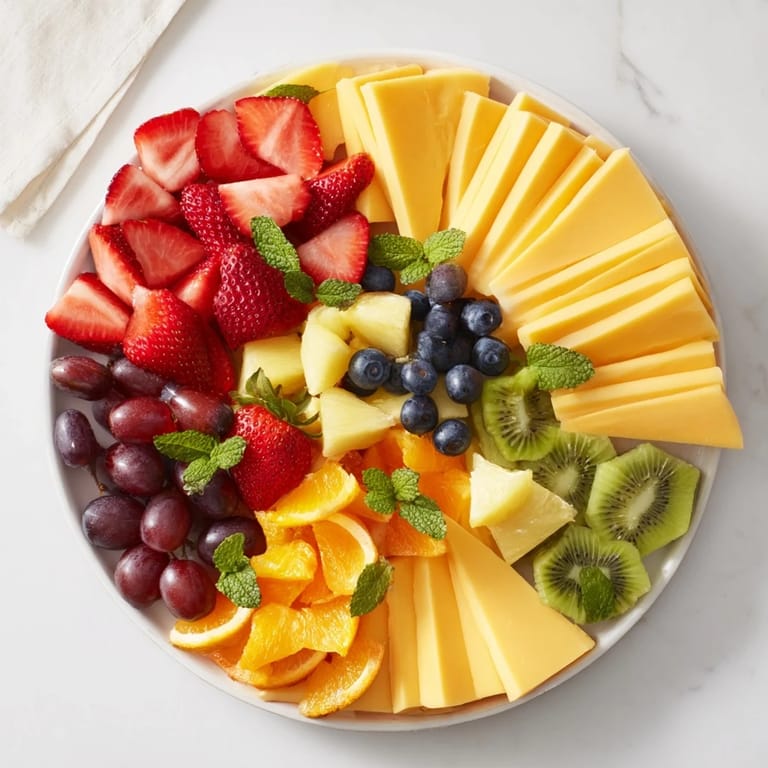
- Seedless red grapes: Their jewel-like appearance and natural sweetness anchor one color family; I always choose ones that are firm, not soft.
- Fresh strawberries: Halved to show their interior, they create that distinctive rosy gradient from edge to center.
- Kiwi: The electric green and tiny seeds add visual texture and a bright, tart note that balances the sweeter fruits.
- Pineapple: Cut into small wedges so they nestle neatly without dominating the pattern; the golden color is essential for warmth.
- Blueberries: These fill gaps and add depth with their deep purple—don't skip them just because they're small.
- Orange: Segmented by hand rather than sliced, the translucent flesh catches light beautifully and adds citrus brightness.
- Aged cheddar: Cut into triangular wedges to echo the fruit shapes; its deep orange-yellow hue provides warmth and richness.
- Manchego: This pale, nutty cheese creates contrast and slices into clean, elegant wedges that hold their shape.
- Brie: The pale, creamy color is a quiet luxury, and cutting it into small portions prevents it from appearing too heavy.
- Goat cheese: Sliced into rounds, this stark white brings visual contrast and a gentle tang that keeps everything from feeling too sweet.
- Fresh mint leaves: A final touch of green that adds aromatic interest and visual completion to the pattern.
Tired of Takeout? 🥡
Get 10 meals you can make faster than delivery arrives. Seriously.
One email. No spam. Unsubscribe anytime.
Instructions
- Prepare your mise en place:
- Wash and dry all fruits thoroughly—any moisture will blur the colors and make them harder to handle. Peel the kiwis and cut everything into uniform wedges roughly the same size, as if you're creating puzzle pieces that will fit together.
- Slice your cheeses:
- Use a sharp, clean knife and cut each cheese into shapes that echo your fruit wedges—triangles speak to triangles, rounds to rounds. This repetition is what creates the kaleidoscope effect.
- Start at the center or edge:
- On your large round platter, decide whether to work from the middle outward or the edge inward. I prefer starting at the edge with a fruit I love, then placing a cheese wedge directly beside it, establishing the rhythm before committing to the full circle.
- Build your pattern:
- Continue placing fruit and cheese in strict alternation, rotating around the platter like the hands of a clock. The repetition is meditative once you find your rhythm—you'll develop a feel for what looks balanced.
- Create concentric circles if space allows:
- Once your first ring is complete, begin a second ring inside it, using the same sequence of colors and shapes. This layering deepens the kaleidoscope illusion.
- Fill the gaps:
- Any small spaces between wedges are perfect spots for blueberries or extra grapes—scatter them to enhance color contrast and prevent the platter from looking sparse. Trust your eye more than any rule.
- Add the final garnish:
- Tuck fresh mint leaves into a few strategic spots around the platter, as if they've naturally settled there. Serve immediately if you can, or cover loosely and refrigerate, knowing the colors will remain vivid for hours.
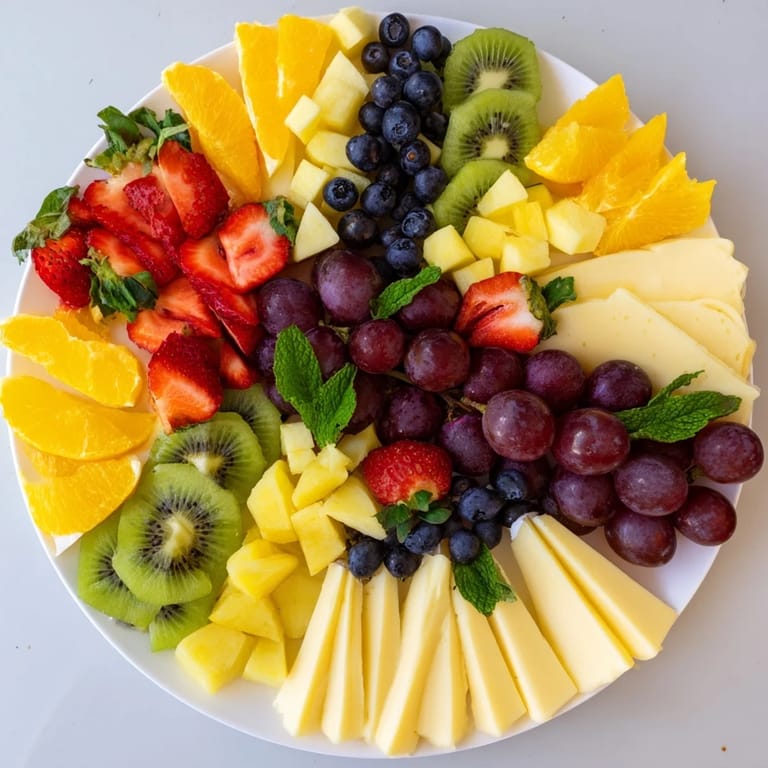 Save
Save What struck me most was realizing that presentation isn't vanity—it's a form of generosity. When you arrange food with care, you're telling people they matter enough to deserve beauty on their plate.
The Geometry of Good Taste
The kaleidoscope works because repetition and symmetry speak to something deep in how we process beauty. Our eyes want to find patterns, and when you give them clear ones, the whole platter becomes restful to look at rather than chaotic. This is why the wedge shapes matter so much—they create visual momentum around the circle, a sense of movement that makes a static platter feel almost alive.
Fruit and Cheese: A Perfect Marriage
The pairing of sweet fruit with salty, rich cheese is ancient wisdom, but on this platter it becomes something you can actually see happening. The pale goat cheese plays against the deep strawberry red, the buttery cheddar warms up the cool kiwi green, and suddenly you understand flavor balance not as an abstract concept but as something that also satisfies the eye. Each choice of cheese matters because it has to look intentional next to its fruit companion.
Seasons and Substitutions
This platter is at its best when you stop thinking of it as a fixed recipe and start seeing it as a template for whatever is peak-season and vivid in your market right now. Summer calls for berries and stone fruits, autumn for apple slices and pomegranate arils, winter for persimmons and citrus. The only rule is this: choose fruits that are truly ripe and cheeses that have enough personality to stand beside them.
- If strawberries look tired, swap them for raspberries or blackberries and adjust your arrangement accordingly.
- Late winter citrus like blood orange or tangerine creates a different color story than regular orange, and that's perfect.
- In a pinch, dried apricots or candied ginger can fill gaps and add unexpected flavor notes without breaking the visual spell.
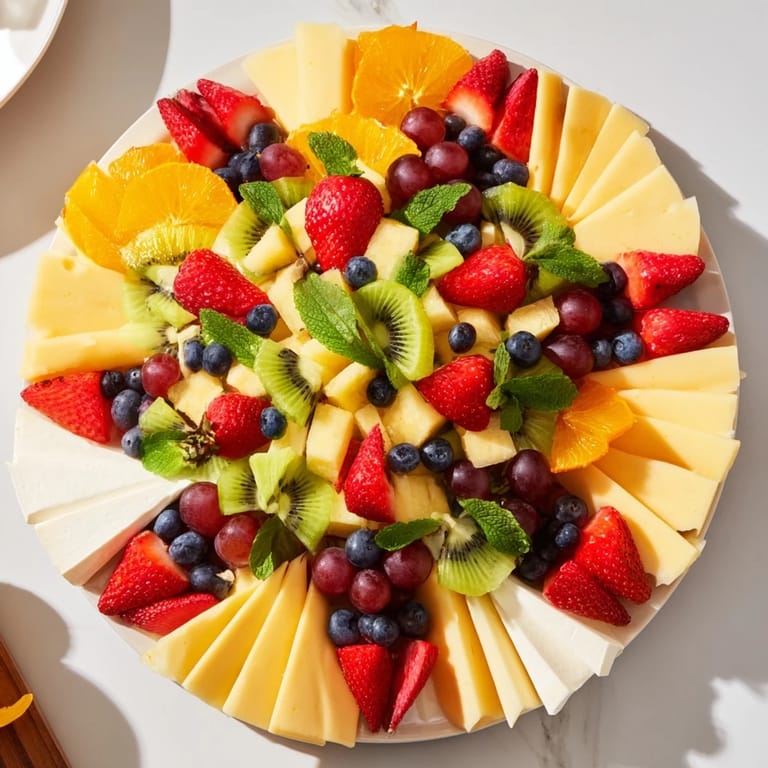 Save
Save The Kaleidoscope Circle taught me that cooking isn't always about heat and technique—sometimes it's about stillness, arrangement, and the confidence to let simple, beautiful things speak for themselves. That's the real gift.
Recipe FAQ
- → How do I create the kaleidoscope effect with fruits and cheeses?
Slice fruits and cheeses into uniform wedges or rounds, then alternate pieces in repeating colorful segments arranged in concentric circles on a round platter.
- → Which fruits work best for this platter?
Use colorful, easy-to-slice fruits like seedless grapes, strawberries, kiwi, pineapple, blueberries, and orange segments to achieve visual vibrancy.
- → Can I substitute the cheeses used in the platter?
Yes, feel free to swap cheeses for others with different textures or flavors, such as gouda or feta, while maintaining a variety of shapes and colors.
- → What garnishes enhance the platter's presentation?
Fresh mint leaves work well to add color and a subtle fresh aroma; you can also add olives or roasted nuts in small gaps for a savory touch.
- → How far in advance can I prepare the platter?
Prepare the fruits and cheeses shortly before serving to maintain freshness and crispness; cover and refrigerate if needed, but avoid long delays.