 Save
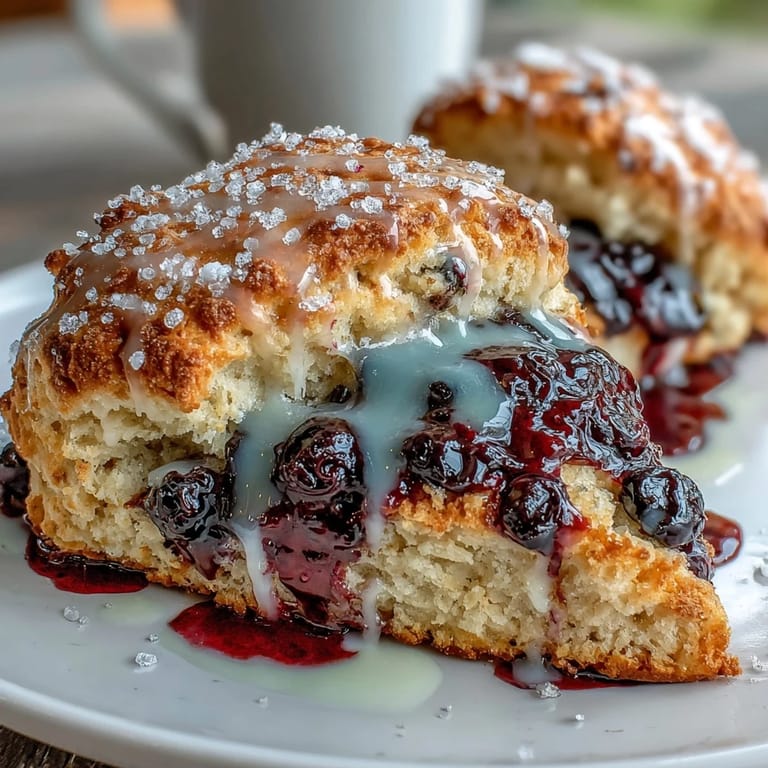
Save The sharp scent of lemon filled my kitchen the first time these blueberry scones tumbled out of the oven. It was one of those quiet Saturday mornings where the only soundtrack was the gentle snap of butter meeting flour and a faint hum from the oven. I wasn't hunting for perfection—just a cozy breakfast treat. Watching the blueberries burst their indigo streaks through the dough, I could already picture a sunny brunch. And when I finally added a drizzle of bright lemon glaze, I swear the whole place felt brighter.
One spring afternoon I whipped up a batch of these scones for a friend who'd dropped by unannounced—she ended up insisting on the recipe before she left, crumbs and all. Sometimes, it’s those spontaneous kitchen moments that stick with you: sticky fingers, laughter over uneven wedges, and the sheer joy of sharing still-warm treats over coffee.
Ingredients
- All-purpose flour: The backbone of tender scones—measure lightly for a fluffier crumb.
- Granulated sugar: Sweetens the dough just enough without overpowering the fruitiness; I always use a level scoop.
- Baking powder & baking soda: These make the dough rise up tall and soft; make sure they’re fresh.
- Salt: Just a pinch wakes up every other flavor in the mix.
- Lemon zest: The key to a zippy, aromatic base—I find grating right over the bowl captures the oils perfectly.
- Cold unsalted butter: Chilled cubes create those irresistible flaky layers; work quickly so the butter stays cold.
- Heavy cream: Keeps the crumb rich and moist; extra for brushing gives the tops a golden sheen.
- Large egg: Binds everything and helps keep the scones soft—bring it to room temp if you think of it, but don’t sweat it if not.
- Pure vanilla extract: Adds a mellow warmth that balances the citrus.
- Fresh blueberries: Their tart juiciness pops in every bite; toss in frozen straight from the freezer if that’s what you have.
- Powdered sugar: For a smooth glaze that sets to a shiny finish.
- Fresh lemon juice: The final bright note—start with less and add more for your ideal tanginess.
Tired of Takeout? 🥡
Get 10 meals you can make faster than delivery arrives. Seriously.
One email. No spam. Unsubscribe anytime.
Instructions
- Get prepped:
- Preheat your oven to 400°F (200°C) and line a baking sheet with parchment paper—this keeps the bottoms from sticking and makes for easy cleanup.
- Mix your dry ingredients:
- Whisk together the flour, sugar, baking powder, baking soda, salt, and lemon zest until the zest is thoroughly dispersed and the mixture smells bright.
- Add the butter:
- Drop the cold butter cubes in and quickly cut them in with a pastry cutter or your fingertips; stop when you have a coarse, pebbly mix with some visible bits of butter.
- Combine the wet ingredients:
- In a separate bowl, whisk the cream, egg, and vanilla together—don’t overbeat, just until it’s one satin-colored mixture.
- Stir to bring together:
- Pour the wet bowl into the dry, then stir gently; the dough might look a little scrappy, which is perfect.
- Fold in blueberries:
- With a light touch, scatter in the blueberries and fold just enough to distribute them—overmixing will crush the fruit.
- Shape the dough:
- Turn out onto a lightly floured surface and pat into a thick 7-inch round—don’t press too hard, just enough to bring it together.
- Slice and arrange:
- Cut into 8 even wedges with a sharp knife and gently pull them apart onto the baking sheet, leaving just a bit of space between each.
- Add the finishing touch:
- Brush the tops lightly with a touch of cream for shine and color.
- Bake:
- Slide into the oven and bake for 16–18 minutes until golden at the edges and the scent is absolutely irresistible. Let cool on a wire rack while you mix the glaze.
- Lemon glaze magic:
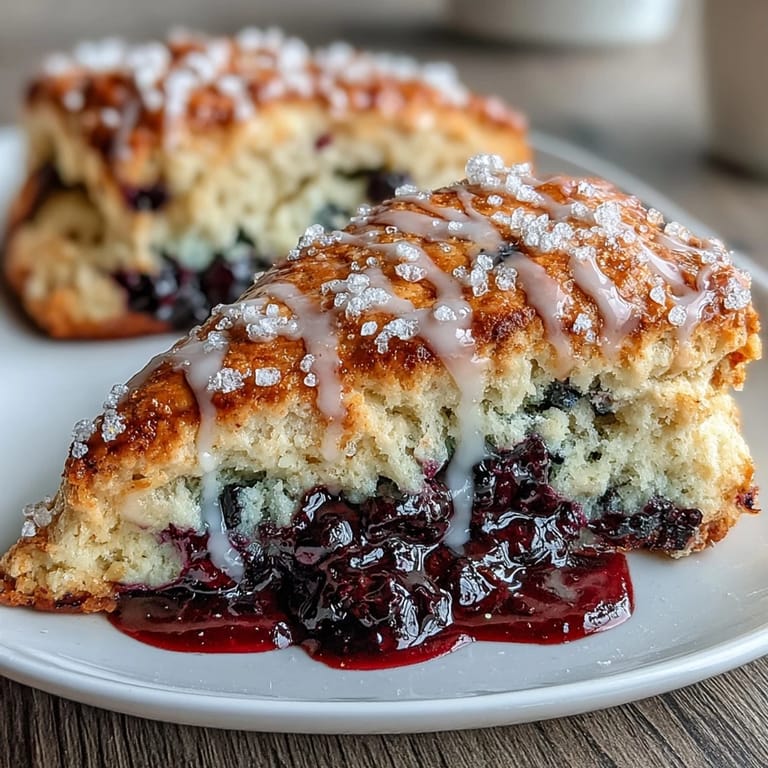
- Quickly whisk together powdered sugar and lemon juice to your desired consistency, then drizzle artfully over cooled (or still slightly warm) scones.
 Save
Save Sharing these scones at the park, sitting on a picnic blanket surrounded by friends, made me realize how pastries can turn a simple moment into a celebration. Somehow, that bit of sunshine in each bite lingered far longer than the crumbs ever could.
Tips for Perfect Scones Every Time
One trick that’s changed my scone game—chill the dough wedges in the freezer for ten minutes before baking. It makes the butter extra stubborn about melting early, which is exactly what you want for height and flakiness.
Mixing and Shaping Hacks
Flour your hands and work the dough quickly if it’s sticky. You don’t need to get every blueberry tucked in perfectly; the rustic look is part of their charm.
Serving and Storage Ideas
Freshly baked, these scones are at their prime, but if you have leftovers, just warm them in the oven for a few minutes to revive their tender crumb. A dusting of powdered sugar or another drizzle of glaze before serving makes every bite feel fresh.
- Store in an airtight container for up to two days.
- Freeze unglazed scones and reheat before glazing for a just-baked finish.
- Don’t skip the zest—the lemon is what makes them sing.
 Save
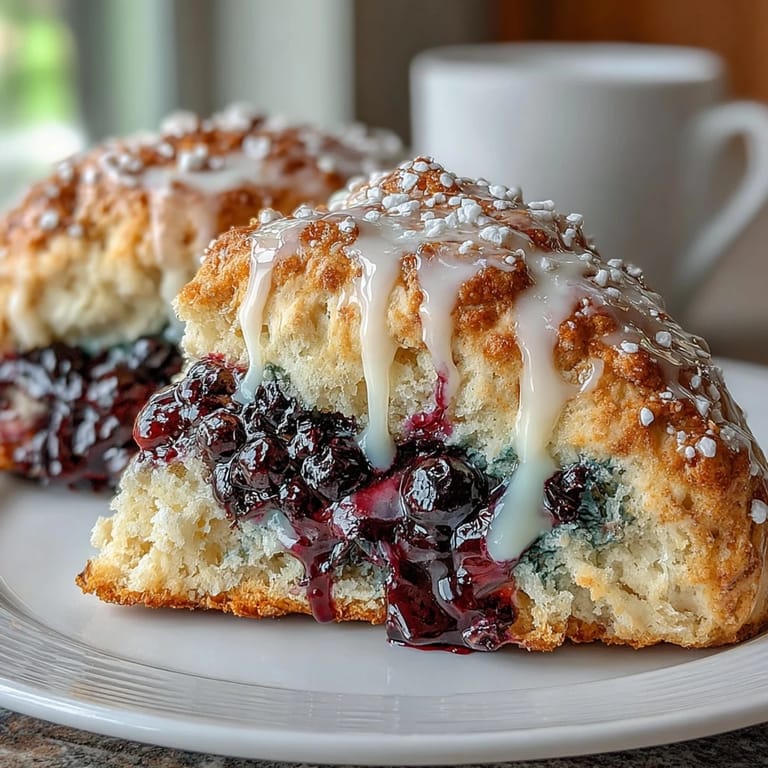
Save When a tray of these comes out of the oven, the morning just feels special—whether shared or savored solo. Here’s hoping they bring a little brightness to your day, too.
Recipe FAQ
- → Can I use frozen blueberries?
Yes. Add them frozen and fold gently to prevent color bleed. Tossing frozen berries in a tablespoon of flour before folding helps keep them from sinking.
- → How do I keep the scones tender and flaky?
Keep the butter cold and cut it into the flour until the mix resembles coarse crumbs. Work quickly, avoid overmixing, and use cold heavy cream to bind for a tender crumb.
- → Can I make them ahead or freeze the dough?
Yes. Shape and cut wedges, freeze on a tray until solid, then bag. Bake from frozen, adding a few extra minutes. Baked scones also freeze well and reheat in a low oven.
- → What oven temperature and bake time work best?
A hot oven (about 400°F/200°C) gives a quick rise and golden exterior. Bake 16–18 minutes until golden and set in the center.
- → How do I get the glaze right?
Whisk powdered sugar with 2–3 tablespoons of fresh lemon juice until smooth. Aim for a pourable but slightly thick consistency and drizzle over cooled scones so it sets.
- → Any good substitutions for dietary needs?
Use plant-based butter and a full-fat non-dairy cream for dairy-free versions; a gluten-free all-purpose blend can work but may alter texture—handle gently and adjust liquids as needed.