 Save
Save I stumbled onto these boxes by accident one Tuesday morning when my fridge was almost empty and I had a packed day ahead. Instead of grabbing another sad desk lunch, I started throwing together whatever proteins and fresh things I could find into a container, and something clicked. The variety, the textures, the fact that everything stayed fresh and separate—it felt less like eating and more like having options. Now they're my go-to when I need to feel intentional about what I'm eating without the fuss.
I made these for a friend who was stressed about starting a new job, and she texted me three days in saying they saved her mornings. She'd open the box at her desk and suddenly had five different things to look forward to instead of one sad sandwich. Watching her actually enjoy her lunch instead of just powering through it reminded me that feeding yourself well is its own kind of self-care.
Ingredients
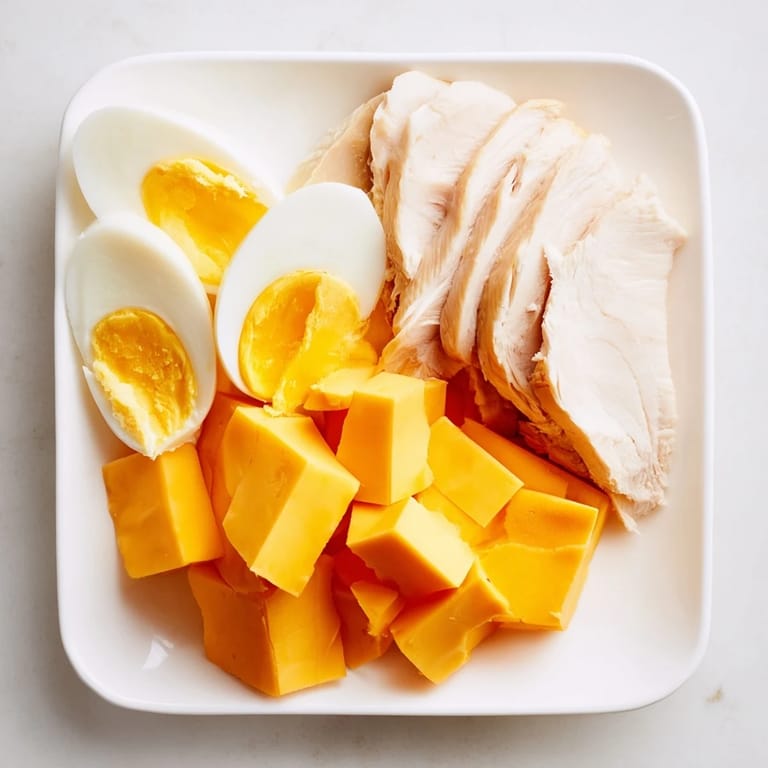
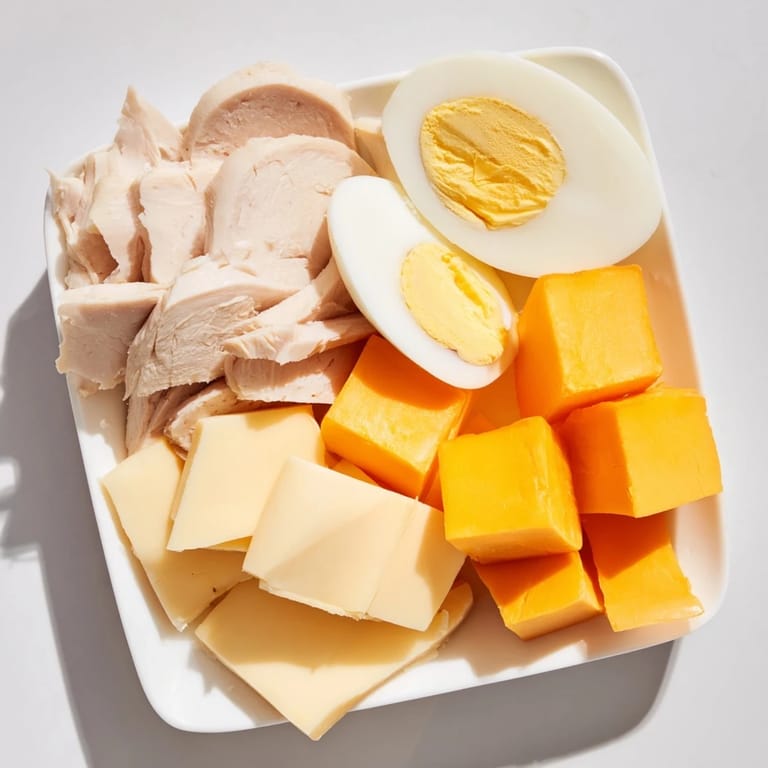
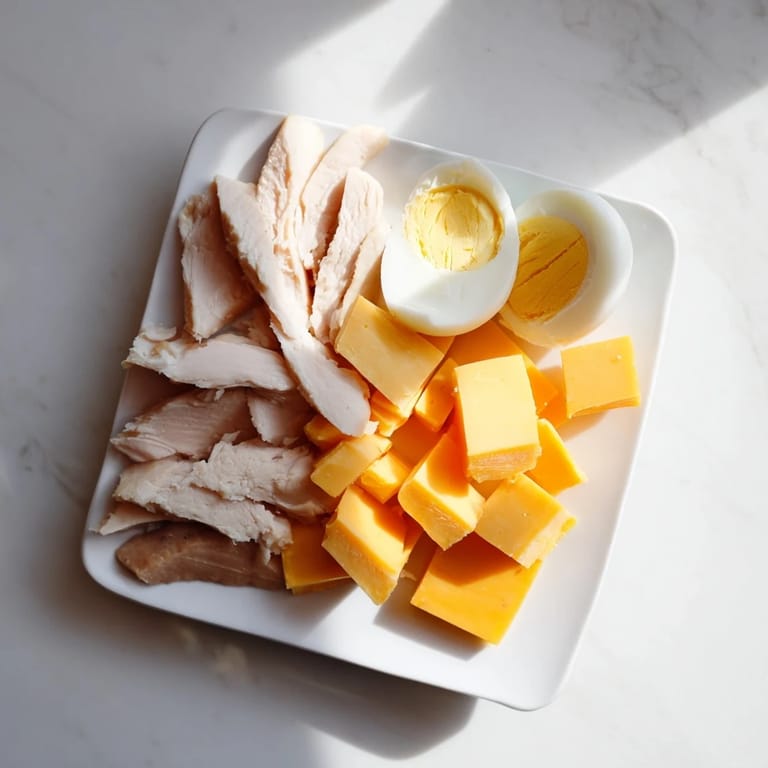
- Cooked chicken breast, sliced: Use rotisserie chicken if you want to skip the cooking step entirely—it's juicier and honestly tastes better than what most of us manage at home.
- Hard-boiled eggs, halved: Boil them the night before so they're ready to go, and that sulfury smell means they're cooked through.
- Sliced turkey or ham: The deli counter stuff works great here, but ask them to slice it thick enough that it doesn't tear when you're dividing it up.
- Cheddar cheese, cubed: Something about cubes instead of slices makes it feel less like a sad office lunch and more intentional.
- Cherry tomatoes: Smaller ones stay fresher longer and won't slide around in the container like those giant beefsteaks would.
- Cucumber slices: Cut them thicker than you think you need to—they soften up by day three, so a little extra crunch is your friend.
- Baby carrots: Raw, crunchy, and they last forever in the fridge, which is why they're a lifesaver for meal prep.
- Apple slices with lemon juice: The acid stops the browning and adds a bright note you didn't know the box needed.
- Hummus: Divided into small containers so each box gets its own dip station instead of everyone double-dipping.
- Whole-grain crackers: Keep them separate or they absorb humidity and turn into cardboard by day two, which is the opposite of what we want.
- Mixed nuts: A small handful adds fat and crunch, which makes your brain register this as a real snack instead of an obligation.
Tired of Takeout? 🥡
Get 10 meals you can make faster than delivery arrives. Seriously.
One email. No spam. Unsubscribe anytime.
Instructions
- Set up your station:
- Line up your four containers on the counter like you're running a little assembly line. This is going to be faster and more organized than jumping around, and honestly it makes you feel a tiny bit like a professional.
- Divide the proteins:
- Split the chicken, turkey, eggs, and cheese evenly among the boxes so everyone gets the same bounty. I like to eyeball it rather than get precious with measurements—this isn't surgery.
- Add the vegetables and fruit:
- Scatter the tomatoes, cucumber, carrots, and apple slices around the proteins, filling in the gaps like you're building a little landscape. The variety of colors is half the appeal.
- Portion the hummus:
- Spoon hummus into small containers and nestle them into each box so they don't get crushed under the weight of everything else. This is the dip that ties everything together.
- Top with crackers and nuts:
- Add four crackers and about a tablespoon of nuts to each box, and keep them in a separate little section if your container allows it. Wet crackers are sad crackers.
- Seal and store:
- Close everything up tight and slide the boxes into the fridge where they'll stay fresh and ready to grab for the next three or four days.
 Save
Save My roommate walked in one afternoon and saw me boxing these up while humming along to something, and she said, 'You actually like making these, don't you?' I realized I did—there's something almost meditative about it, turning simple ingredients into four perfect little boxes of possibility. It's meal prep, but it doesn't feel like punishment.
Make It Your Own
The beauty of these boxes is that they're endlessly flexible. Swap the chicken for grilled shrimp if you're feeling fancy, or use tofu and some marinated vegetables if you're going vegetarian. Add snap peas for extra crunch, throw in some olives or marinated artichoke hearts if you want a Mediterranean vibe, or swap the hummus for ranch or a spicy mayo. Once you understand the framework—protein, vegetables, fruit, a dip, a crunch element—you can fill it with whatever your kitchen and your mood are telling you to use.
Storage and Portability
These boxes live happily in the fridge for three or four days, which is the goldilocks zone where everything stays fresh without getting weird. If you're taking them on the go, toss in a small ice pack to keep everything cool, especially the proteins and eggs. The compartments are the MVP here—they keep flavors from mixing and give you the illusion of variety even though you made the same box four times.
Why These Always Disappear
There's something about opening a box and finding exactly what you want to eat instead of forcing yourself through whatever you packed that turns snack time into an actual moment of joy. Your body gets what it needs, your taste buds don't feel neglected, and you don't spend twenty minutes standing in front of the fridge trying to decide what to eat. These boxes work because they feel like a choice every single time.
- Prep on Sunday and thank yourself every weekday when you just grab and go.
- Double-check all packaged items like crackers and nuts for allergens if you're making these for someone else.
- The numbers work out to about 340 calories per box, which means you're looking at a real snack or light lunch, not a side dish.
 Save
Save These boxes live in that sweet spot where meal prep feels effortless instead of like an obligation, and the food actually tastes good enough to look forward to. Make a batch and watch how they disappear.
Recipe FAQ
- → What proteins are included in these snack boxes?
They feature cooked chicken breast, sliced turkey or ham, hard-boiled eggs, and cheddar cheese for a rich protein variety.
- → Can these snack boxes be customized?
Yes, you can swap proteins like grilled shrimp, tofu, or plant-based deli slices, and add extra vegetables or Mediterranean ingredients.
- → How should the snack boxes be stored?
Keep the boxes sealed and refrigerated, ideally consuming them within 3-4 days for optimal freshness.
- → What snacks and dips accompany the proteins and veggies?
Hummus is divided into small containers for dipping, paired with whole-grain crackers and mixed nuts to add crunch and variety.
- → Are these snack boxes suitable for gluten-free diets?
They can be gluten-free if you use gluten-free crackers instead of regular whole-grain ones.
- → What tools are recommended for preparing these snack boxes?
Using meal prep containers with compartments, small lidded containers for hummus, a sharp knife, and a cutting board makes assembly easy.