 Save
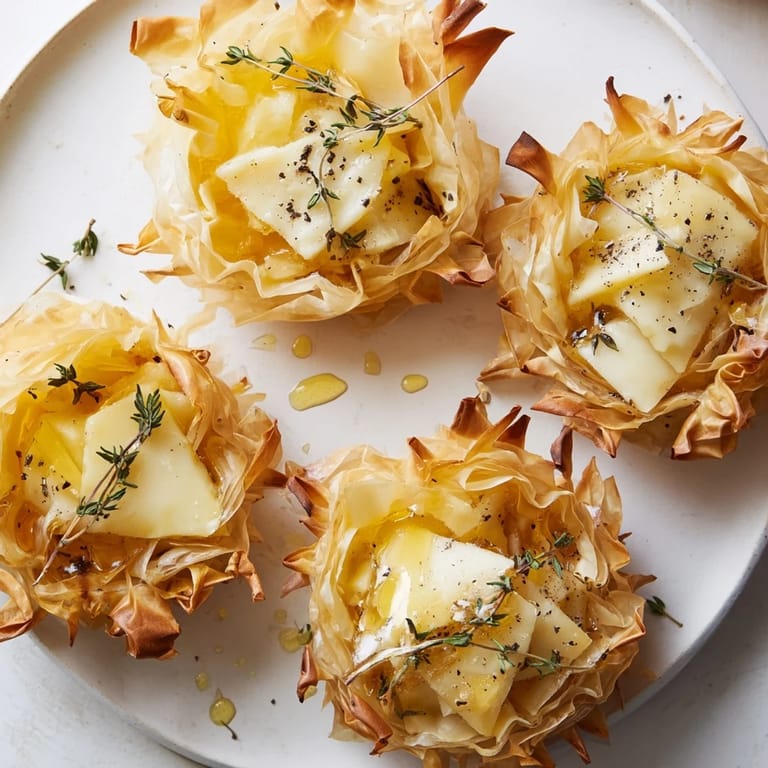
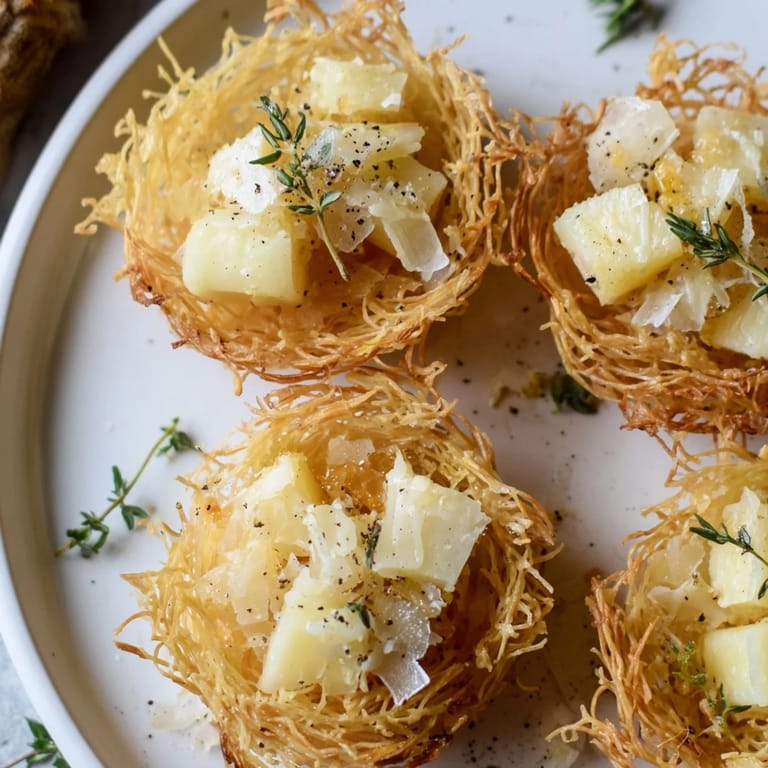
Save There's something magical about serving food that looks like you've spent hours in the kitchen when really, you've barely broken a sweat. I discovered these phyllo nests completely by accident one autumn evening, hunting through my pantry for something quick to impress some unexpected guests. The shredded phyllo caught my eye—I'd bought it months earlier with vague intentions—and suddenly I envisioned these delicate, golden haystacks crowned with proper farmhouse cheese. Twenty minutes later, they were golden and crackling, and my guests couldn't believe how simple they were.
I remember plating these for a small gathering in late October when the air had that particular chill that makes you crave something warm and substantial. A friend who normally passes on appetizers came back for seconds, then thirds, asking how I'd managed to make something so elegant. I loved watching people discover that the crackling nest was actually edible—not just decoration—and that moment when they understood the genius of pairing crispy with creamy.
Ingredients
- Shredded phyllo dough (kataifi), 200 g: This is the secret weapon—it creates those delicate, hay-like strands that crisp up beautifully in the oven. Don't defrost it longer than necessary or it becomes sticky and difficult to work with.
- Unsalted butter, 50 g melted: The butter is what turns pale phyllo into golden, shatteringly crisp nests. Use real butter; it makes an actual difference in flavor and texture.
- Olive oil, 1 tsp: This adds a subtle richness and helps the phyllo brown evenly without burning.
- Sea salt, pinch: Just enough to wake up the phyllo before it hits the oven.
- Farmhouse cheddar, 200 g in rustic hunks: The sharp, slightly crumbly texture of a proper aged cheddar pairs beautifully with the delicate phyllo. Avoid pre-sliced cheese.
- Aged gouda, 150 g in rustic hunks: The nutty sweetness of gouda bridges the gap between the crispy and the creamy. Look for wheels aged at least 12 months.
- Tomme de Savoie or semi-soft farmhouse cheese, 150 g in rustic hunks: This cheese adds a slightly earthy, creamy element that rounds out the board. If you can't find tomme, a good alpine cheese works beautifully.
- Fresh thyme sprigs (optional): A few sprigs scattered on top add a gentle herbal note and visual charm.
- Honey for drizzling (optional): Just a whisper of honey creates an unexpected sweet-savory moment.
- Cracked black pepper: Finish generously—it adds a peppery bite that cuts through the richness of the cheese.
Tired of Takeout? 🥡
Get 10 meals you can make faster than delivery arrives. Seriously.
One email. No spam. Unsubscribe anytime.
Instructions
- Warm your oven:
- Preheat to 180°C (350°F). This gentle heat is key to getting the phyllo crispy without browning too fast.
- Prepare the phyllo:
- Gently loosen and separate the shredded phyllo dough in a bowl—it tends to clump, so be patient and let your fingers do the work. Drizzle with melted butter, olive oil, and a tiny pinch of sea salt, then toss gently until every strand is lightly coated and glistening.
- Form the nests:
- Take a small handful of the buttered phyllo (about 5–6 cm wide) and press it into a loose nest shape on a parchment-lined baking sheet. Think of them as haystacks—rustic and imperfect is the goal. You should get about 6 nests from this amount.
- Bake until golden:
- Pop them into the oven for 10–12 minutes, watching for that moment when they shift from pale to deep golden. The edges will crisp up fastest, so if they're browning unevenly, rotate the sheet halfway through. Remove and let them cool to room temperature—they'll crisp up even more as they cool.
- Build your board:
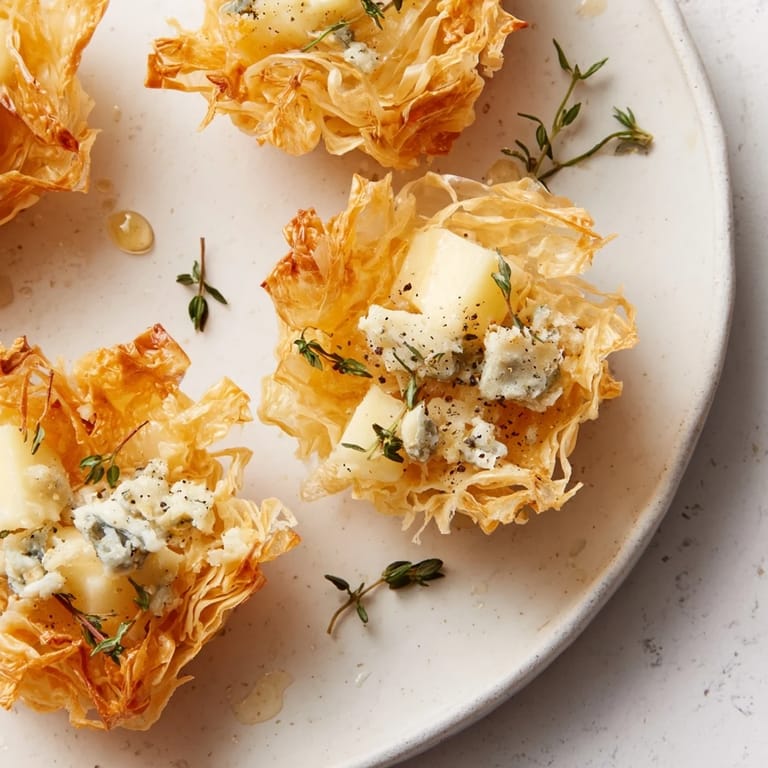
- Arrange the cooled phyllo nests on a serving board or platter. Top each nest with a rustic hunk of cheese—mix and match the varieties so each nest gets a little surprise.
- Finish with care:
- Scatter a few fresh thyme sprigs across the board, drizzle a whisper of honey if you'd like that sweet note, and finish everything with a generous crack of black pepper. The pepper is your friend here—don't be shy.
 Save
Save The first time someone told me these tasted like something from a proper cheese board at a vineyard in Provence, I realized I'd accidentally stumbled onto something special. It's one of those dishes that reminds you that hospitality doesn't require complexity—just good ingredients treated with a little care and attention.
Why Phyllo Works Here
Phyllo is one of those ingredients that seems intimidating until you realize it's just thin sheets of dough waiting to be transformed. When you shred it and toss it with butter, it becomes something magical in the oven—each strand crisps independently, creating these delicate, almost lacy structures that shatter when you bite into them. The contrast between that shattering texture and the dense creaminess of good cheese is exactly why this appetizer works so well. It's simple food elevated by technique, not ingredients.
Building Your Cheese Board
The beauty of this dish is that you're not locked into these specific cheeses. The principle is what matters: choose cheeses that represent different textures and flavor profiles, and cut them into generous, rustic hunks that feel substantial in your hand. A sharp aged cheddar, a nutty aged gouda, and something creamy and earthy creates a nice arc of flavors, but you could just as easily reach for Manchego, Comté, or a smoked farmhouse cheese. I've learned that the most interesting cheese boards are the ones where you've chosen cheeses you'd actually eat and enjoy on their own, not the ones that sound impressive. The phyllo nests are just the vehicle—the cheese is the story.
- Visit a proper cheese counter and ask the person behind it what's good right now; they'll steer you toward something seasonal and interesting.
- Buy your cheese the day you plan to serve it if possible, or at least within a day or two.
- Let the cheeses sit at room temperature for 10-15 minutes before serving so their flavors wake up.
Serving Suggestions
These nests shine on their own, but a few thoughtful additions make them sing. Sliced apples or grapes add a crisp sweetness that plays beautifully against the salty cheese and buttery phyllo. A drizzle of good honey (just a whisper, not a deluge) creates an unexpected sweet-savory moment that people never forget. I've also served these with a small bowl of fig jam or quince paste on the side, and watching people discover that combination is pure joy. The point is: don't overthink it, but do think about balance—something fresh and bright to cut through the richness.
 Save
Save These phyllo nests have become my go-to when I want to cook something that feels generous and thoughtful without stealing all my time. They're a quiet reminder that the best entertaining doesn't require drama, just good ingredients and a little care.
Recipe FAQ
- → What type of phyllo dough is used for the nests?
Shredded kataifi phyllo dough is used to create delicate, crisp nests that hold their shape well when baked.
- → Can I use different cheeses for this dish?
Yes, alternatives like Manchego, Comté, or smoked farmhouse cheeses work wonderfully and add unique flavors.
- → How can I add extra flavor to the phyllo nests?
Sprinkle herbes de Provence on the phyllo before baking for a fragrant, savory touch.
- → What garnishes enhance this dish?
Fresh thyme, a drizzle of honey, and cracked black pepper balance the richness and add aromatic notes.
- → Is this dish suitable for vegetarians?
Yes, it contains no meat ingredients and suits vegetarian diets that include dairy.