 Save
Save Years ago, I stood in a cramped London chippy on a rainy Tuesday evening, watching through the steamy window as a man in a grease-stained apron lowered basket after basket of fish into bubbling oil. The smell hit me before I even opened the door—salt, vinegar, something impossibly golden. That moment stuck with me, and now whenever I make fish and chips at home, I chase that exact memory: the crispy snap of the batter, the soft flake of perfectly cooked fish, the way everything tastes better wrapped in newspaper and eaten with your fingers.
I taught my dad to make this at home during a weekend when his favorite pub went into lockdown. He was skeptical—thought it couldn't possibly taste the same from our kitchen. But when that first batch came out of the oil, golden and steaming, he got quiet in that way he does when food surprises him. We ate them straight off the paper towels with malt vinegar, standing at the counter like we were back at that chippy, and he's been making them ever since.
Ingredients
- White fish fillets (cod or haddock): These mild, flaky fish are the traditional choice because they stay tender inside while the batter crisps up perfectly around them.
- All-purpose flour and cornstarch: The cornstarch is the secret—it replaces some flour and gives the batter its signature crunch and lightness.
- Baking powder: This creates tiny air pockets in the batter so it puffs up and becomes impossibly crispy rather than dense and heavy.
- Cold sparkling water or beer: Keep it cold and use it just before frying; the temperature and carbonation make the batter light and airy.
- Russet or Maris Piper potatoes: Maris Piper are the British standard because they have the right starch-to-moisture ratio, but russets work beautifully too.
- Sea salt and malt vinegar: These aren't optional extras—they're the finishing touches that make everything taste authentically proper.
Tired of Takeout? 🥡
Get 10 meals you can make faster than delivery arrives. Seriously.
One email. No spam. Unsubscribe anytime.
Instructions
- Soak your potatoes:
- Cut your potatoes into thick, chunky fries—these should feel sturdy in your hand, not thin and delicate. Soak them in cold water for at least 15 minutes to release some starch, which helps them get crispy later.
- First fry at lower temperature:
- Heat your oil to 150°C (300°F) and fry the potatoes in batches for about 4–5 minutes until they're tender but still pale. This first fry cooks them through without browning them; you're building layers of texture here.
- Make a smooth batter:
- Whisk your dry ingredients together, then slowly add your cold sparkling water while whisking constantly. The batter should be thick and silky, like single cream—smooth enough to coat the fish but thick enough to cling properly.
- Crank up the heat for the second fry:
- Turn the oil up to 190°C (375°F) and fry those parcooked potatoes again for 2–3 minutes until they turn deep golden and crispy. This is where the magic happens—the outside shatters while the inside stays fluffy.
- Prepare and coat your fish:
- Pat each fillet absolutely dry—moisture is the enemy of crispy batter. Dust it lightly with flour, then dip it quickly into your cold batter, letting the excess drip off for a few seconds before carefully lowering it into the hot oil.
- Fry until golden all over:
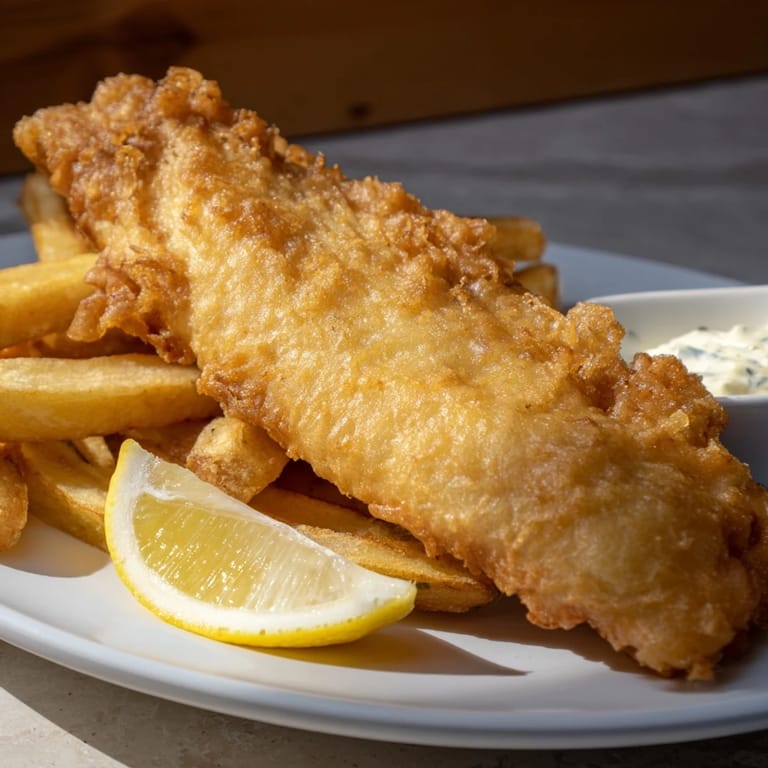
- You'll hear the sizzle immediately, which is a good sign. Fry for about 5–7 minutes, turning once, until the batter is golden brown and crispy all over and the fish inside is cooked through and just barely flaking.
- Drain and serve immediately:
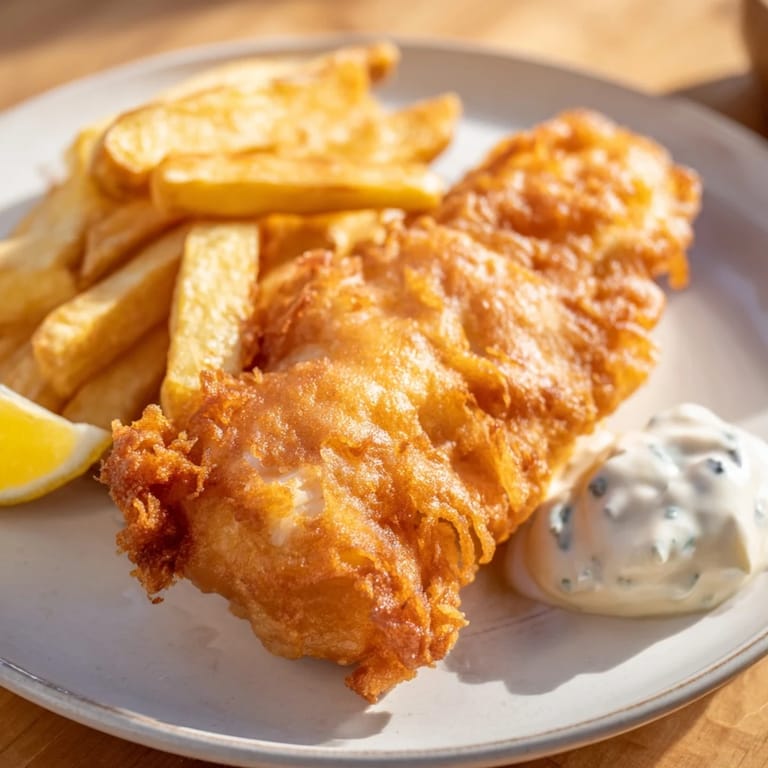
- Place everything on paper towels or a wire rack (not a closed plate, which steams them and ruins the crispiness). Sprinkle the chips with sea salt right away while they're still hot, and serve with malt vinegar and lemon wedges.
 Save
Save There's something about standing in a kitchen with oil crackling and popping, watching the batter bubble and brown, that connects you to every chippy worker and home cook who's ever made this dish. It stops being just dinner and becomes a little tradition, something you pass on almost without meaning to.
Why the Double-Fry Method Works
The double fry isn't fussy—it's actually the most efficient way to get two different textures in the same potato. The first fry cooks the potato through and sets its structure, so when you hit it with hot oil the second time, the outside crisps up fast while the inside stays soft and fluffy. Skip the first fry and you'll either end up with raw centers or burnt outsides. It's the kind of technique that sounds complicated but makes perfect sense once you see why it works.
The Art of the Batter
The cornstarch is often overlooked, but it's genuinely what separates a good batter from one that's just flour suspended in water. It fries up lighter and crispier because it doesn't develop as much gluten, which means you get those delicate, shatteringly crispy layers instead of a tough, dense coating. When you whisk in your cold sparkling water or beer, you're looking for something that coats the back of a spoon smoothly—too thin and it won't stick, too thick and it'll be heavy and doughy.
Serving and Storage
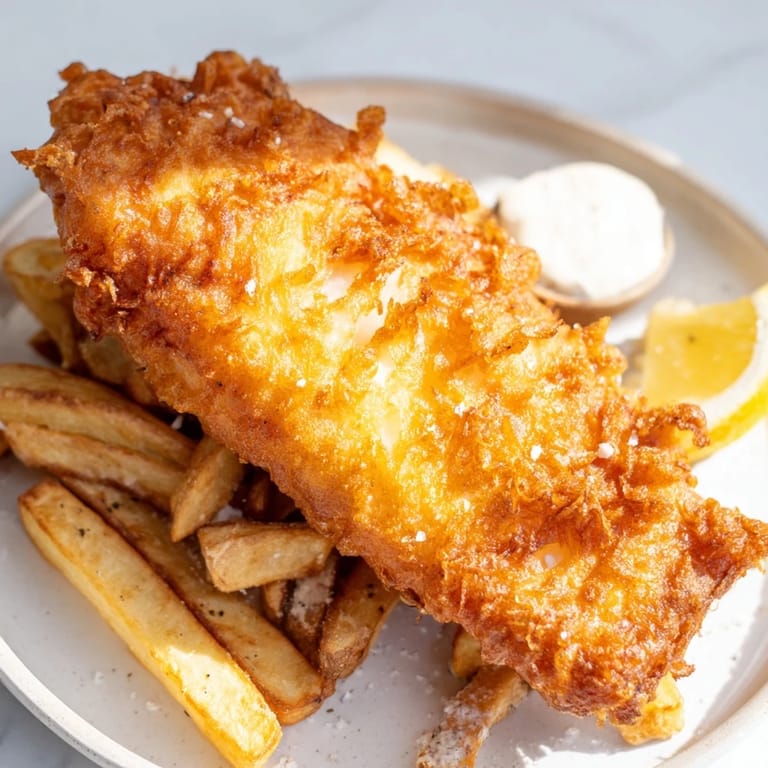
Fish and chips is genuinely best served within minutes of frying—the whole point is that contrast between crispy outside and tender inside. If you're making this for a crowd, you can fry everything in stages and keep finished pieces warm on a low oven while you finish the rest, but don't stack them or cover them tightly.
- Malt vinegar and sea salt are the traditional finish and they genuinely belong here—they cut through the richness and make everything taste brighter.
- Tartar sauce is optional but absolutely worth making or buying; it adds a cool, creamy contrast that balances the heat and saltiness.
- Leftovers can be refrigerated but won't taste nearly as good reheated; this is one of those dishes meant to be eaten immediately and enjoyed in the moment.
 Save
Save Make this once and you'll understand why it's been a Friday night staple in Britain for over a century. It's not about being fancy—it's about getting the basics absolutely right and letting the ingredient quality speak for itself.
Recipe FAQ
- → What type of fish is best for this dish?
Cod or haddock fillets, skinless and boneless, are preferred for their mild flavor and flaky texture.
- → Why is the chip double-fried?
Double frying ensures the chips have a soft fluffy interior and a crispy, golden exterior.
- → Can the batter be made without beer?
Yes, sparkling cold water creates a light and crispy batter as an alternative to beer.
- → What is the ideal oil temperature for frying?
Fry the chips first at 150°C to cook through, then at 190°C for crispiness; fish is fried at about 190°C for a golden finish.
- → What accompaniments enhance the dish?
Malt vinegar, lemon wedges, tartar sauce, or peas add classic flavors and complementary textures.
- → How should the potatoes be prepared before frying?
Soak cut potatoes in cold water to remove excess starch, then dry thoroughly before frying to ensure crispiness.