 Save
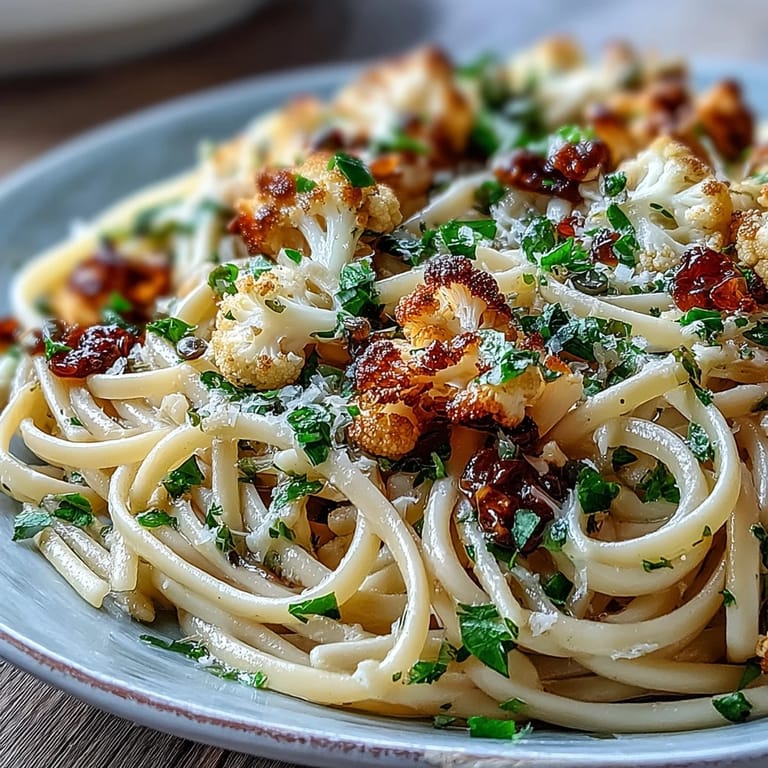
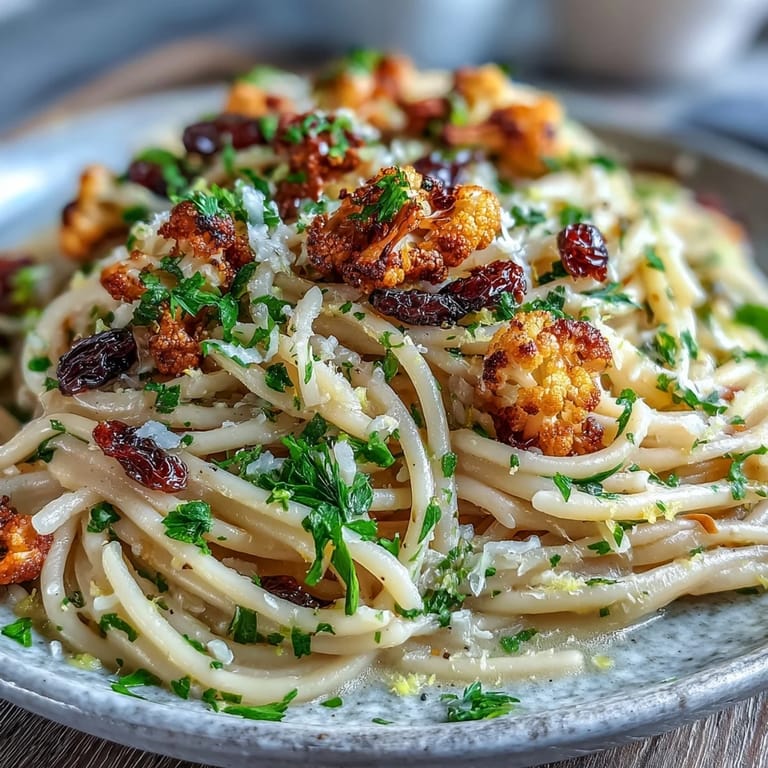
Save My kitchen window was open the night I threw this together from pantry odds and ends, and the scent of roasting cauliflower drifted into the courtyard below. A neighbor called up asking what I was making. I had no name for it then, just hunger and a hunch that anchovies and raisins might work the way they do in Sicilian cooking. That hunch turned into this dish, and now it's what I make when I want something that tastes complex but comes together easily.
I made this for a friend who swore she hated anchovies, and I didn't tell her they were in there until she'd finished her plate. She paused, fork in the air, and said it tasted like the sea without tasting fishy. That's when I realized this dish has a kind of magic to it—the anchovies dissolve into the oil and become this invisible backbone that holds everything together. Now I serve it to skeptics on purpose.
Ingredients
- 320 g whole wheat spaghetti: The nuttiness of whole wheat stands up to bold flavors better than regular pasta, and it doesn't turn mushy if you toss it a few extra times in the pan.
- 1 medium cauliflower (about 600 g), cut into small florets: Small florets roast faster and give you more crispy edges, which is where all the flavor hides.
- 2 cloves garlic, thinly sliced: Thin slices turn golden and sweet instead of burning, and they scatter throughout the dish like little flavor surprises.
- 1 small red chili, finely chopped (optional): Just enough heat to wake up your palate without overwhelming the sweetness of the raisins.
- 2 tbsp flat-leaf parsley, chopped: Adds a fresh, grassy note at the end that cuts through the richness.
- 6 anchovy fillets, drained and chopped: They melt into the oil and create a savory base that tastes nothing like fish but everything like depth.
- 40 g raisins: I use regular dark raisins because they plump up and add little bursts of sweetness that contrast beautifully with the anchovies.
- 1 tbsp capers, rinsed and chopped: Rinsing them tames the brine so they add brightness without making the dish too salty.
- Zest of 1 lemon: The zest goes in at the very end so it stays vibrant and citrusy, not cooked out.
- 2 tbsp extra virgin olive oil: Use the good stuff here, it becomes part of the sauce.
- Salt and freshly ground black pepper, to taste: Go easy on the salt until the end, the anchovies and capers bring plenty.
Tired of Takeout? 🥡
Get 10 meals you can make faster than delivery arrives. Seriously.
One email. No spam. Unsubscribe anytime.
Instructions
- Roast the cauliflower:
- Preheat your oven to 220°C (425°F) and toss the florets with 1 tablespoon of olive oil, a pinch of salt, and a few grinds of pepper. Spread them out on a baking sheet without crowding—this is how you get those caramelized edges that make the dish sing.
- Boil the pasta:
- Bring a large pot of salted water to a rolling boil and cook the spaghetti until it still has a bit of bite, usually a minute less than the package says. Scoop out half a cup of the starchy pasta water before you drain—it's your secret weapon for making the sauce cling.
- Build the base:
- In a large skillet over medium heat, warm the remaining tablespoon of olive oil and add the garlic and chili, stirring until the garlic just starts to turn golden and the kitchen smells amazing, about a minute. Toss in the anchovies and capers, breaking up the anchovies with your spoon until they melt into the oil and disappear.
- Bring it together:
- Stir in the raisins and roasted cauliflower, letting everything get acquainted for a moment, then add the drained spaghetti and a good splash of that reserved pasta water. Toss it all together until the pasta is glossy and coated, adding more water if it looks dry.
- Finish and serve:
- Pull the skillet off the heat and stir in the lemon zest and chopped parsley, then taste and adjust the seasoning. Serve it right away while it's hot, with an extra drizzle of olive oil and more parsley if you're feeling fancy.
 Save
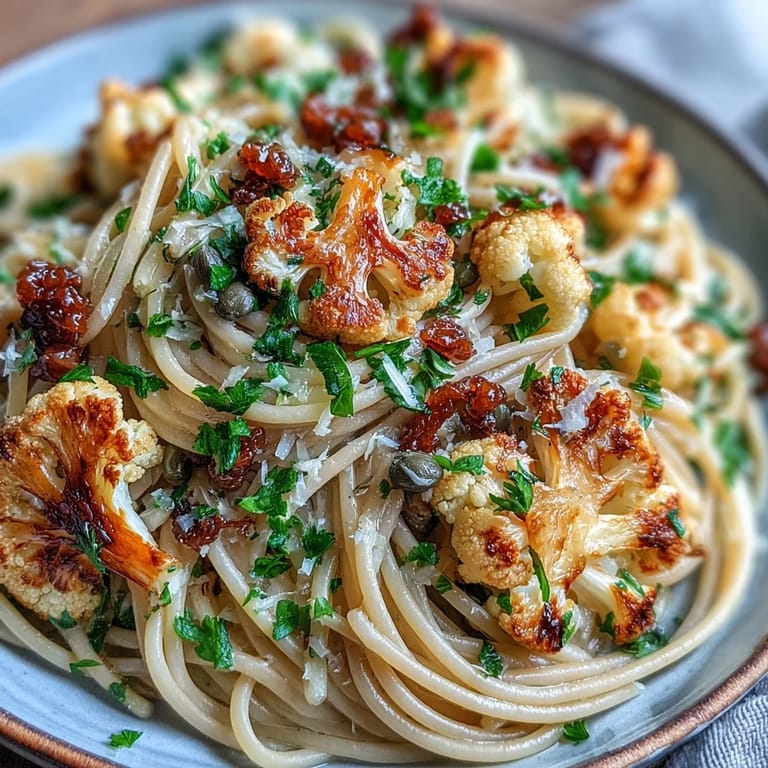
Save One evening I served this to my brother, who usually drowns everything in hot sauce, and he ate it without reaching for the bottle once. He looked up halfway through and said it didn't need anything. That's when I knew this dish had balance, the kind where every bite has a little bit of everything and nothing fights for attention.
What to Do with Leftovers
This reheats surprisingly well if you add a splash of water or broth to the pan and warm it gently over low heat. The flavors actually deepen overnight as the raisins soak up the anchovy oil. I've even eaten it cold, straight from the fridge, standing at the counter in the morning, and it still tastes good in a different, almost salad-like way.
Making It Your Own
If you want crunch, toast some breadcrumbs in olive oil until golden and scatter them on top before serving. You can swap the raisins for chopped dried apricots if you want a tangier sweetness, or leave them out entirely and add a handful of cherry tomatoes to the roasting pan with the cauliflower. Sometimes I throw in a few olives with the capers for extra brininess.
Pairing and Serving Ideas
I like to serve this with a simple arugula salad dressed with lemon juice and olive oil, something peppery to cut through the richness. A crisp white wine like Verdicchio or a light Pinot Grigio works beautifully, cold enough that the first sip makes you close your eyes for a second.
- For a gluten-free version, use your favorite gluten-free spaghetti and check that your capers and anchovies are certified gluten-free.
- If you're feeding kids, dial back the chili and anchovies and let the sweetness of the raisins and caramelized cauliflower do the talking.
- Leftovers can be tossed into a frittata the next morning with a handful of grated cheese.
 Save
Save This dish taught me that some of the best meals come from trusting odd combinations and letting them prove themselves on the plate. I hope it surprises you the way it surprised me.
Recipe FAQ
- → Can I substitute the anchovies with something else?
While anchovies provide the signature umami depth, you can use capers in larger quantities or a splash of soy sauce for a different savory profile. The dish will have a milder flavor without anchovies.
- → How do I prevent the cauliflower from becoming mushy?
Cut florets into uniform small pieces and roast at high heat (220°C/425°F) without overcrowding the baking sheet. Turn them once during roasting to ensure even caramelization and maintain texture.
- → What type of raisins work best in this dish?
Regular dark raisins work perfectly, but golden raisins or currants offer a slightly different sweetness. Soak them in warm water for 5 minutes before adding if they seem too dry.
- → Can I make this dish ahead of time?
This pasta is best enjoyed fresh, but you can roast the cauliflower up to 2 days ahead and store refrigerated. Reheat gently in the skillet when combining with freshly cooked pasta.
- → What wine pairs well with this pasta?
A crisp, dry white wine like Verdicchio or Pinot Grigio complements the salty anchovies and sweet raisins beautifully. The acidity cuts through the richness while enhancing the Mediterranean flavors.
- → How can I add more protein to this meal?
Toss in white beans or chickpeas during the final mixing stage, or add grilled shrimp alongside the anchovies. Toasted pine nuts also provide additional protein and satisfying crunch.