 Save
Save There's something about the smell of coconut oil hitting a hot pan that instantly transports me to a bustling market somewhere warm. I stumbled into making this curry on a dreary Tuesday when I had half a dozen vegetables that needed rescuing from the back of my fridge, and what started as a salvage mission became something I now crave. The first time I tasted that golden, silky coconut broth coating tender vegetables, I realized I'd accidentally discovered my favorite weeknight dinner. It's the kind of dish that feels fancy enough for guests but honest enough for a solo meal at the kitchen counter. Now, whenever I open a can of coconut milk, I'm already imagining that first spoonful.
I made this for my roommate on a night when she'd had a terrible day at work, and I watched her face completely soften after the first bite. She didn't say much, just kept eating quietly while I stood by the stove, and that's when I understood that sometimes the best thing you can offer someone is food that tastes like care. Now whenever I make it, I think of that moment and how a simple curry turned an evening around.
Ingredients
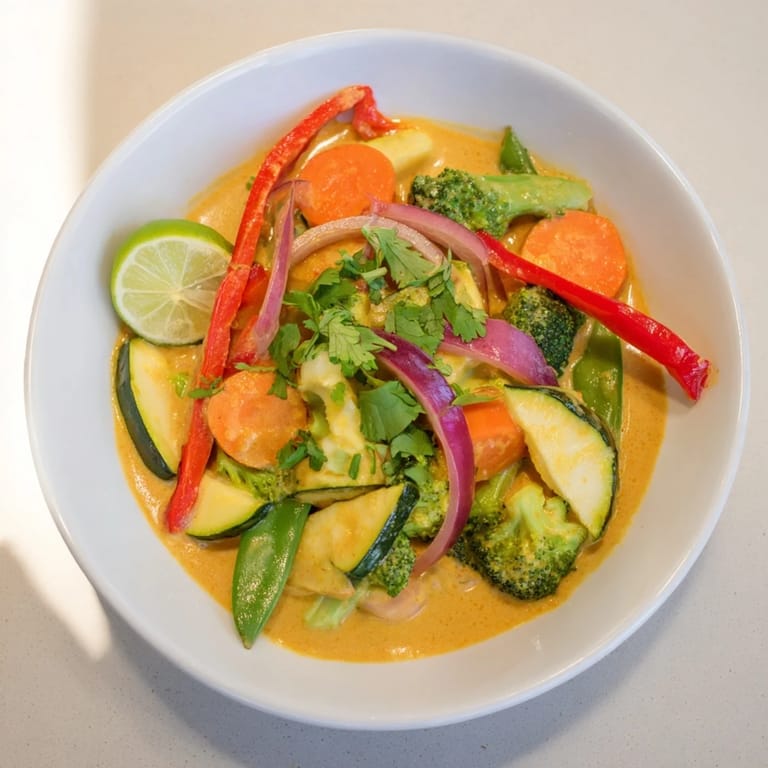
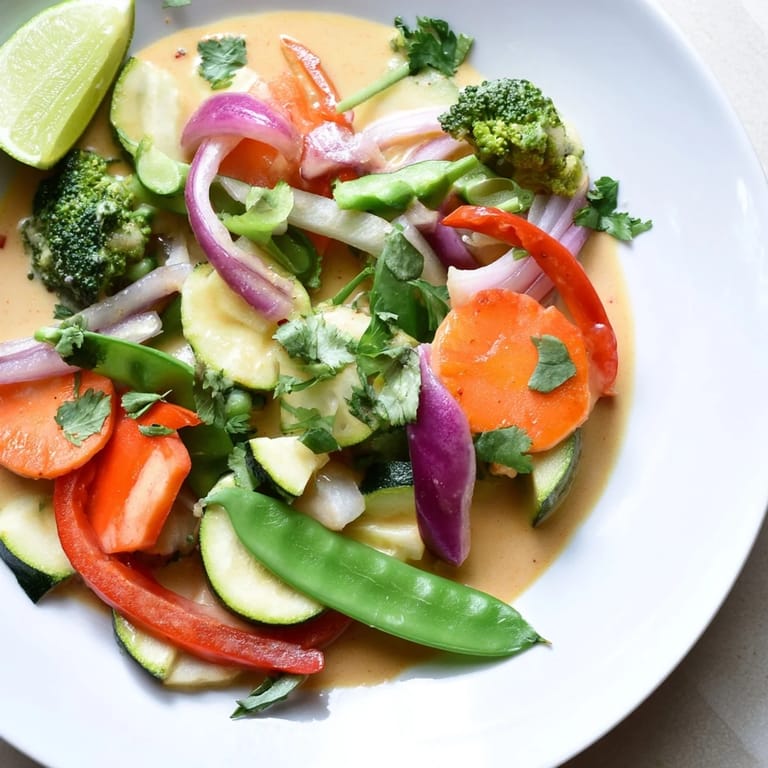
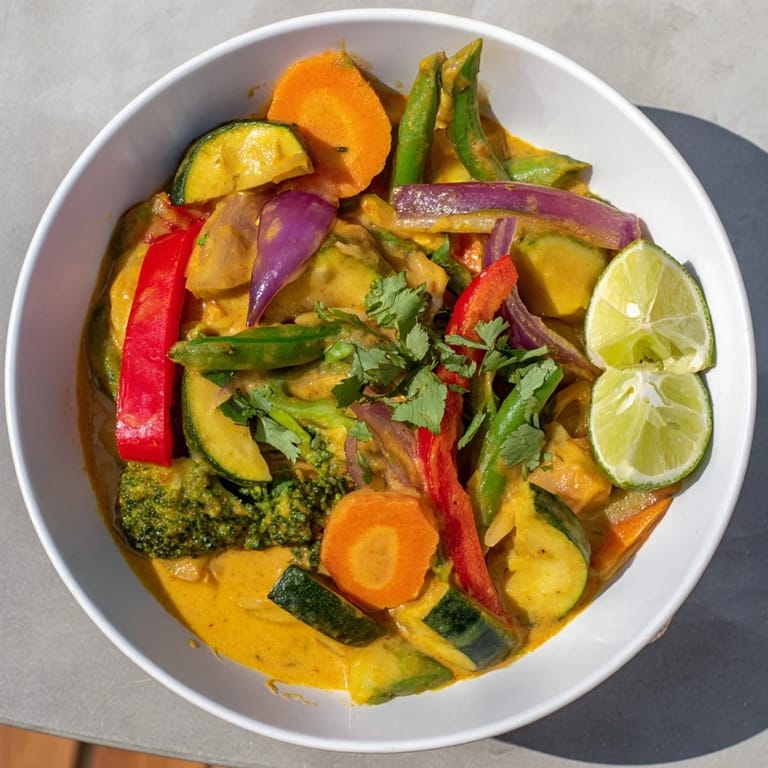
- Red bell pepper and carrot: These are your sweet foundation, softening into the sauce and balancing the spice with natural sugars.
- Zucchini and broccoli: They keep their structure beautifully if you don't overcook them, adding texture and earthiness.
- Snap peas: Stir these in near the end so they stay crisp and almost snappy against your teeth.
- Red onion: Sauté it first to remove that sharp bite and turn it sweet and mild.
- Coconut oil: It's the backbone of the aromatics, carrying all those spices into the vegetables with grace.
- Garlic and ginger: Fresh is non-negotiable; the heat and bite they bring is what makes this feel alive.
- Red curry paste: This is where the soul lives, but taste before you add the full amount because brands vary wildly in heat.
- Turmeric, cumin, coriander: Together they create that warm, earthy depth that makes the dish feel complete.
- Coconut milk: Use full fat without hesitation; it's what transforms the whole thing into something luxurious.
- Vegetable broth: This keeps the sauce from becoming too thick and heavy.
- Soy sauce or tamari: Just a touch to anchor all those bright spices with umami.
- Lime juice: Add this last, like a whisper of brightness that wakes everything up.
- Fresh cilantro: Some people skip this, but it's the final note that makes the dish sing.
Tired of Takeout? 🥡
Get 10 meals you can make faster than delivery arrives. Seriously.
One email. No spam. Unsubscribe anytime.
Instructions
- Warm your oil and soften the onion:
- Pour coconut oil into your pan and let it heat until it smells nutty and inviting. Slice that red onion thin and let it sizzle for a couple of minutes, stirring occasionally, until it loses its sharp bite and turns golden at the edges.
- Wake up the aromatics:
- Add your minced garlic and grated ginger, and stand close because this is where the magic starts happening—the smell alone will make you hungry. Give it about a minute, just long enough for the raw edge to soften.
- Toast the spice paste:
- Dollop in your curry paste and sprinkle the turmeric, cumin, and coriander right on top. Stir constantly for a minute so the spices release their essential oils and perfume the whole kitchen.
- Add your vegetables in stages:
- Toss in the bell pepper, carrot, zucchini, and broccoli. Let them cook for a few minutes, stirring now and then, so they start to soften slightly and absorb all those spices.
- Create the sauce:
- Pour in the coconut milk and vegetable broth, stirring gently until everything is coated in that golden liquid. Bring it to a simmer where small bubbles lazily break the surface.
- Finish cooking:
- Add the snap peas and soy sauce, cover the pan, and let everything simmer for about 10 to 12 minutes. The vegetables should be tender when you pierce them with a fork but still hold their color and shape.
- Brighten and taste:
- Remove from heat and stir in that fresh lime juice, which will transform everything with its subtle zing. Taste for salt and pepper, adjusting until it feels balanced and makes you happy.
- Plate and celebrate:
- Spoon the curry into bowls and scatter cilantro over the top like confetti. Serve with wedges of lime on the side so everyone can add as much brightness as they want.
 Save
Save What surprised me most about making this curry regularly is how it became a quiet ritual on weeknights, something I could make without thinking but still feel proud serving. There's something grounding about stirring a simmering pot of vegetables in coconut broth, knowing that in fifteen minutes you'll have something nourishing and warm to eat.
Why This Curry Works So Well
The magic of this dish is in its balance: the richness of coconut milk against the brightness of lime, the earthiness of the spices against the crisp vegetables, the speed of preparation against the depth of flavor. I've made countless curries, and the ones I return to are always the ones where nothing dominates; everything plays its part. This one hits that sweet spot every time, which is why it's become my default answer when someone asks what I'm making for dinner.
Customizing Your Curry
One of the best things about this recipe is how forgiving it is; your vegetables don't have to match mine exactly. I've made it with cauliflower when that's what I had, added mushrooms for earthiness, thrown in green beans when snap peas were expensive. The formula stays the same: any vegetables you like will work beautifully in this sauce. The only thing I'd caution is to cut everything roughly the same size so it cooks evenly, and to respect the softer vegetables by adding them later if needed.
Making It a Complete Meal
While this curry is wonderful on its own, I almost always serve it over something absorbent: jasmine rice, quinoa, or even coconut rice if I'm feeling fancy. Sometimes I warm up naan bread on the side and use it to scoop up the sauce, which feels generous and celebratory. The vegetables are the star, but they're best when there's something soft underneath to catch all that golden broth.
- If you want more protein, stir in white beans, chickpeas, or crumbled tofu about halfway through the simmering.
- Leftovers taste even better the next day when all the flavors have gotten to know each other.
- This freezes beautifully, so make a double batch and thank yourself later.
 Save
Save This curry has become the recipe I make when I want to feel taken care of, or when I want to take care of someone else. It's simple enough that it doesn't feel like a chore, but thoughtful enough that it feels like love.
Recipe FAQ
- → Can I use different vegetables?
Yes, you can swap or add vegetables like cauliflower, green beans, or mushrooms to suit your taste or availability.
- → How can I make it spicier or milder?
Adjust the amount of red curry paste to increase or decrease the spice level according to your preference.
- → What are good protein additions?
For extra protein, adding chickpeas or tofu during the simmering step works perfectly.
- → What can I serve with this dish?
This curry pairs wonderfully with jasmine rice, quinoa, or naan bread to soak up the sauce.
- → Are there allergen considerations?
Note that soy sauce contains soy and some curry pastes may contain shrimp or fish; opt for soy-free sauces or verify labels to accommodate allergies.