 Save
Save There's a particular kind of kitchen magic that happens when you're standing over a pot of boiling noodles at 11 PM, too hungry to order delivery, and you remember that one bottle of chili oil sitting in your pantry. That night changed everything. Within minutes, I had chewy noodles coated in a gleaming, fragrant oil that tasted like I'd spent hours building layers of flavor. It wasn't complicated, but it felt dangerous and delicious in equal measure. Since then, this dish has been my answer to every moment when I need something bold and satisfying fast.
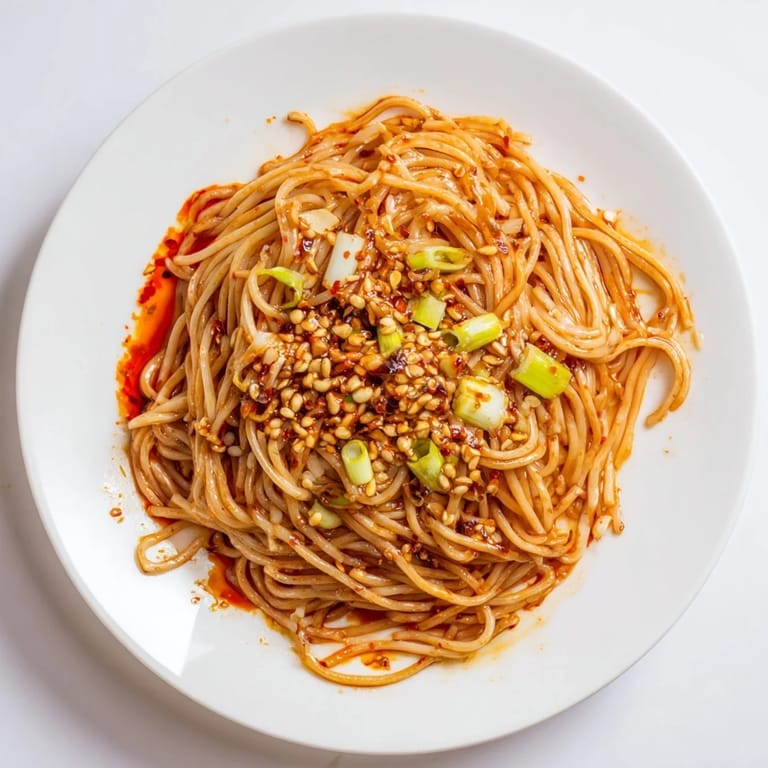
I made this for my roommate once when she came home stressed and exhausted, and she literally sat on the kitchen counter eating straight from the bowl, not saying much, just making those small satisfied sounds that meant everything was right again. The way the oil caught the light as she twirled the noodles around her chopsticks, the steam rising up, the whole kitchen smelling like garlic and heat—that's when I realized this wasn't just quick food, it was comfort with an edge.
Ingredients
- 200 g wheat noodles: Chinese wheat noodles work best because they have a chewier texture that stands up to the glossy oil, but linguine works if that's what you've got—the key is not overcooking them.
- 4 cloves garlic, finely minced: Don't use a food processor or you'll end up with paste; the mincer should be your friend here because individual pieces give better flavor distribution.
- 2 scallions, thinly sliced: Separate the white and green parts—the whites bloom in the hot oil while the greens stay bright and fresh on top.
- 1 tablespoon toasted sesame seeds: Buy them already toasted or toast them yourself in a dry pan for 2 minutes; raw ones taste flat and waxy.
- 2½ tablespoons chili flakes: Sichuan flakes bring a numbing heat while Korean varieties tend to be fruitier—start with less if you're cautious and remember you can always make it hotter.
- ½ teaspoon Sichuan peppercorns: Optional but honestly worth finding; they add a fizzy, mouth-tingling sensation that elevates the whole dish.
- ¼ teaspoon ground white pepper: This adds warmth without the visual heat of black pepper specks.
- ½ teaspoon sugar: A small amount balances the heat and salt without making anything sweet.
- ½ teaspoon salt: Taste and adjust at the end since soy sauce adds saltiness too.
- 3 tablespoons neutral oil: The temperature of this oil is what activates all those dormant spices, so don't skimp or use cold oil.
- 1½ tablespoons light soy sauce: The lighter version is saltier and brighter than dark soy.
- 1 tablespoon Chinese black vinegar: This is different from regular vinegar—it's deeper and more complex, but rice vinegar works in a pinch.
- 1 teaspoon dark soy sauce: Adds depth and color; completely optional but worth it if you have it.
- ½ teaspoon toasted sesame oil: Use a tiny amount—this stuff is potent and a little goes a long way toward richness.
Tired of Takeout? 🥡
Get 10 meals you can make faster than delivery arrives. Seriously.
One email. No spam. Unsubscribe anytime.
Instructions
- Boil your noodles:
- Fill a pot with water, bring it to a hard boil, then add noodles and cook until they're al dente according to the package, but taste them yourself because times vary wildly. Drain into a colander and pour 2 tablespoons of that starchy cooking water into a cup—you'll need it later, and it's the secret ingredient that helps the sauce cling to every strand.
- Build your flavor base:
- In a heatproof bowl (and yes, it must be heatproof because you're about to pour hot oil on it), combine your minced garlic, the white parts of the scallions, chili flakes, Sichuan peppercorns if using, white pepper, sugar, salt, and sesame seeds. This is where the magic lives—just sitting there, waiting to come alive.
- Heat your oil carefully:
- Pour neutral oil into a small saucepan and set it over medium-high heat until it shimmers across the surface and barely starts to smoke—you're looking for a gentle sizzle when you're ready. This temperature matters because it needs to be hot enough to bloom the spices but not so hot that it turns everything from fragrant to acrid.
- Bloom the spices:
- Carefully pour that hot oil over the chili-garlic mixture and immediately step back because it will sizzle dramatically and fill your kitchen with the kind of aroma that makes your neighbors jealous. Stir everything together gently and let it cool for just a moment while the flavors marry.
- Mix your sauce:
- In a large bowl, whisk together the light soy sauce, black vinegar, dark soy sauce if using, and sesame oil, then add that reserved noodle cooking water. The starch in that water is crucial—it helps the sauce coat the noodles evenly rather than pooling at the bottom.
- Bring it together:
- Add your drained noodles to the sauce mixture, then pour that glossy, fragrant chili oil over the top. Toss everything together with chopsticks or tongs until every strand is coated and glistening.
- Finish and serve:
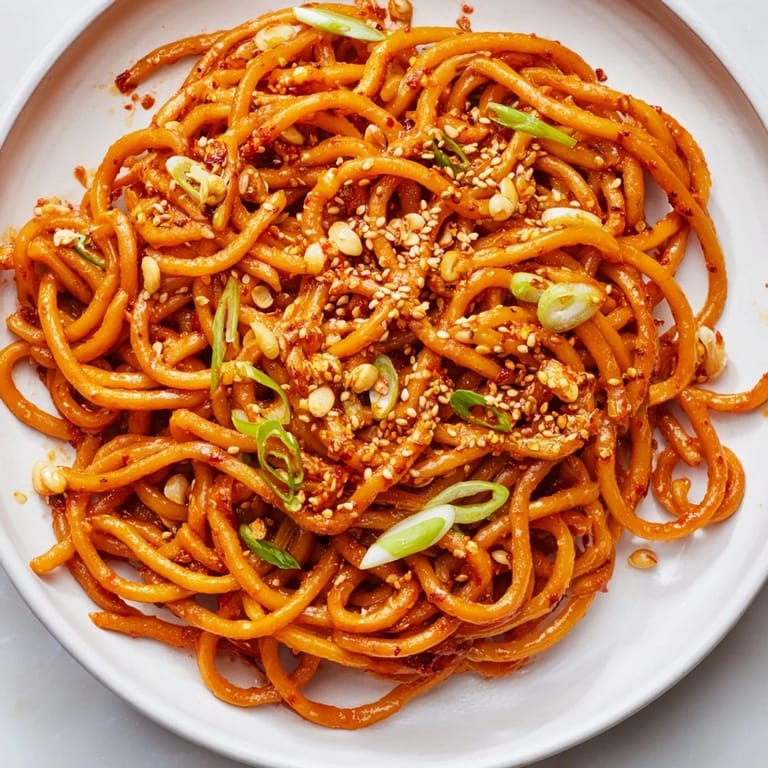
- Scatter the green parts of your scallions and extra sesame seeds over the top if you want, then eat it immediately because noodles fade the longer they sit. Toss once more in the bowl before you eat to redistribute any oil that has settled.
 Save
Save One winter evening, I made this for myself in a tiny kitchen with a single window that fogged up from the steam, and for those few minutes while I ate, I forgot about everything stressful happening outside. The noodles were hot, the oil was glossy and alive, and the flavors felt like they were having a conversation on my tongue—that's when I understood that sometimes the simplest dishes carry the most power.
The Chili Oil Foundation
The real secret to this dish isn't the noodles or even the noodles—it's understanding that chili oil is a technique, not just an ingredient. When you pour hot oil over raw spices, you're essentially infusing it with flavor, and the heat level, the time it blooms, and even the type of oil you use completely change the final dish. I learned this by accident when I once used oil that was too cool and ended up with something that tasted musty, then again when I used oil that was smoking and nearly burned everything. Now I know the sweet spot feels like a gentle sizzle, neither angry nor timid.
Temperature Timing and the Perfect Serve
There's a narrow window of time where these noodles are absolutely perfect—they should be eaten right after tossing, while the oil is still glossy and the noodles are at their chewiest. If they sit, the starch from the noodles absorbs the oil and things get gummy instead of silky, so this is a meal you have to be present for, which I've come to see as a gift rather than a limitation. Eat slowly enough to taste every layer—the heat, the garlic, the sesame, the vinegar—because rushing through something this intentional feels like a waste of the care you put in.
Endless Personalization
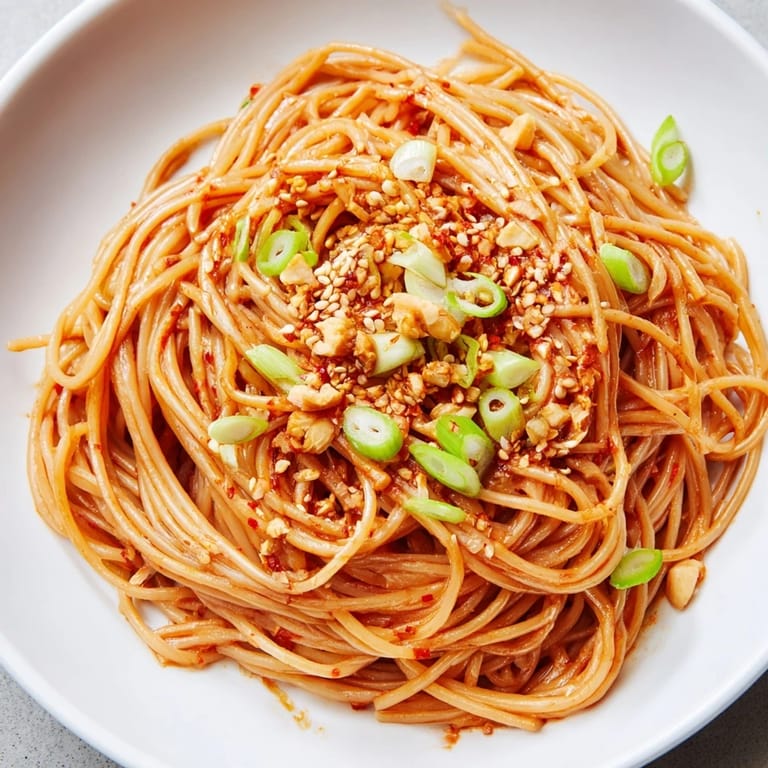
While this dish shines exactly as written, it's also a template that begs for your touch. I've added everything from stir-fried mushrooms to crispy tofu to leftover shredded chicken, and each version felt like its own complete meal rather than an afterthought. The foundation is strong enough to hold whatever you want to build on it, which is perhaps why I keep coming back—there's room for experimentation without ever losing what makes it special.
- Sautéed vegetables like mushrooms, bok choy, or bell peppers add texture and volume without drowning out the chili oil.
- Crumbled tofu or thin-sliced chicken stirred in at the end turns this from side dish into a full protein situation.
- A cracked egg mixed in right after plating adds richness and turns the whole thing into something almost creamy.
 Save
Save This dish has become my go-to when I want to feel like I've cooked something impressive without having to spend an evening in the kitchen. It's proof that bold, memorable food doesn't require complexity or time—just intention and a willingness to let simple ingredients do what they're meant to do.
Recipe FAQ
- → What type of noodles work best?
Wheat-based noodles like Chinese wheat noodles or linguine are ideal for their chewy texture and ability to absorb the bold flavors.
- → Can I adjust the heat level?
Yes, vary the amount of chili flakes to suit your spice preference, from mild to fiery.
- → Is Sichuan peppercorn essential?
It's optional but adds a unique numbing heat that enhances the chili oil's complexity.
- → How can I add more texture to this dish?
Incorporate toasted sesame seeds or garnish with sliced scallion greens for extra crunch and freshness.
- → What side pairings complement this dish?
A crisp cold beer or jasmine tea balances the spiciness, offering a refreshing accompaniment.
- → Can I include protein in this dish?
Yes, additions like tofu, shredded chicken, or sautéed vegetables can enhance nutrition and variety.