 Save
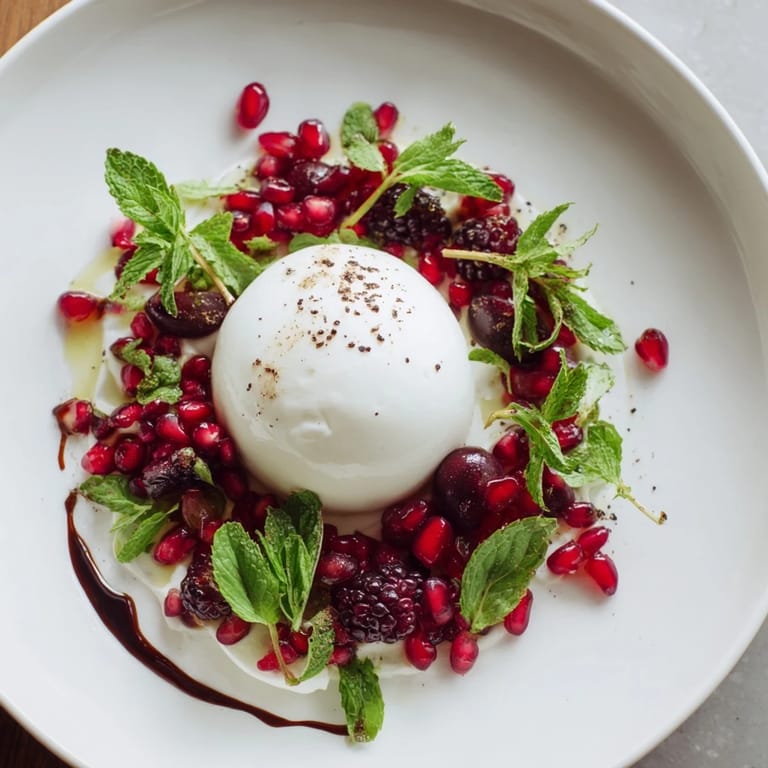
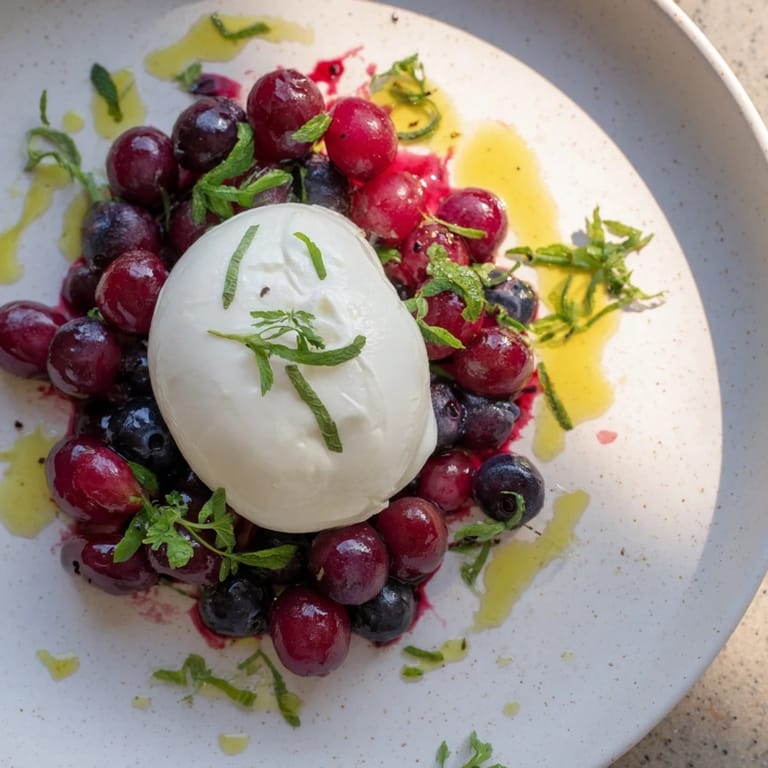
Save There's something about late summer evenings that makes me want to arrange food more like art than sustenance. I was standing in my kitchen with a handful of blueberries and purple grapes, and instead of tossing them into a bowl the usual way, I thought about how they'd look circling something creamy and white—like a moon reflected in dark water. That's how The Moonlit Lagoon was born, less from a recipe and more from staring out the window and wanting to bring that feeling to the table.
I made this for friends who arrived just as the sun was setting, and I remember someone saying it was too beautiful to eat. Of course, we ate it anyway, and the moment the burrata broke open onto the grapes—that creamy, almost liquid center mixing with the tart balsamic—everyone went quiet in that way that means food just became something more than food.
Ingredients
- Fresh blueberries, 1 cup: Look for ones that feel heavy and dry to the touch; they should roll gently across your palm without any give.
- Seedless purple grapes, 1 cup halved: Halving them creates little wells that catch the balsamic glaze, so don't skip that step even though it feels tedious.
- Burrata cheese, 1 large ball (about 200 g): This is the star—the creamy center is what makes this dish sing, so buy it as fresh as you can find it.
- Fresh basil leaves, 1/3 cup torn: Tear them by hand just before serving so they stay bright green and fragrant instead of bruised and dark.
- Baby arugula or mixed greens, 1 cup (optional): This gives you a base and extra texture, but the salad is stunning without it if you want to keep it simple.
- Extra-virgin olive oil, 2 tbsp: Use one you'd actually taste on its own because you'll taste it here.
- Balsamic glaze, 1 tbsp: The glaze, not the regular vinegar—it's thicker and sweeter, and it drapes beautifully over the fruit.
- Sea salt and freshly ground black pepper, to taste: Don't skip the fresh pepper; it adds a warmth that makes everything else taste more like itself.
- Lemon zest, from 1 lemon (optional garnish): A light sprinkle of zest adds a brightness that wakes up all the other flavors.
Tired of Takeout? 🥡
Get 10 meals you can make faster than delivery arrives. Seriously.
One email. No spam. Unsubscribe anytime.
Instructions
- Create your base:
- If using greens, arrange them in a wide, shallow bowl or on a platter—this is your canvas, so use something beautiful. The greens should look loose and casual, not pressed down.
- Paint with fruit:
- Scatter the blueberries and halved grapes in a generous ring around the edge, leaving a clear circle of space in the very center. Step back and look at it; this is the moment where it becomes The Moonlit Lagoon.
- Place the moon:
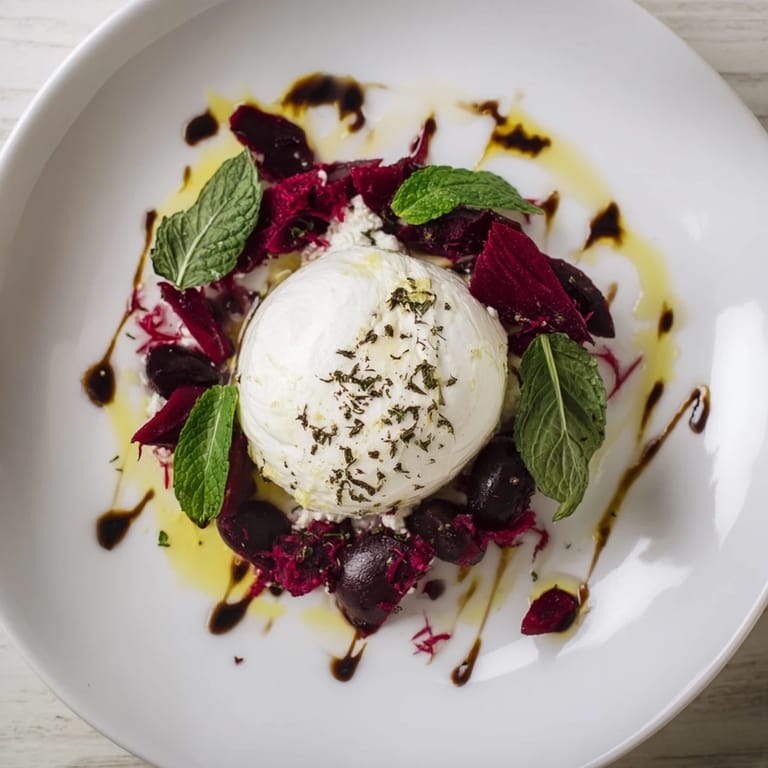
- Set the burrata ball in the center with your hands—it's delicate, so be gentle. The white against the dark fruit should feel intentional.
- Dress with intention:
- Drizzle the olive oil evenly over everything, then use a small spoon to make thin, graceful streams of balsamic glaze over the berries and across the top of the burrata. This is where you control the visual drama.
- Finish and serve:
- Sprinkle torn basil leaves, lemon zest if you're using it, a pinch of sea salt, and a few turns of fresh pepper. Serve immediately while everything is still cool and the presentation is pristine.
 Save
Save What surprised me most about this dish is how it turned a simple arrangement of good ingredients into something that felt like a gift, even though I made it for myself on an ordinary Tuesday night. That's when I understood that sometimes the most nourishing thing food can do is remind us to slow down and look at what's in front of us.
Playing with Flavor Pairings
The beauty of this salad is how the tartness of the balsamic plays against the natural sweetness of the grapes and blueberries, while the burrata stays cool and neutral in the middle, almost acting as a peacemaker between everything else. Once you understand that dynamic, you can start experimenting—a handful of toasted pistachios adds a subtle bitterness and crunch, or swap the blueberries for blackberries if that's what looks fresh at your market. The basil is flexible too; mint would be lovely if you want something more delicate, or skip the herbs entirely if you want the fruit to be the only voice.
Presentation as Part of the Experience
I've learned that when a dish is this simple, the way you present it matters more than usual. A beautiful platter becomes part of the story, and taking those extra thirty seconds to arrange the fruit in an actual circle instead of just scattering it changes how people approach eating it. It makes them pause, which is the whole point on a summer evening when everything else feels rushed.
Serving Suggestions and Timing
This is best served right after assembly while the burrata is still at its creamiest and the fruit is chilled. It's perfect as an elegant appetizer, but I've also served it as a light lunch or even as the finale to a bigger meal when I want something fresh and not heavy. Pair it with crusty bread to catch the oil and glaze, or skip the bread entirely if you want to keep it light.
- Serve immediately after plating—the colder everything is, the more the textures shine through.
- If you're making this ahead, prep the fruit and store it separately, then assemble just before guests arrive.
- This is a warm-weather dish through and through, so save it for when berries and grapes are at their peak.
 Save
Save This salad reminds me that the best meals aren't always the ones with the longest ingredient lists—sometimes they're the ones where you take time to let each flavor be heard. Serve this with confidence and watch how it changes the mood of the table.
Recipe FAQ
- → What type of cheese is used in this dish?
The salad features creamy burrata cheese, which adds a rich and smooth texture that pairs wonderfully with fresh fruit.
- → Can I substitute the blueberries and grapes?
Yes, blackberries can replace blueberries, and other seedless grapes work well to maintain the balance of sweetness and texture.
- → How can I add crunch to the salad?
To add crunch, toasted pistachios or walnuts are excellent toppings that complement the creamy and fruity elements.
- → What dressing is used in the salad?
A simple dressing of extra-virgin olive oil and balsamic glaze enhances the natural flavors without overpowering the ingredients.
- → Is this dish suitable for vegetarians and gluten-free diets?
Yes, it is vegetarian and gluten-free, making it accessible for various dietary preferences.
- → What herbs provide flavor in this preparation?
Fresh basil leaves bring a fragrant and slightly sweet herbaceous note, brightening the overall taste.