 Save
Save The first time I understood what made Moroccan food so mesmerizing, I was standing in a cramped spice market in Marrakech, watching an older woman layer fragrant spices into a clay pot with the same casual confidence most people reserve for making toast. She moved without measuring, her hands knowing exactly when the cumin had released enough of its earthiness, when the cinnamon was about to tip from warm to overwhelming. That tagine taught me that this isn't just dinner—it's a conversation between sweet and savory, heat and comfort, that somehow always ends in harmony.
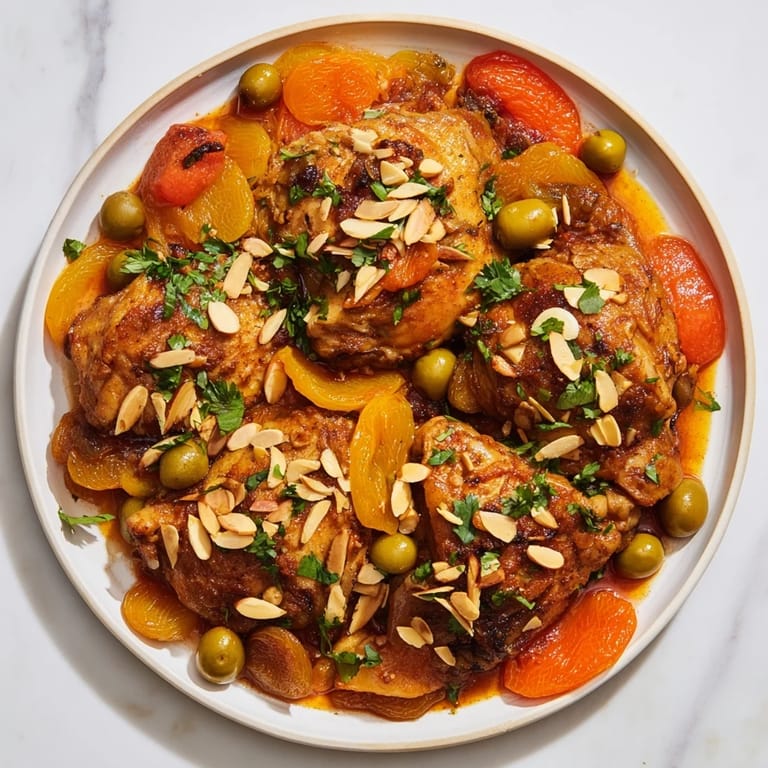
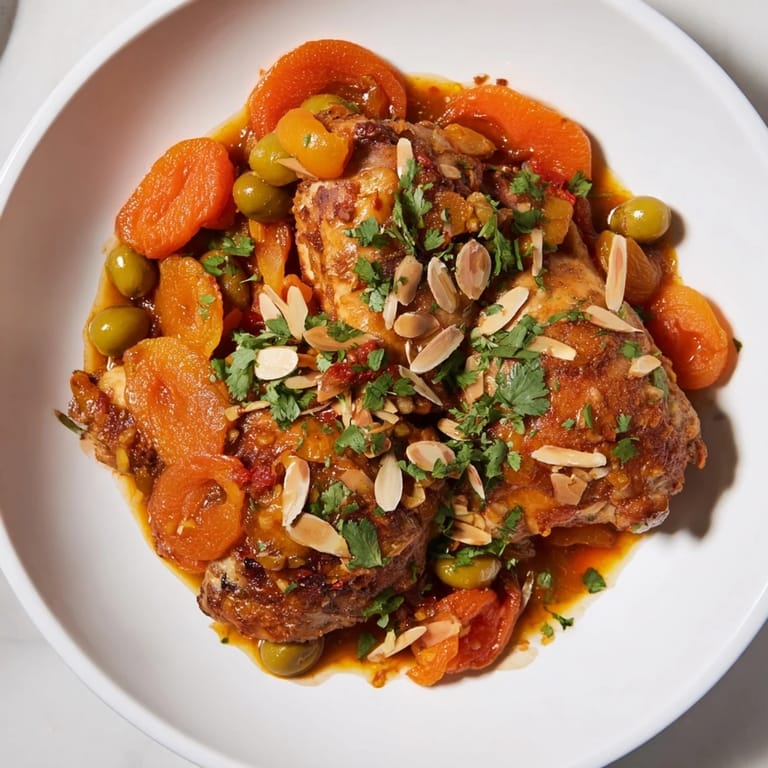
I made this for a dinner party on a cold November night when everyone arrived skeptical about the fruit-and-chicken combination. By the time the tagine came to the table, steam rising and almonds catching the light, people stopped mid-conversation. One friend went back for thirds and admitted she'd never considered apricots in savory cooking before—now she can't imagine this dish any other way.
Ingredients
- Bone-in, skin-on chicken thighs (1.5 lbs): Thighs stay moist and flavorful even with long cooking, unlike breast meat which can dry out; the skin crisps slightly when browned, adding depth to the sauce.
- Dried apricots (1 cup, halved): They soften into the sauce and release their sweetness gradually, creating pockets of concentrated fruit flavor that balance the savory spices.
- Preserved lemon rind (1 whole, thinly sliced): This ingredient adds an authentic tang that regular lemon can't replicate; if you can't find it, skip rather than substitute—the dish is complete without it.
- Green olives (1/2 cup, pitted and halved): Their briny bite cuts through the richness and adds textural contrast in the final minutes of cooking.
- Spice blend (cumin, coriander, cinnamon, paprika, turmeric): Toast these briefly in the hot oil to wake up their oils and deepen their flavor—this step transforms the dish from good to unforgettable.
- Onion, garlic, ginger (1 large onion, 3 cloves, 1-inch piece): These create the aromatic base that holds everything together; don't rush this step or skip the ginger, which adds a subtle warmth that other ingredients can't provide.
- Chicken broth (1 cup): Low-sodium is essential so you can control the salt level and taste the individual spices instead of just salt.
- Olive oil (2 tbsp): Use good quality oil since it's fundamental to the flavor and browning process.
- Diced tomatoes (1 can, drained): They add subtle acidity that keeps the sauce balanced; draining prevents the tagine from becoming watery.
- Cilantro and toasted almonds (for garnish): These finish the dish with brightness and crunch, turning a simple braise into something that feels intentional.
Tired of Takeout? 🥡
Get 10 meals you can make faster than delivery arrives. Seriously.
One email. No spam. Unsubscribe anytime.
Instructions
- Dry and season your chicken:
- Pat the thighs completely dry with paper towels so they'll brown properly instead of steaming. Season generously with salt and pepper right before browning.
- Brown the chicken until golden:
- Heat your Dutch oven over medium-high heat with olive oil, then lay the chicken skin-side down first. You'll hear it sizzle—that's the sound of flavor building. Let it sit undisturbed for 3–4 minutes to develop that mahogany crust, then flip and brown the other side, about 2–3 minutes more. Remove and set aside.
- Build the aromatics:
- In the same pot with the flavorful browned bits still clinging to the bottom, reduce heat to medium. Add your chopped onion and carrot with a pinch of salt—the salt helps them release moisture and cook faster. Stir occasionally until soft and beginning to caramelize, about 5 minutes.
- Bloom the spices:
- Add minced garlic, grated ginger, and all your dry spices. Stir constantly for about 1 minute—you want to smell their warmth without letting them burn. This is when the kitchen starts smelling like Morocco.
- Incorporate the tomatoes:
- Add your drained diced tomatoes and cook for 2 minutes, scraping the bottom with a wooden spoon to release all those caramelized bits. This deglazing step is where hidden depth comes from.
- Return chicken and add the braise liquid:
- Nestle the browned chicken back into the pot, then add your apricots, preserved lemon slices if using them, and chicken broth. Bring the liquid up to a gentle simmer—you want small bubbles breaking the surface, not a rolling boil.
- Cook low and slow:
- Cover the pot and reduce heat to low. Let it simmer undisturbed for 45 minutes, stirring gently every 15 minutes or so to ensure even cooking. The chicken will become incredibly tender.
- Add olives and thicken the sauce:
- Remove the lid, scatter in your halved olives, and simmer uncovered for another 10 minutes. This allows the sauce to reduce slightly, concentrating the flavors and creating a glossier consistency.
- Taste and adjust seasoning:
- Take a spoon and taste the sauce. Add more salt if needed, or a tiny pinch of cayenne for warmth if you want it. Trust your palate here.
- Finish and serve:
- Ladle the tagine into bowls, top with fresh cilantro and toasted almonds, and serve with couscous, rice, or warm flatbread to soak up every drop of sauce.
 Save
Save There's a moment near the end of cooking when you lift the lid and steam rolls out carrying all those spice aromas straight into your face. That's when you know something special is happening. A friend once said this dish made her feel like she was traveling without leaving the kitchen, and I think that's exactly the point of food like this.
Why Apricots Work Here
Apricots might seem like an unusual addition to chicken, but they've been part of North African cooking for centuries. They're not trying to make the dish sweet—instead, they add a subtle fruity depth that makes the spices taste more complex and interesting. The trick is using dried apricots rather than fresh ones; dried fruit concentrates its flavor and holds its shape during the long simmer instead of turning to mush.
Preserved Lemon: The Secret Ingredient
If you can find preserved lemons, they'll elevate this dish from delicious to craveable. They're salty, funky, and intensely lemony in a way that fresh lemon juice can never be. You use only the rind, slicing it thinly and stirring it into the sauce where it adds tang without making anything acidic or sharp. The first time I used preserved lemon in a tagine, I understood why people keep jars of them in their pantries.
Serving and Storage
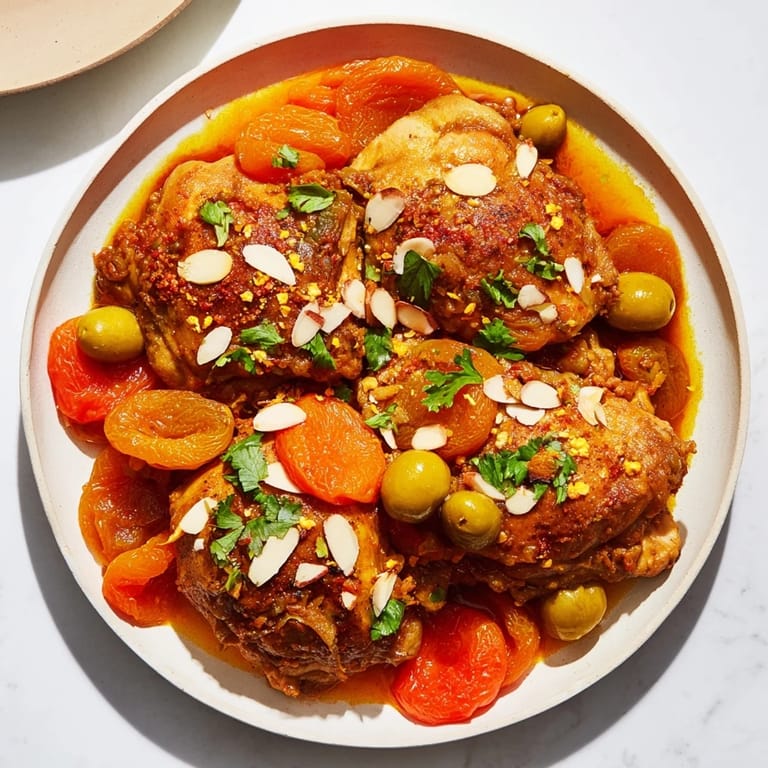
Serve this tagine hot from the pot with plenty of couscous or rice to catch the sauce. Leftovers actually taste better the next day after the flavors have had time to meld together. Store it covered in the refrigerator for up to four days, or freeze for up to three months and reheat gently on the stovetop.
- Make extra couscous because people always want more sauce than you'd expect.
- Add the cilantro and almonds right before serving so they stay bright and crispy.
- Harissa paste stirred in at the end adds heat if your crowd likes things spicier.
 Save
Save This tagine proves that the best dishes don't need to be complicated—they just need good ingredients, patience, and a willingness to let flavors develop on their own time. Make it once and you'll understand why it's become a staple in my kitchen.
Recipe FAQ
- → What cut of chicken works best for this dish?
Bone-in, skin-on chicken thighs are ideal for their tenderness and rich flavor when slow-cooked.
- → Can I substitute dried apricots with fresh fruit?
Dried apricots provide concentrated sweetness and texture; fresh apricots may add too much moisture and a milder flavor.
- → Is preserved lemon necessary for the authentic flavor?
Preserved lemon adds a distinctive tangy brightness, but it is optional and can be skipped or replaced with lemon zest.
- → What side dishes pair well with this chicken preparation?
Steamed couscous, fluffy rice, or warm flatbread complement the dish perfectly, soaking up the flavorful sauce.
- → How can I adjust the heat level of the dish?
Adjust cayenne pepper or add harissa paste for extra spice, or omit these for a milder flavor.