 Save
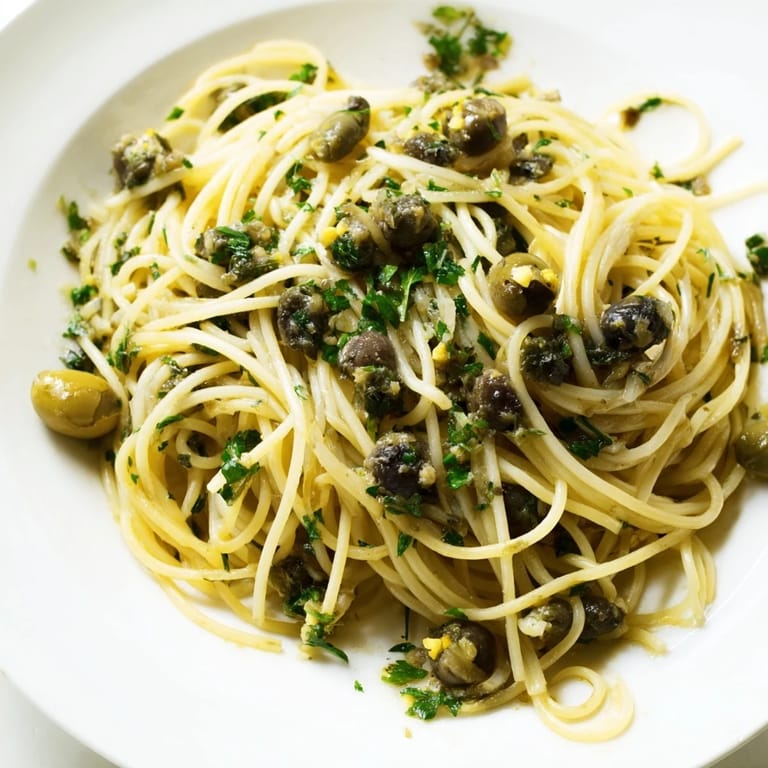
Save The smell of briny olives and garlic hitting warm olive oil always takes me straight back to a tiny kitchen in a coastal town where I learned that not every great pasta needs hours of simmering. This dish came together on a Tuesday night when the fridge was nearly empty but the pantry held a jar of beautiful olives and a box of dried pasta. I tossed them together with capers and fresh lemon, and what emerged was so much more vibrant than I expected. It tasted like the Mediterranean itself had shown up for dinner. Sometimes the simplest combinations teach you the most about flavor.
I made this for a friend who swore she didnt like olives, and I watched her face change with the first bite. She asked what was in it, and when I told her, she laughed and said sometimes you just need the right context. We sat on the back porch with our bowls, the evening warm and the pasta still steaming. She went back for seconds and admitted that maybe her relationship with olives had just begun. That night, this dish became my quiet proof that food can change minds.
Ingredients
- Mixed pitted olives: Use a combination of Kalamata and green for complexity, the Kalamata brings depth while the green adds a sharper bite that keeps things interesting.
- Capers: These little bursts of brine are essential, make sure to drain them well or the tapenade can become too salty and overpower the pasta.
- Garlic: Fresh cloves are a must here, the raw garlic mellows slightly when tossed with hot pasta but still delivers that punchy backbone.
- Fresh parsley: It brightens the whole dish and cuts through the richness, flat leaf parsley works best but curly will do in a pinch.
- Lemon juice: Just a teaspoon lifts everything, adding acidity that makes the olives and capers sing without tasting overtly citrusy.
- Extra virgin olive oil: This is not the place for a bland oil, use something fruity and robust that you would happily dip bread into.
- Black pepper: Freshly ground makes all the difference, it adds a gentle heat and aromatic quality that pre ground pepper simply cannot match.
- Dried pasta: Spaghetti or linguine grip the tapenade beautifully, their long strands get coated in every crevice of the chunky sauce.
- Reserved pasta water: This starchy liquid is the secret to a silky sauce that clings instead of clumping, never skip this step.
Tired of Takeout? 🥡
Get 10 meals you can make faster than delivery arrives. Seriously.
One email. No spam. Unsubscribe anytime.
Instructions
- Boil the pasta:
- Bring a large pot of water to a rolling boil and add enough salt so it tastes like the sea. Cook your pasta until it still has a slight firmness in the center, then save a mugful of that cloudy starchy water before draining.
- Blend the tapenade:
- Toss the olives, capers, garlic, parsley, and lemon juice into your food processor and pulse until everything is chopped but still has texture. Drizzle in the olive oil while the blade runs, stopping when you have a chunky paste that holds together but isnt smooth.
- Combine and toss:
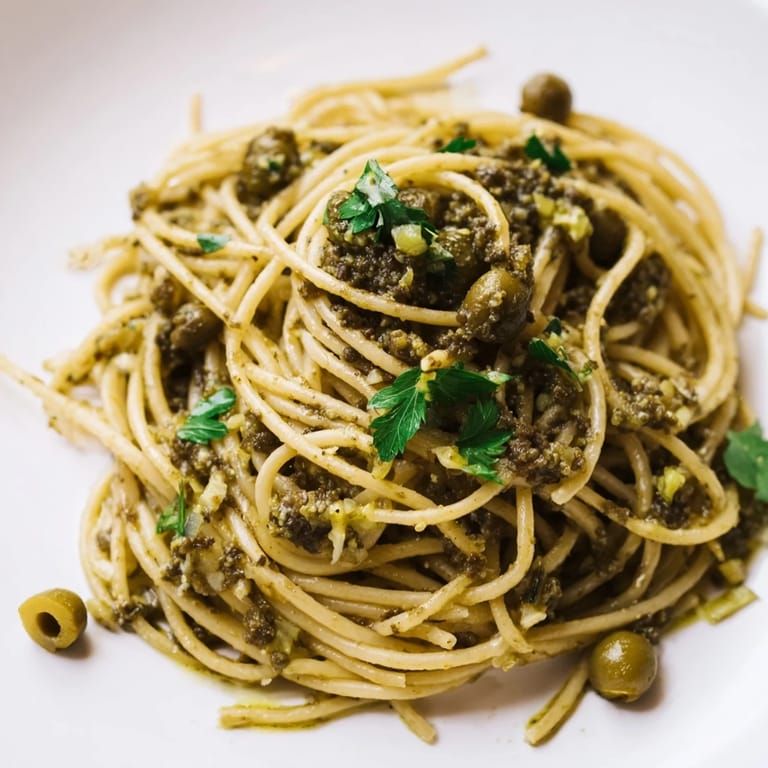
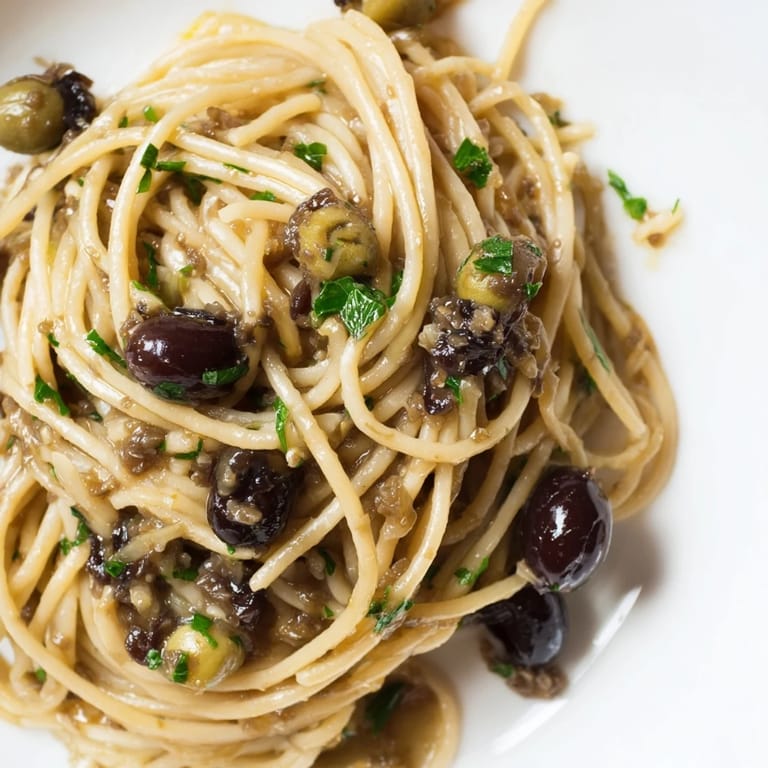
- Put the hot drained pasta back in the pot and add the tapenade, tossing with tongs or a wooden spoon until every strand is coated. Add splashes of reserved pasta water to loosen the sauce, stirring until it becomes glossy and clings to the noodles instead of pooling at the bottom.
- Garnish and serve:
- Plate the pasta immediately while its still steaming, then scatter fresh parsley and lemon zest over the top. If youre not keeping it vegan, a light shower of Parmesan adds a nutty finish that plays beautifully with the briny tapenade.
 Save
Save One summer evening, I served this to a table full of people who had been swimming all day and were ravenous and sun tired. The bowls emptied in minutes, and someone said it tasted like vacation. I realized then that this pasta does not just feed people, it transports them. It carries the warmth of the coast, the ease of simple abundance, and the kind of satisfaction that comes from food that does not try too hard.
Choosing Your Olives
Not all olives are created equal, and this dish lives or dies by the quality of what you pick. I learned this after using a sad jar of bland black olives from the back of the pantry and ending up with a tapenade that tasted like mush and regret. Seek out olives from the deli counter or a good jar of Kalamata and Castelvetrano if you can find them. The flavor should be bold and fruity, not flat or overly salty. If you taste one straight from the container and it makes you happy, it will make your pasta happy too.
Making It Your Own
This recipe is a canvas, and I have painted it a dozen different ways depending on what is around. A handful of sun dried tomatoes in the tapenade adds sweetness and chew, while a couple of anchovies bring an umami depth that is hard to place but impossible to forget. Red pepper flakes give it a gentle kick that builds as you eat, and a handful of toasted pine nuts scattered on top adds crunch and richness. Some nights I toss in arugula right at the end so it wilts into the hot pasta, adding a peppery bite that balances the brine. Trust your instincts and taste as you go.
Storing and Reheating
This pasta is best eaten right away when the noodles are hot and the tapenade is freshly tossed, but leftovers can be stored in the fridge for up to two days. The pasta will soak up some of the sauce as it sits, so when you reheat it, add a splash of olive oil or a spoonful of water to bring it back to life. I usually eat leftovers cold straight from the container, standing at the counter, because the flavors have melded overnight and it tastes almost better that way.
- Store in an airtight container in the fridge and bring to room temperature before serving if you prefer it cold.
- Reheat gently in a skillet with a drizzle of olive oil, tossing constantly to avoid drying out the pasta.
- Extra tapenade keeps for a week in the fridge and is phenomenal on toast, stirred into scrambled eggs, or dolloped onto roasted vegetables.
 Save
Save This dish reminds me that some of the best meals come from simplicity, from trusting a few strong flavors and letting them speak for themselves. I hope it brings you as much joy as it has brought me, whether you are cooking for a crowd or just for yourself on a quiet night.
Recipe FAQ
- → Can I make the tapenade ahead of time?
Yes, you can prepare the tapenade up to 3 days in advance. Store it in an airtight container in the refrigerator. Bring it to room temperature before tossing with hot pasta for the best flavor and texture.
- → What type of olives work best for this dish?
A combination of Kalamata and green olives provides balanced flavor and complexity. Kalamata olives offer earthiness while green olives add brightness. Use whatever quality olives you prefer, just ensure they're pitted for convenience.
- → Is it necessary to use a food processor?
A food processor works best for creating the ideal chunky texture, but you can use a blender or even finely chop everything by hand with a sharp knife. The key is achieving a coarse, spreadable paste rather than a smooth puree.
- → How do I prevent the pasta from sticking together?
Toss the drained pasta with the tapenade immediately while it's hot. The oil in the tapenade coats each strand and prevents clumping. Add reserved pasta water gradually if needed to achieve the right consistency.
- → Can I add protein to make this heartier?
Absolutely. Consider adding white beans, chickpeas, grilled chicken, or anchovies (omit for vegan diets). Toss protein in with the pasta and tapenade, or serve alongside for a more substantial meal.
- → What pasta shapes work well with this tapenade?
Long, thin pasta like spaghetti and linguine work beautifully, but you can also use penne, fusilli, or farfalle. Avoid very small shapes that might not showcase the tapenade chunks. Whole wheat and gluten-free options are excellent substitutes.