 Save
Save I discovered this trick one weeknight when I opened my fridge to find cottage cheese instead of heavy cream. What started as a frustration turned into a revelation—blended smooth with milk and Parmesan, it became the most delicious Alfredo sauce I've ever made, lighter and somehow richer at the same time. My partner asked for seconds before I'd even finished explaining the ingredient swap. Now it's become my go-to when I want something that feels indulgent but doesn't leave me feeling weighed down for the rest of the evening.
There was this Sunday when my sister called last minute saying she'd be stopping by with her kids, and I panicked about having something quick but nice to serve. I threw this together, and watching her face when she tasted it—that moment of surprise when she realized it was cottage cheese—made me feel like I'd discovered something genuinely special, not just followed a recipe.
Ingredients
- Fettuccine or linguine (350 g): The wider ribbons catch and hold the sauce beautifully, giving you more creamy goodness in every bite than thinner pastas would.
- Low-fat cottage cheese (1 cup): The star ingredient—make sure it's smooth and fresh, because that's what determines how silky your sauce becomes.
- Milk (1/2 cup): Whole or 2% works best here; it thins the cottage cheese into something pourable without watering down the flavor.
- Grated Parmesan cheese (1/2 cup): Real Parmigiano-Reggiano makes a noticeable difference, but any good quality Parmesan will work.
- Unsalted butter (2 tbsp): This is your flavor foundation; don't skip it or substitute it, as it's what makes the garlic sing.
- Garlic cloves, minced (2): Fresh garlic is non-negotiable here—the aromatics are what make people think you've spent hours on this.
- Freshly ground black pepper (1/4 tsp) and salt (1/4 tsp): Ground fresh pepper tastes completely different from pre-ground, and it's worth the 10 seconds it takes.
- Freshly grated nutmeg (pinch, optional): It's subtle but transforms the sauce into something that tastes like you actually know what you're doing.
- Fresh parsley (2 tbsp chopped) and extra Parmesan for garnish: These aren't just decoration—the parsley brightens everything up and the extra cheese is the permission slip to go generous.
Tired of Takeout? 🥡
Get 10 meals you can make faster than delivery arrives. Seriously.
One email. No spam. Unsubscribe anytime.
Instructions
- Get your pasta water ready:
- Fill a large pot with salted water and bring it to a rolling boil—you want it aggressive and bubbling. The salt is crucial; it's your only chance to season the pasta itself.
- Cook the pasta to al dente:
- Drop in your pasta and stir it immediately so it doesn't stick to itself. Set a timer for a minute less than the package suggests, then taste it; you want it to have just a tiny bit of resistance when you bite it. Before draining, scoop out 1/2 cup of that starchy pasta water and set it aside—this is liquid gold for adjusting your sauce later.
- Blend the cottage cheese mixture:
- While your pasta cooks, combine the cottage cheese, milk, and Parmesan in a blender or food processor. Blend until it's completely smooth and creamy with no grainy bits—this might take a full minute, so be patient. This is the moment where the cottage cheese transforms into something that tastes nothing like cottage cheese.
- Build the garlic base:
- In a large skillet over medium heat, melt your butter slowly so you can watch it turn golden and fragrant. Once it's foaming gently, add your minced garlic and listen for that immediate sizzle—stir it constantly for exactly one minute, no more, or it'll turn bitter and brown.
- Warm the sauce gently:
- Pour that silky cottage cheese mixture into the skillet with the garlic butter, then add your salt, pepper, and nutmeg. Stir constantly and keep the heat at medium; you're looking for it to warm through for about 2 to 3 minutes until steam gently rises from the surface. Never let it boil, or the sauce will break and separate.
- Bring it all together:
- Add your drained pasta directly to the skillet and toss everything together gently but thoroughly, making sure every strand gets coated. If it looks too thick, pour in your reserved pasta water a little at a time, tossing between additions, until you get that creamy, flowing consistency you're after.
- Plate and garnish immediately:
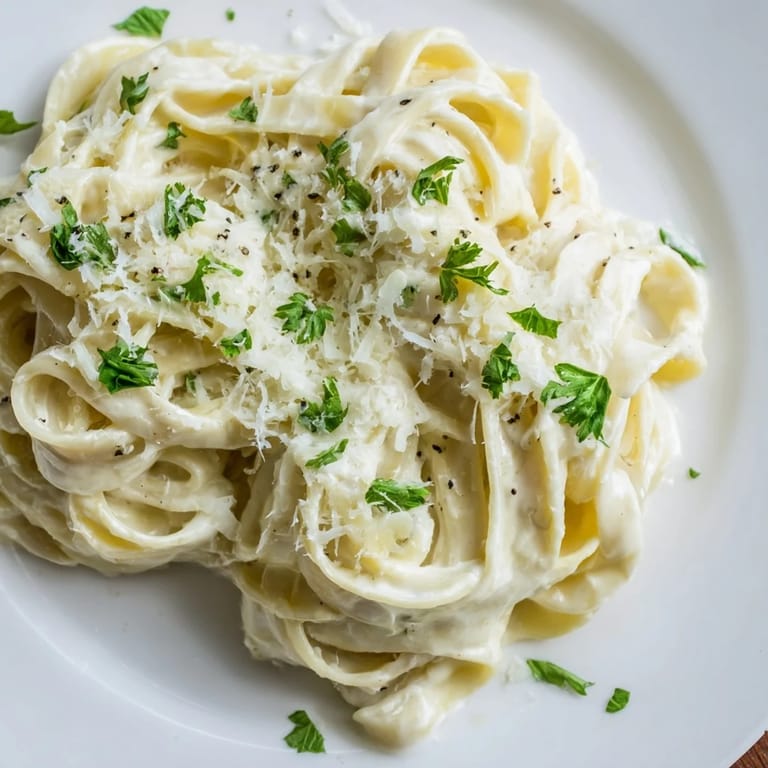
- Serve right away in warm bowls while the sauce is still silky and clinging to the pasta. Scatter fresh parsley over the top and finish with a generous handful of grated Parmesan—this final step is what makes it look restaurant-worthy.
 Save
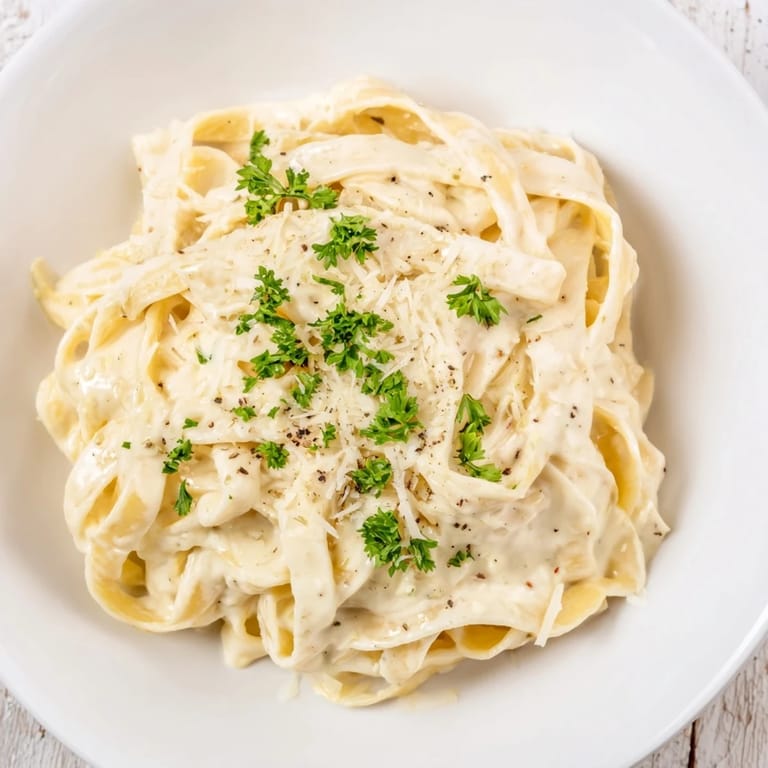
Save I made this for my friend who'd been watching her diet pretty strictly, and she actually got emotional about it—not in an over-the-top way, but genuinely moved that something this delicious could exist without heavy cream. That's when I realized this recipe isn't just about shortcuts or health hacks; it's about proving that different doesn't mean lesser.
Why Cottage Cheese Changes Everything
Most people have a knee-jerk reaction to cottage cheese in pasta—I did too until I tried it blended. The magic is that it has just as much protein as ricotta but costs half the price, and when you blend it smooth with milk, it becomes something unrecognizable and entirely luxurious. The sauce clings differently too, coating each strand with a gentle richness instead of a heavy glaze. It's one of those moments where a simple ingredient swap teaches you that cooking isn't about following tradition; it's about understanding how things actually work.
The Flavor Game: When Less Cream Means More Taste
There's something counterintuitive about how lighter sauces actually let you taste the individual components better. The Parmesan flavor comes through more clearly, the garlic hits differently, and that whisper of nutmeg becomes audible instead of buried under a wall of cream. Once you make it this way, going back to heavy cream-based Alfredo starts to feel almost one-note. It's the kind of realization that makes you question other recipes you've always assumed were set in stone.
Beyond the Basic: Making It Your Own
This sauce is forgiving enough to build on once you've nailed the basics. A squeeze of fresh lemon zest brightens it instantly, sautéed mushrooms add an earthy depth, and a handful of torn spinach wilts right into the heat. If you're cooking for someone who needs extra protein, stirring in shredded rotisserie chicken or steamed broccoli florets feels natural rather than like an afterthought. The foundation is stable enough that you can get creative without the whole thing falling apart.
- Lemon zest or a small splash of white wine adds brightness that prevents the sauce from feeling one-dimensional.
- Sautéed mushrooms or caramelized onions give you umami depth and make it feel like a restaurant dish without extra effort.
- Fresh herbs beyond parsley—chives, tarragon, or even basil—can completely shift the mood depending on your mood that night.
 Save
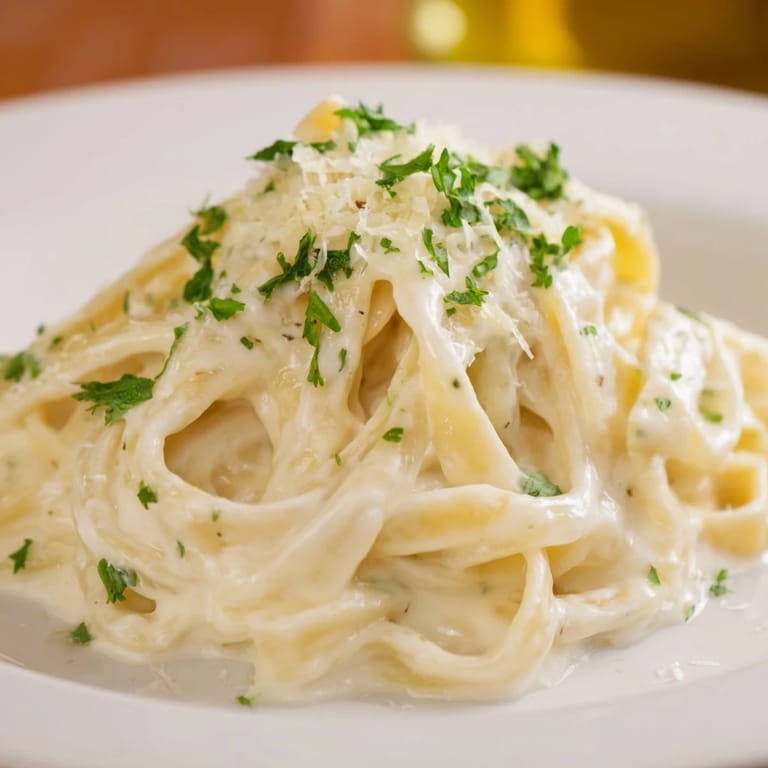
Save This recipe taught me that the best cooking discoveries often come from limitations instead of Instagram inspiration. It's become my proof that slowing down and using what's in front of you creates something better than chasing complicated ideals.
Recipe FAQ
- → Can I use different pasta types?
Yes, fettuccine or linguine work best but any pasta you prefer can be used based on availability and taste.
- → How do I make the sauce smooth?
Blending the cottage cheese, milk, and Parmesan until completely smooth ensures a creamy, silky sauce texture.
- → Is there a way to adjust the sauce thickness?
Adding reserved pasta cooking water gradually helps achieve the desired sauce consistency without thinning it too much.
- → Can I add protein or vegetables?
Absolutely, cooked chicken pieces or steamed broccoli can be mixed in for extra protein and nutrients.
- → What garnishes enhance the flavors?
Fresh chopped parsley and extra grated Parmesan cheese add brightness and depth to the finished dish.