 Save
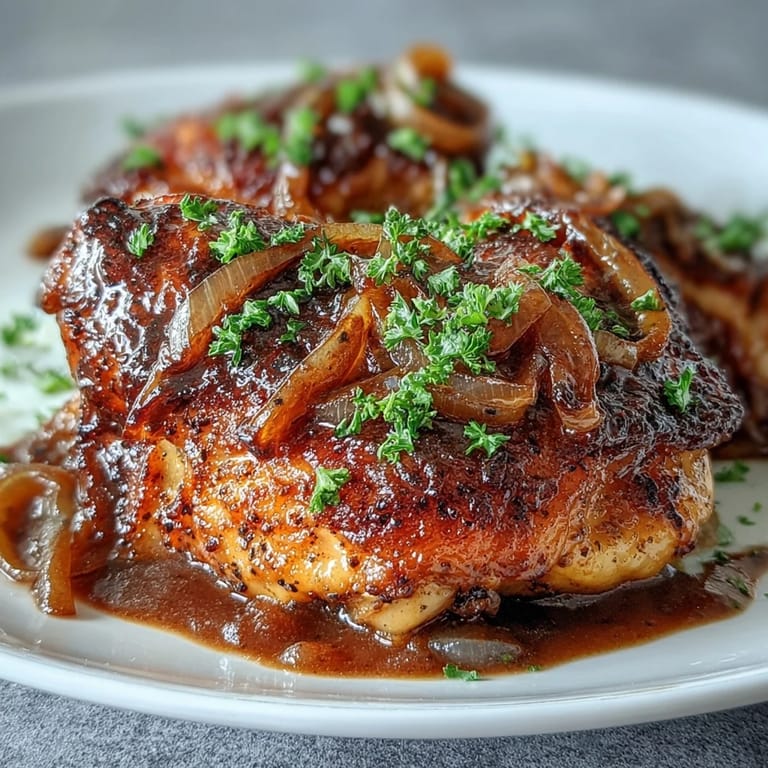
Save My grandmother's kitchen on Sunday afternoons always smelled like this dish—onions caramelizing in cast iron while chicken sizzled, filling the house with that unmistakable Southern comfort. Years later, I realized she wasn't following a recipe at all; she was moving through muscle memory, adjusting the heat by ear, tasting the gravy and nodding to herself like it was a conversation. When I finally asked her to teach me, she just laughed and said the secret was patience and never rushing the onions. That lesson stuck with me more than any written instructions ever could.
I made this for my partner during the first winter we lived together, and I remember being so nervous about getting it right—second-guessing the simmering time, worrying the gravy would break. When he sat down and took that first bite without saying anything, just closing his eyes, I knew it didn't matter that it wasn't perfect. It was enough that we were sitting at our own table, in our own kitchen, with something warm and real between us.
Ingredients
- Bone-in, skin-on chicken thighs and drumsticks: These cuts stay moist during the long braise while the bones add incredible depth to the gravy; dark meat forgives you if you're a few minutes off on timing.
- All-purpose flour: Use it to dredge and to thicken—the same flour does double duty, which is elegant and practical all at once.
- Vegetable oil: Keep it neutral so the onions and chicken are the real stars; don't skimp on temperature or you'll end up with soggy coating instead of that golden crust.
- Large yellow onions: They caramelize into sweet submission if you give them enough time and heat; never use a wimpy flame or you'll just get steam instead of color.
- Low-sodium chicken broth: The foundation of your gravy, and it needs space to marry with the pan drippings without fighting salt that's already in your seasoning.
- Unsalted butter: Added at the end to round out the gravy's flavor and give it that glossy finish that makes people spoon extra onto their plates.
- Dried thyme and paprika: These are your quiet confidence builders—they whisper in the background, making everything taste more like itself without announcing their presence.
Tired of Takeout? 🥡
Get 10 meals you can make faster than delivery arrives. Seriously.
One email. No spam. Unsubscribe anytime.
Instructions
- Pat and season your chicken:
- Get those chicken pieces really dry with paper towels—moisture is the enemy of a good crust. Dust them generously with salt, pepper, paprika, garlic powder, and onion powder, rubbing it into every crevice and under the skin where it counts.
- Dredge in flour with confidence:
- Mix your flour, salt, and pepper in a shallow bowl and coat each piece thoroughly, shaking off the excess so you're left with a thin, even layer. Save that leftover flour—it's going straight into your gravy, so don't waste it.
- Get the oil hot and listen for the sizzle:
- Heat your oil over medium heat until it shimmers and a piece of onion dropped in immediately pops and moves; this is the moment you've been waiting for. Place chicken skin-side down and let it sit without moving for a good 6 to 8 minutes—resist the urge to fuss with it.
- Brown both sides until golden:
- Flip the chicken carefully and give the other side another 6 to 8 minutes until it's deeply golden but still slightly underdone in the center. This is intentional; it'll finish cooking in the gravy and stay tender in the process.
- Build your gravy base with caramelized onions:
- Leave about 2 tablespoons of oil in the pan and add those sliced onions, stirring occasionally as they soften and turn golden over 8 to 10 minutes. Don't rush this step; the flavor transformation is where the magic happens.
- Make a roux and cook out the flour:
- Sprinkle your reserved flour over the softened onions and stir constantly for 1 to 2 minutes until it's lightly browned and smells toasty. This raw flour taste disappears, and you get a deeper, nuttier foundation for your gravy.
- Whisk in the broth slowly and scrape the pan:
- Pour the broth in gradually while whisking, making sure to scrape up every golden crusty bit stuck to the bottom—that's pure flavor. Keep stirring until the mixture is smooth and you don't see any flour lumps hiding.
- Season and simmer until silky:
- Add your thyme, paprika, salt, black pepper, and butter, then let it bubble gently for 2 to 3 minutes until it thickens into something that coats a spoon. Taste it now and adjust salt if needed; you want it to taste savory and round, not thin or sharp.
- Return the chicken and finish low and slow:
- Nestle those chicken pieces back into the gravy, spoon some of that liquid over the top, then cover and reduce heat to low. Let it simmer for 25 to 30 minutes until the chicken is fork-tender and the internal temperature hits 165°F, which you can check with an instant-read thermometer if you want to be sure.
- Serve with the gravy as the real star:
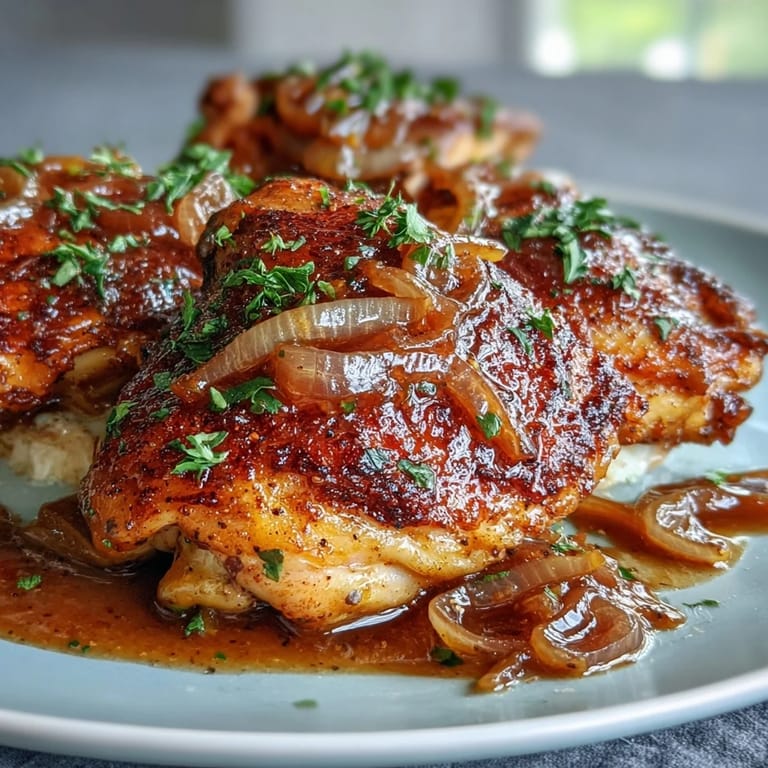
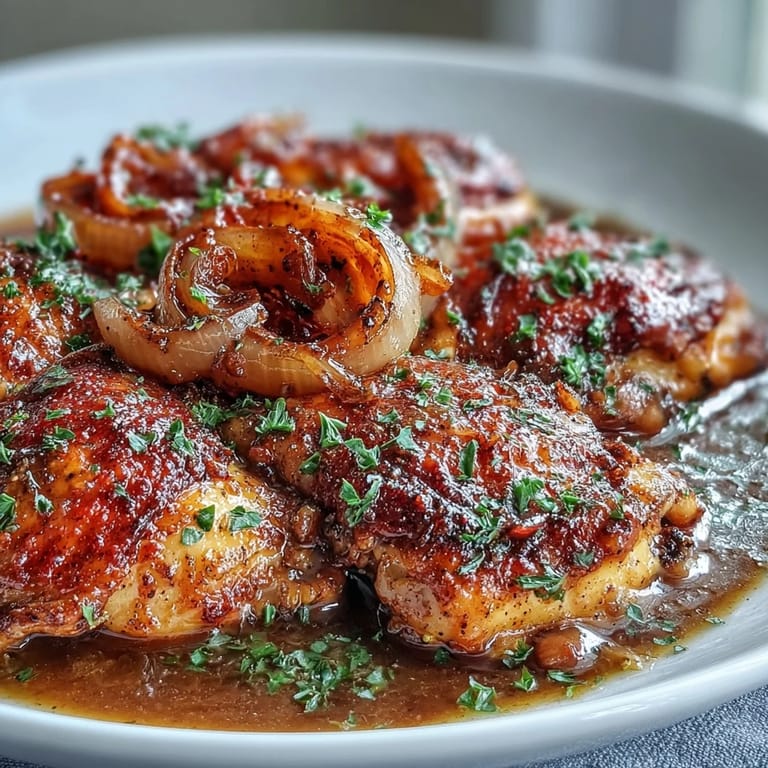
- Spoon that onion gravy generously over each piece of chicken and whatever you're serving it with—there's no such thing as too much in this case.
 Save
Save There was a night when my friend showed up unexpectedly with her new baby, tired and overwhelmed, and this was the only dish I could make that felt like a hug served on a plate. She cried a little while eating, not from sadness but from the weight lifting just slightly—and I understood then that good food isn't really about technique or ingredients. It's about showing up and saying, without words, that someone matters enough for you to spend an hour at the stove.
Why Bone-In Chicken Matters Here
Boneless chicken would cook faster and be technically easier, but you'd lose so much flavor and texture in the bargain. The bones leach collagen and minerals into that gravy, making it rich and silky in a way boneless chicken simply can't achieve—plus the skin gets crispy while the meat stays juicy, which is an impossible pleasure you won't want to miss. If you do choose boneless, just cut the simmering time down to about 15 to 20 minutes and accept that your gravy will be good, but not transcendent.
The Temperature Question
I used to worry constantly about overcooking chicken, checking it every two minutes like it might suddenly transform into leather. An instant-read thermometer changed my life—you want the internal temperature to reach 165°F and no higher. This takes the guesswork out entirely, and you can relax knowing that the meat will be perfectly cooked and safe, nestled in that beautiful gravy.
Serving This Like You Mean It
Mashed potatoes are the traditional companion here, and they soak up that onion gravy in a way that makes both of you better. Rice works beautifully too if you want something lighter, and collard greens on the side echo the Southern tradition without pretending to be anything fancy. This meal is humble and honest, and it deserves to be plated simply so nothing gets in the way of the flavors talking to each other.
- Make extra gravy without shame—everyone will want more, and leftovers are incredible over rice or potatoes the next day.
- If you're cooking for people with dietary restrictions, this adapts well; just swap in gluten-free flour for the same visual and textural results.
- Serve this hot, in bowls if you have them, so the gravy doesn't cool before it reaches the table.
 Save
Save This dish taught me that comfort food isn't about being complicated or fancy—it's about taking care of people the way you'd want to be taken care of. Make it, share it, and watch how something so simple becomes the meal people remember.
Recipe FAQ
- → What type of chicken is best for smothered chicken?
Bone-in, skin-on chicken thighs and drumsticks work best as they stay juicy and flavorful during slow cooking.
- → How do I achieve a thick onion gravy?
Cook sliced onions until soft and golden, then sprinkle flour to absorb all moisture before slowly whisking in chicken broth to thicken.
- → Can I substitute any seasonings in the dish?
Yes, the seasoning includes paprika, garlic, and onion powders which can be adjusted to taste or replaced with other preferred spices.
- → How long should the chicken simmer in the gravy?
Simmer the chicken in the gravy with the lid on for about 25–30 minutes or until it reaches an internal temperature of 165°F (74°C).
- → What are ideal side dishes for this dish?
Traditional sides include mashed potatoes, rice, or collard greens, which complement the rich, savory flavors perfectly.