 Save
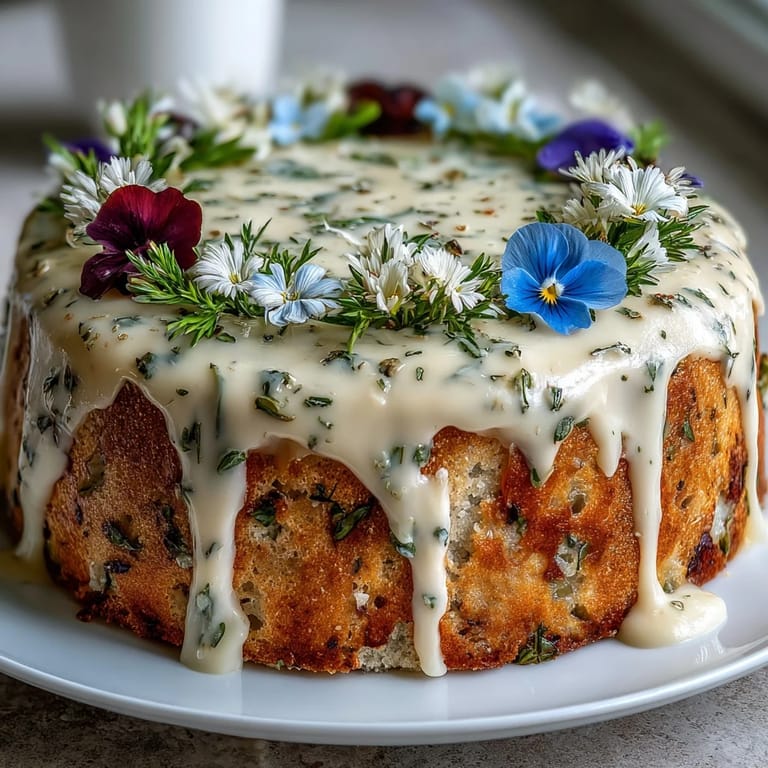
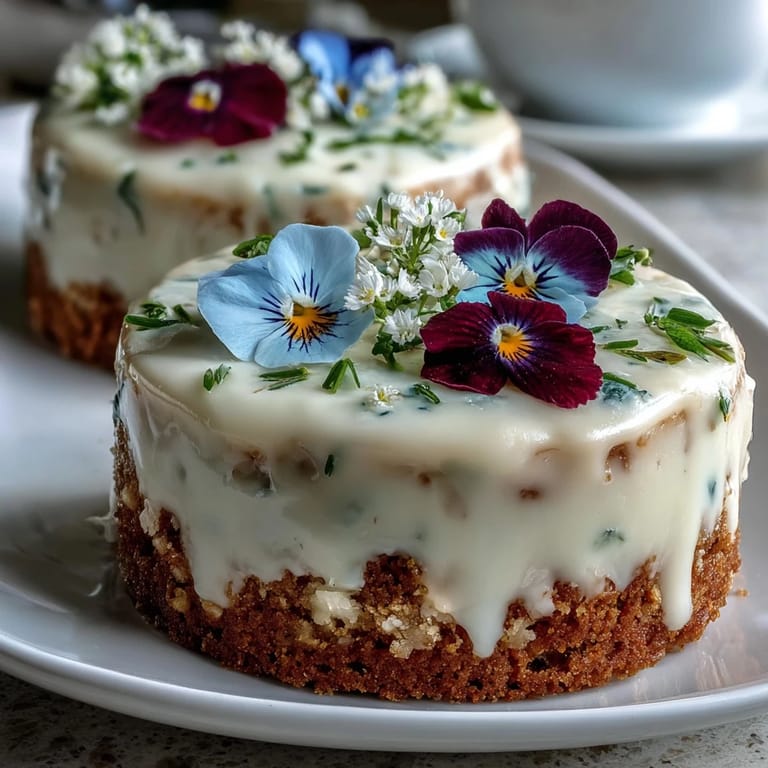
Save My neighbor brought over a box of pressed flowers one afternoon, still chatting about her grandmother's garden traditions, and suddenly I understood why spring cakes deserve more than just fondant and piping. There's something about seeing actual petals—violets, pansies, rose—pressed into cream that makes you slow down at the table. This vanilla cake became my way of honoring that moment, a tender crumb with clouds of whipped cream and flowers that taste like they came from somewhere real.
Last May, I made this for my daughter's garden party, worried the whole time that the flowers would slide off or bruise. When guests started asking if they could eat the petals, I realized the frosting held everything perfectly in place. She kept pointing at the cake between conversations, and I caught her taking a photo before the first slice.
Ingredients
- All-purpose flour (2 1/2 cups): Sift it even if you think you don't need to—it aerates the flour and gives you a lighter cake every time.
- Baking powder (2 1/2 tsp): This is what lifts the cake without making it dense, so don't skip the sifting step that mixes it evenly through the flour.
- Salt (1/2 tsp): Sounds small but it wakes up all the vanilla flavor hiding in the background.
- Unsalted butter (1 cup, softened): Room temperature is non-negotiable here—cold butter won't cream properly and you'll lose the fluffy crumb you're after.
- Granulated sugar (1 3/4 cups): Creaming this with butter for 3-4 minutes creates tiny air pockets that keep the cake tender.
- Eggs (4 large, room temperature): Cold eggs break the emulsion and the batter gets weird and separated—patience with temperature matters here.
- Vanilla extract (1 tbsp pure): Pure vanilla, not imitation, makes a difference you can actually taste against the delicate flowers.
- Whole milk (1 cup, room temperature): Alternating with flour keeps the batter from getting tough while it comes together.
- Heavy whipping cream (2 cups, cold): The colder it is, the faster it whips to stiff peaks—cold bowls help too.
- Powdered sugar (1/2 cup): Dissolves instantly into cream without the grittiness of granulated sugar.
- Pressed edible flowers (1/2–1 cup): Press them for at least 24 hours between parchment and heavy books so they're completely dry and stay put.
- Fresh mint leaves (optional): A few leaves tucked around the flowers add greenery without extra fuss.
Tired of Takeout? 🥡
Get 10 meals you can make faster than delivery arrives. Seriously.
One email. No spam. Unsubscribe anytime.
Instructions
- Set your stage:
- Preheat to 350°F and line two 8-inch pans with parchment—this part takes two minutes but saves you from a stuck cake and scrambled emotions. Grease everything generously because parchment can still surprise you.
- Build your dry base:
- Sift flour, baking powder, and salt together so every particle knows what it's doing. Set it aside and forget about it for now.
- Cream butter and sugar:
- Beat for 3-4 minutes until it looks pale and fluffy like clouds—you're essentially beating air into butter, which is what makes this cake rise so gently. Listen for the mixer to sound a little lighter when you're done.
- Add eggs one by one:
- Drop each egg in, mix until it disappears, then add the next one—rushing this part breaks the batter and you end up with weird separated texture. Scrape the bowl between additions.
- Mix in vanilla:
- Stir just until you smell the vanilla bloom through the batter.
- Fold in flour and milk:
- Do this in three parts—flour, milk, flour, milk, flour—starting and ending with flour so the batter stays stable. Don't overmix or you'll wake up the gluten and the cake gets tough and dense, which defeats the whole point.
- Pour and smooth:
- Divide batter evenly between pans and smooth the tops with a spatula so they bake level and you don't have lopsided layers.
- Bake until set:
- Bake 30-35 minutes until a toothpick comes out clean and the kitchen smells like pure comfort. A toothpick with wet batter means it needs a few more minutes.
- Cool with patience:
- Let cakes rest in pans for 10 minutes—this stops them from collapsing—then turn them out onto racks to cool completely so the frosting doesn't melt into warm cake.
- Whip your frosting:
- In a chilled bowl, beat cold heavy cream, powdered sugar, and vanilla until you see stiff peaks form—usually 2-3 minutes with an electric mixer. Overbeat and you'll have buttermilk and lumps.
- Layer and frost:
- Place one cake on your serving plate, spread a thick, generous layer of whipped cream on top, then crown it with the second layer. Frost the top and sides—be as neat or rustic as you feel like being.
- Press flowers in:
- Gently push your dried flowers into the frosting where they look good to you—there's no wrong way to do this, and the frosting holds everything in place. Scatter mint leaves in the gaps if you want a whisper of green.
- Chill before serving:
- Give it at least 30 minutes in the fridge so the frosting sets and the flowers settle. This also buys you time if you're making it ahead.
 Save
Save What stays with me about this cake is how it makes people pause before eating. Someone once asked if they were supposed to remove the flowers, and I said no, eat them—they taste like spring and memory at the same time. It's the kind of dessert that makes you feel like you've done something gentle.
Finding and Pressing Your Flowers
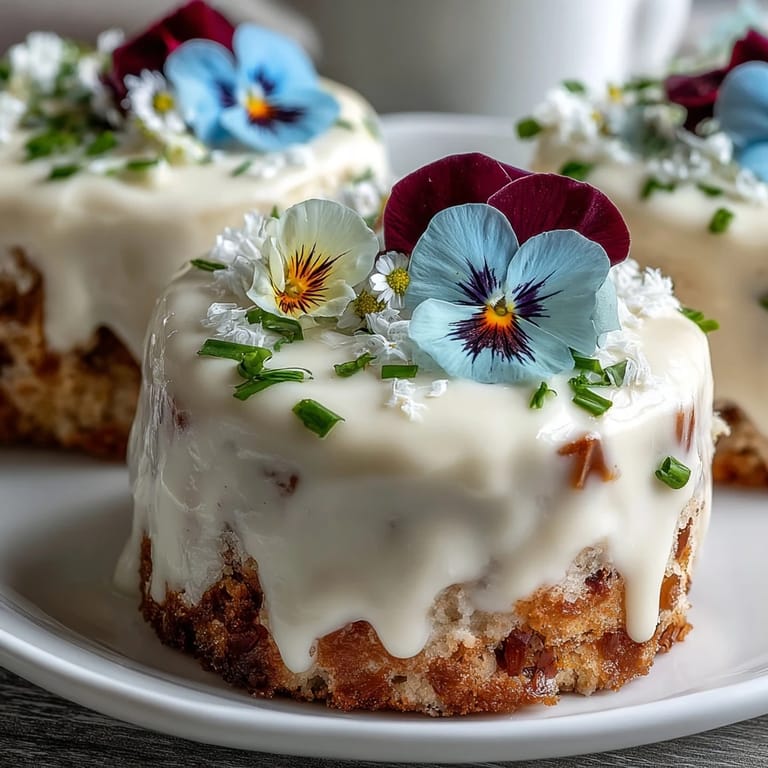
The flowers are honestly the whole thing, so sourcing them feels important. I order organic edible flowers online or find them at farmers markets where the grower can tell me they've never touched pesticides. Violets, pansies, nasturtiums, and rose petals all press beautifully and taste like themselves—delicate, slightly sweet, sometimes with a peppery edge.
Press them for at least 24 hours between parchment paper with heavy books stacked on top. I use old cookbooks, which feels poetic. The drier they are, the more they hold their shape and color once they touch the frosting. Once pressed, they stay fresh in a dry box for weeks.
Variations That Work
Lemon zest in the batter brings brightness without overwhelming the delicate florals—1 to 2 teaspoons folded in with the vanilla creates this subtle citrus undertone. I've also added a few drops of almond extract alongside the vanilla, which makes the whole cake feel richer and more almond-cake-adjacent. The base is forgiving enough that you can shift it gently without losing what makes it special.
Serving and Pairing Ideas
Serve this cake chilled or at cool room temperature—cold frosting against tender crumb is its own kind of perfect. A glass of something light and sparkling makes sense, or a floral tea like chamomile or rose hip if you want to lean into the theme. It's the kind of cake that doesn't need coffee, though it wouldn't refuse a cup of tea.
- Chill the serving plate before sliding the cake onto it so the frosting doesn't start sweating.
- Use a warm, wet knife between slices for cleaner cuts through the layers.
- Eat it within 2-3 days while the cake is still tender and the flowers hold their shape.
 Save
Save This cake is proof that sometimes the most elegant food comes from the simplest impulse—wanting to celebrate something beautiful. Make it and watch how people lean in.
Recipe FAQ
- → How do I prepare the edible flowers for decoration?
Press the flowers between parchment paper under heavy books for at least 24 hours to ensure they are dry and flat for decorating.
- → Can I substitute vanilla in the cake?
Yes, you can replace pure vanilla extract with almond extract for a different, complementary flavor.
- → What is the best way to achieve stiff peaks for the whipped cream?
Chill your mixing bowl and beat cold heavy cream on medium-high speed until firm peaks are formed to achieve the perfect texture.
- → How should the cake be stored after assembling?
Store the assembled cake in the refrigerator, covered, to keep the whipped cream fresh and the flowers intact.
- → Can I add citrus zest to the cake batter?
Adding 1-2 teaspoons of lemon zest enhances the flavor with a bright, citrusy note that pairs well with the floral accents.