 Save
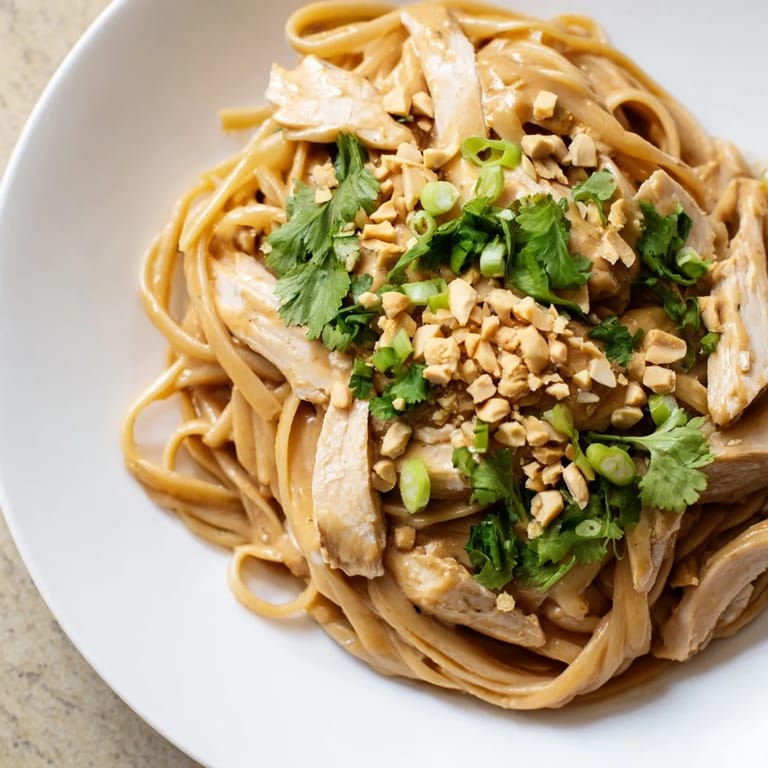
Save One weeknight, I was staring at a half-empty pantry and craving something that felt far more adventurous than what I had available. A jar of Thai peanut sauce caught my eye, and I wondered what would happen if I tossed it with pasta instead of rice. Twenty minutes later, my kitchen smelled like a Bangkok street market, and I'd discovered something between comfort food and pure cravings satisfaction. This Thai Peanut Chicken Pasta has become my answer when I want something restaurant-worthy but don't have the energy to overthink it.
I made this for my sister the first time she visited after moving away, and watching her face light up when she took that first forkful reminded me that the best meals aren't always the most complicated ones. She kept asking for the recipe between bites, which was the highest compliment I could ask for.
Ingredients
- Linguine or spaghetti (340 g): Long pasta strands hold onto the peanut sauce better than short shapes and give you that satisfying twirl-and-lift moment.
- Boneless, skinless chicken breast (450 g), thinly sliced: Slicing against the grain keeps the meat tender and helps it cook through evenly in just minutes.
- Vegetable oil (1 tbsp): A neutral oil lets the chicken brown without overpowering the delicate aromatics coming next.
- Salt and black pepper: Season the chicken generously before it hits the hot skillet for deeper, more even flavor.
- Ready-made Thai peanut sauce (1 cup): This is your secret weapon, a base you can trust to deliver authentic complexity without you having to toast and grind anything.
- Soy sauce (2 tbsp): It adds umami depth and a savory note that keeps the sauce from tasting one-dimensional.
- Fresh lime juice (2 tbsp): The acidity wakes up the sauce and prevents it from feeling heavy, even with all that peanut richness.
- Fresh ginger (1 tsp, grated): Just a small amount brings a warming spice and floral note that ties everything to those Thai flavors you're after.
- Garlic (2 cloves, minced): Garlic in the sauce rounds out the flavors and adds aromatic depth that makes people wonder what your secret ingredient is.
- Fresh cilantro (1/4 cup, chopped): Stir it in at the very end so it stays bright and doesn't turn dark and bitter from the heat.
- Fresh mint (2 tbsp, optional): Mint adds a cool, herbaceous note that contrasts beautifully with the warm, creamy sauce.
- Green onions (2, thinly sliced): Use them split between the cooking and garnish, so you get layers of fresh onion flavor without any raw bite.
- Roasted peanuts (1/4 cup, chopped): The crunch is essential, a texture that keeps you interested in every bite.
- Lime wedges: Serve these on the side so people can add extra brightness exactly where they want it.
Tired of Takeout? 🥡
Get 10 meals you can make faster than delivery arrives. Seriously.
One email. No spam. Unsubscribe anytime.
Instructions
- Get your pasta water going:
- Fill a large pot with water, salt it generously so it tastes like seawater, and bring it to a rolling boil. The salt isn't just tradition, it's your only chance to season the pasta itself from the inside out.
- Cook the pasta:
- Add your pasta and follow the package time, but taste a strand a minute before that time to catch the moment it's tender but still has a tiny bite to it. Drain it well and set it aside, but don't rinse it.
- Sear the chicken while pasta cooks:
- Heat oil in your largest skillet over medium-high heat until the pan is almost smoking. Season your chicken slices with salt and pepper, then lay them out in a single layer and let them sit untouched for a minute, which gives them time to develop a golden crust before you start moving them around.
- Let the chicken finish:
- Toss and move the pieces around for another few minutes until they're cooked through and no pink remains. If your pieces are thicker than a finger, it might take closer to seven minutes, but start checking at five.
- Build the sauce:
- Lower the heat to medium, then pour in your peanut sauce along with soy sauce, lime juice, ginger, and garlic. Stir everything together gently and let it simmer for a couple of minutes while the flavors get to know each other.
- Bring it all together:
- Add your drained pasta and cooked chicken back into the skillet with the sauce. Toss everything with tongs or a pair of forks until every strand of pasta is glossy and coated with that creamy peanut goodness.
- Finish with freshness:
- Take the pan off the heat, then stir in your cilantro, mint if you're using it, and half the green onions. The heat of the pasta will warm them without cooking away their brightness.
- Plate and serve:
- Divide among bowls and scatter the remaining green onions and chopped peanuts over the top. Squeeze a lime wedge over everything just before you eat, and taste it before adding salt, because the soy sauce and peanut sauce already bring plenty.
 Save
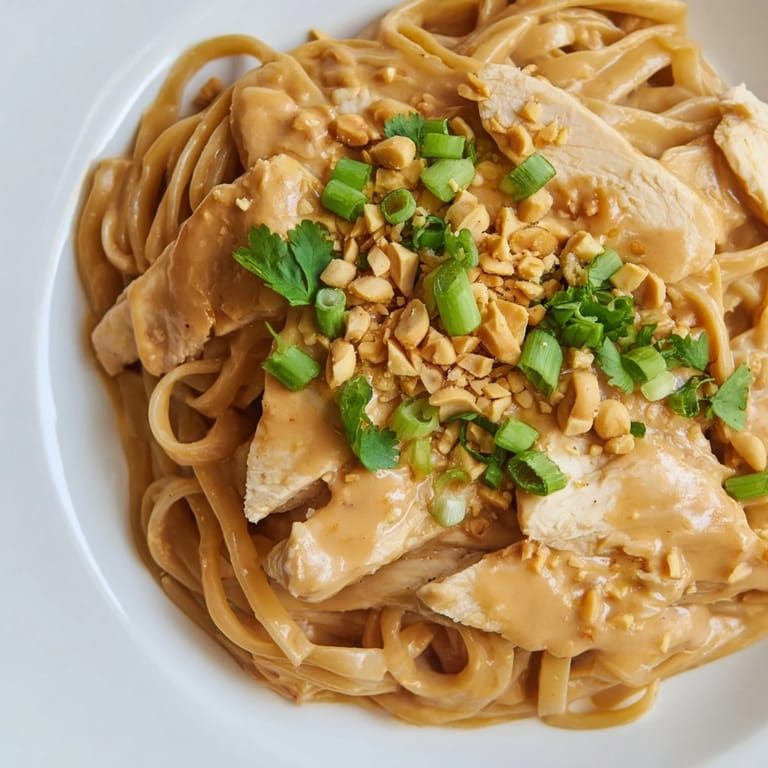
Save There's a moment in cooking when you realize something tastes like home even though it's barely been on your radar. This dish did that for me, standing at the stove watching the pasta glisten under that amber-colored sauce, and suddenly feeling like I'd unlocked something I wanted to make again and again.
Customizing Your Bowl
The beauty of this recipe is how flexible it is, bending to whatever you've got on hand or whatever you're craving that night. I've made it with shrimp when I wanted something lighter, with tofu when I was cooking for a vegetarian friend, and even with leftover rotisserie chicken when I was short on time. The sauce stays just as good, the flavor balance never shifts, and you still get that same satisfied feeling at the end of the meal. Vegetables love this dish too, if you want to bulk it up, just stir in some sliced bell peppers or broccoli florets right after you add the chicken back in.
Making It Your Own with Heat and Spice
The first time I made this, I followed the recipe exactly and loved it, but the second time I got curious about turning up the heat. A tiny drizzle of sriracha mixed into the sauce transformed it into something that made my eyes water in the best way, and suddenly it became my go-to version. Red chili flakes work just as well, and the amount is entirely up to you, because the base sauce is neutral enough to handle whatever spice level you're after. Even a squeeze of hot sauce at the table lets everyone adjust their own bowl without changing what's in the pot.
Pairing and Serving Ideas
This dish sits right in that comfortable middle ground where it works with almost any beverage, making it easy to serve without overthinking it. A cold glass of something crisp, whether that's a Riesling or just iced Thai tea, cuts through the richness and makes each bite feel lighter. The key is finding something that cleanses your palate between forkfuls so you stay interested all the way to the bottom of the bowl.
- Serve this with a simple cucumber salad on the side to add cooling freshness and crunch.
- A cold beer or crisp white wine pairs beautifully without stealing the spotlight from the food.
- Make it a feast by adding spring rolls or satay skewers, turning dinner into a whole experience.
 Save
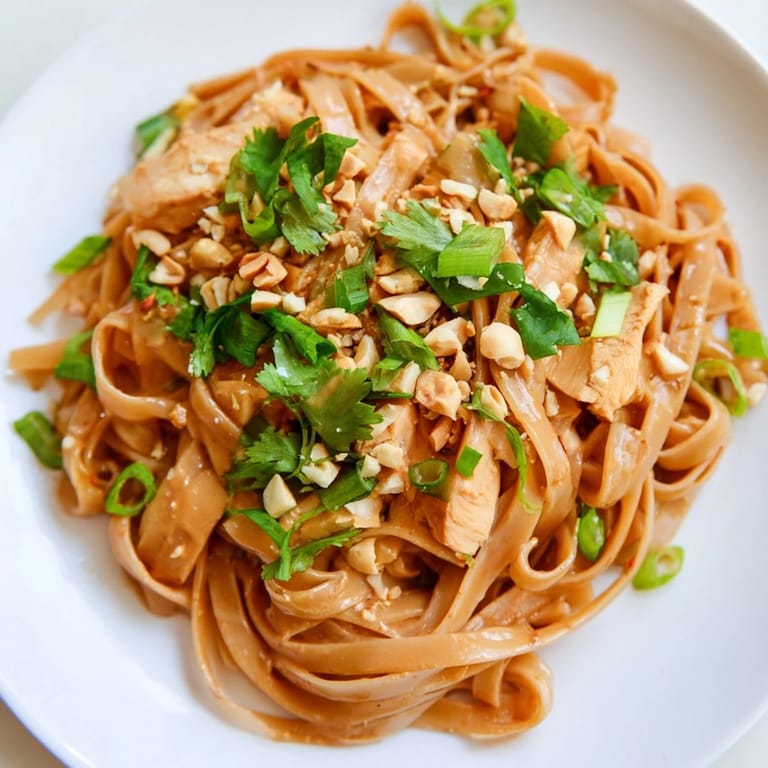
Save This Thai Peanut Chicken Pasta has taught me that some of the most satisfying meals come from the willingness to play with what you have and trust your instincts. It's one of those recipes I come back to when life gets busy but my appetite doesn't shrink, a reliable friend in the kitchen that never lets me down.
Recipe FAQ
- → What type of pasta works best?
Linguine or spaghetti hold the sauce well, but rice noodles can be used for gluten-free options.
- → Can I substitute the chicken?
Yes, tofu can replace chicken for a vegetarian twist without losing protein richness.
- → How to add heat to this dish?
Incorporate sriracha or red chili flakes into the peanut sauce to enhance spiciness.
- → What garnishes complement the flavors?
Fresh cilantro, mint, chopped roasted peanuts, and sliced green onions add freshness and crunch.
- → How to keep chicken tender?
Slice thinly and sauté quickly over medium-high heat until golden but still juicy, about 5–7 minutes.