 Save
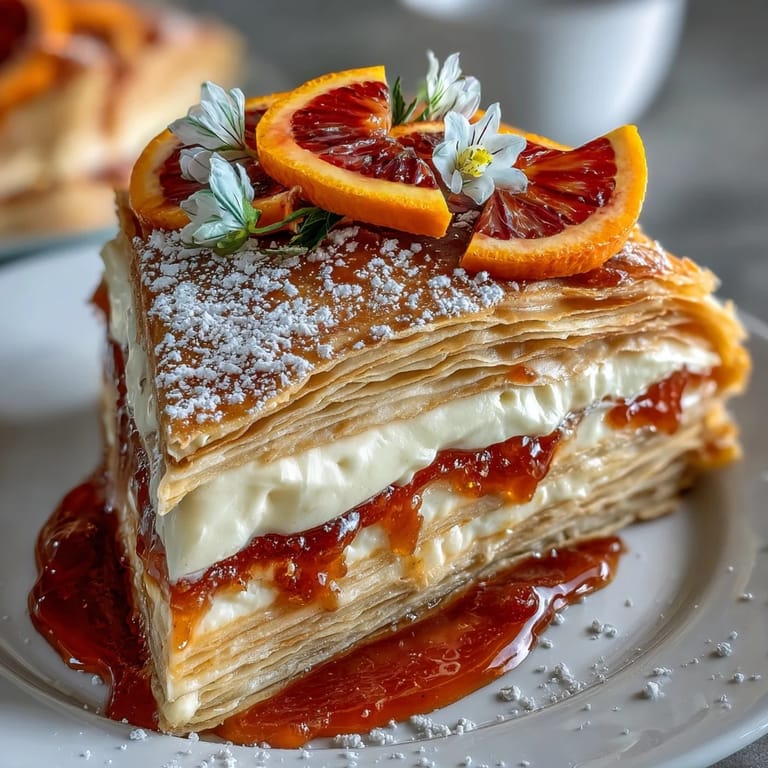
Save My neighbor brought blood oranges from a farmers market last winter, and I stood at my counter slicing one open, watching that deep crimson juice pool on the cutting board. I'd been meaning to make something impressive for a dinner party that weekend, and suddenly I had an idea that felt both ambitious and surprisingly doable. The secret was admitting I didn't need to make everything from scratch—good store-bought crêpes exist, and they're thin and tender in ways mine never quite achieve. By the time the cake came together, stacked high and jewel-toned, I felt like I'd pulled off something magical without losing my mind in the process.
I served this at a birthday dinner where half the guests were pastry chefs, which felt terrifying until the first person cut into it and nodded approvingly. Someone asked if I'd tempered the cream, and I just smiled and said I kept it simple. The blood orange slices on top had started to candy slightly in the sugar dust, their edges curling like little sculptures. By the end of the night, there were only crumbs left on the plate, and my friend who never eats dessert scraped up the last bit of curd with her fork.
Ingredients
- Ready-made crêpes (16, about 8 inch diameter): I used to feel guilty about buying these until I realized the packaged ones are consistently thin and pliable, which matters when you're stacking sixteen layers without tearing.
- Blood orange curd (1 1/2 cups or 360 g): The store-bought version from a good brand saves you from tempering eggs over a double boiler, and honestly, it tastes nearly identical to homemade if you choose one with real citrus.
- Heavy cream (1 1/2 cups or 360 ml): This whips up into soft, cloudlike peaks that hold their shape between the crêpe layers without weeping or deflating over time.
- Powdered sugar (3 tbsp or 24 g, plus extra for dusting): It dissolves instantly into the cream and gives you that clean sweetness without any gritty texture.
- Vanilla extract (1 tsp): Just a hint rounds out the cream and keeps it from tasting flat.
- Blood orange for garnish (1 whole, plus zest from 1): Slice it as thin as you can manage so the slices drape over the top like stained glass, and the zest adds bursts of fragrance.
- Edible flowers (optional): I toss these on at the last second for color, but they're completely optional and the cake is stunning without them.
Tired of Takeout? 🥡
Get 10 meals you can make faster than delivery arrives. Seriously.
One email. No spam. Unsubscribe anytime.
Instructions
- Prep your curd if needed:
- If you're making blood orange curd from scratch, do it first and let it cool completely in the fridge while you gather everything else. Cold curd spreads more cleanly and won't soak into the crêpes.
- Whip the cream:
- In a large bowl, beat the heavy cream with powdered sugar and vanilla until soft peaks form—stop just before it gets stiff, because you want it spreadable, not buttery. I use a hand mixer and it takes about three minutes on medium-high speed.
- Start layering:
- Place one crêpe flat on your serving plate and spread about 2 tablespoons of blood orange curd evenly across the surface, going right to the edges. The first layer sets the tone, so take your time making it smooth.
- Alternate the fillings:
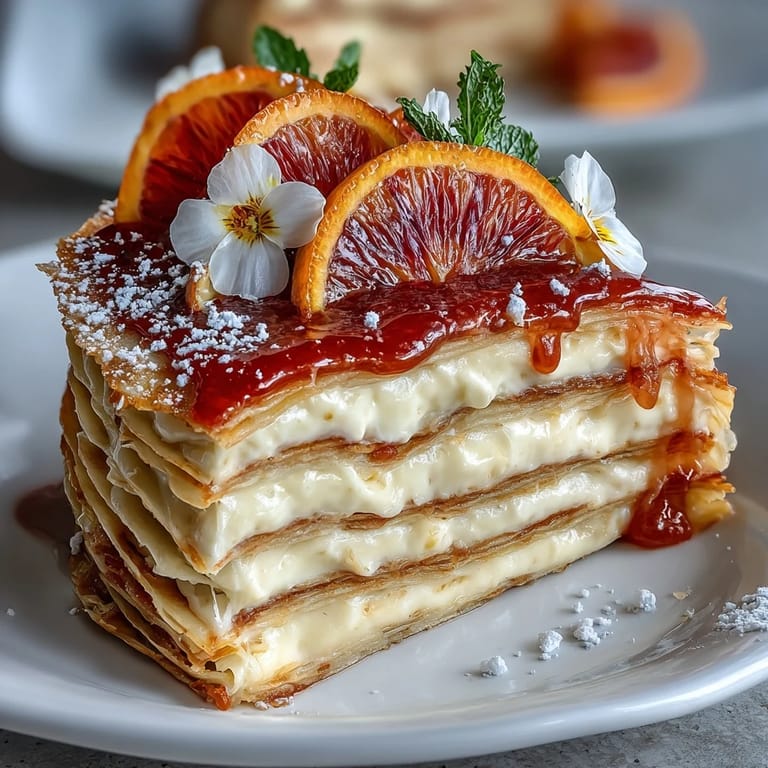
- Lay another crêpe on top and spread 2 tablespoons of whipped cream this time, then repeat the process, switching between curd and cream with each new crêpe. The alternating layers create that striped effect when you slice into it.
- Finish with a bare crêpe:
- Your top layer should be a plain crêpe with nothing on it, which gives you a clean canvas for garnish. Press down gently on the whole stack to even it out.
- Chill to set:
- Cover the cake loosely with plastic wrap and refrigerate for at least an hour so the layers meld together and the cake firms up enough to slice cleanly. I've left mine for up to four hours and it only got better.
- Garnish and serve:
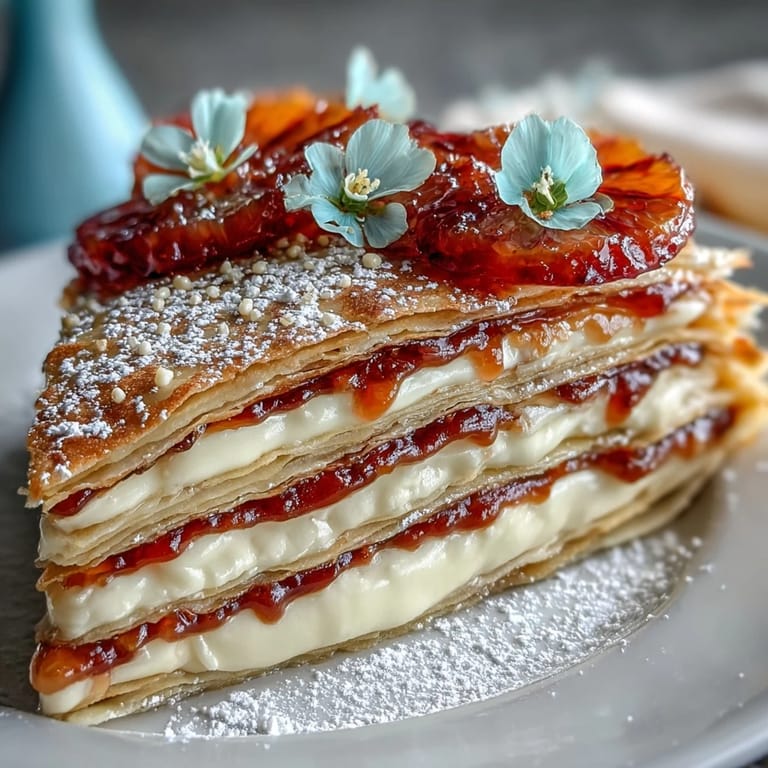
- Right before serving, arrange thin blood orange slices on top, scatter the zest, and dust everything with powdered sugar through a fine sieve. Slice with a sharp knife wiped clean between cuts, and serve each piece cold on a chilled plate.
 Save
Save There's something about slicing into a tall layered cake that feels like opening a present, especially when those blood orange stripes reveal themselves. My sister, who doesn't usually care about plating, took a photo before she even picked up her fork. We ate it slowly that night, talking and laughing, and I realized this dessert had become the kind of thing I'd make again and again, not because it was complicated, but because it made people pause and pay attention.
Making It Your Own
If blood oranges aren't in season or you can't find the curd, regular orange or lemon curd works beautifully and gives you that same tangy contrast against the cream. I've also folded a few tablespoons of mascarpone into the whipped cream for a richer, almost cheesecake-like layer, which is incredible if you want to make it feel more indulgent. You can even add a splash of Grand Marnier or Cointreau to the whipped cream if you're serving adults and want a subtle boozy warmth. The structure is forgiving, so don't be afraid to experiment with different citrus or flavor twists.
Storing and Serving
This cake keeps in the fridge for up to two days, covered loosely so the garnishes don't get smashed, though the crêpes soften slightly over time which some people actually prefer. I like to pull it out about ten minutes before serving so it's cold but not ice-cold, which lets the flavors come through more clearly. If you're transporting it, assemble it on a flat cake board or sturdy plate, and keep it level in the car because it's tall and can shift. Leftovers are wonderful for breakfast the next morning with coffee, which I discovered entirely by accident.
What to Serve Alongside
I love pairing this with a glass of Moscato d'Asti or Champagne, something lightly sweet and bubbly that echoes the citrus without overwhelming it. If you're serving it at brunch, a strong espresso or a pot of Earl Grey is perfect because the bergamot plays nicely with the orange. For a dinner party, a small scoop of vanilla or honey ice cream on the side adds a creamy contrast to the tangy curd, though the cake is rich enough to stand alone.
- A handful of fresh berries on each plate adds color and a tart pop that complements the citrus.
- Drizzle a little honey over each slice if you want extra sweetness without adding more sugar to the recipe.
- Serve with tiny forks and napkins because people will want to savor every bite slowly.
 Save
Save This is the dessert I make when I want to impress without pretending I'm someone I'm not—someone who has time to make crêpes from scratch or temper curd on a weeknight. It's a reminder that sometimes the best cooking is about knowing when to let good ingredients do the work, and just being there to stack them into something beautiful.
Recipe FAQ
- → Can I make this cake ahead of time?
Yes, this cake actually benefits from advance preparation. Assemble it up to 24 hours before serving and keep it refrigerated. The layers will set beautifully and the flavors will meld together perfectly.
- → What can I substitute for blood oranges?
Regular oranges or Meyer lemons work wonderfully as substitutes. You can also use lemon curd for a classic flavor profile. The cake will be equally delicious with any citrus variety.
- → Do I need to make the crêpes from scratch?
Not at all. Quality store-bought crêpes save significant time and work beautifully in this dessert. However, if you prefer homemade, prepare a classic crêpe batter and cook 16 thin, 8-inch crêpes.
- → How should I store leftover cake?
Cover the cake tightly with plastic wrap and refrigerate for up to 3 days. The texture remains best within the first 2 days, as the crêpes will gradually absorb moisture from the fillings.
- → Can I add other flavors to this dessert?
Absolutely. Try adding mascarpone to the whipped cream layer, incorporate orange zest into the cream, or add a thin layer of chocolate ganache between some layers for variation.
- → What's the best way to slice this cake?
Use a sharp chef's knife and wipe it clean between cuts for neat slices. The cake cuts best when well-chilled, and slicing with a gentle sawing motion helps maintain the beautiful layers.