 Save
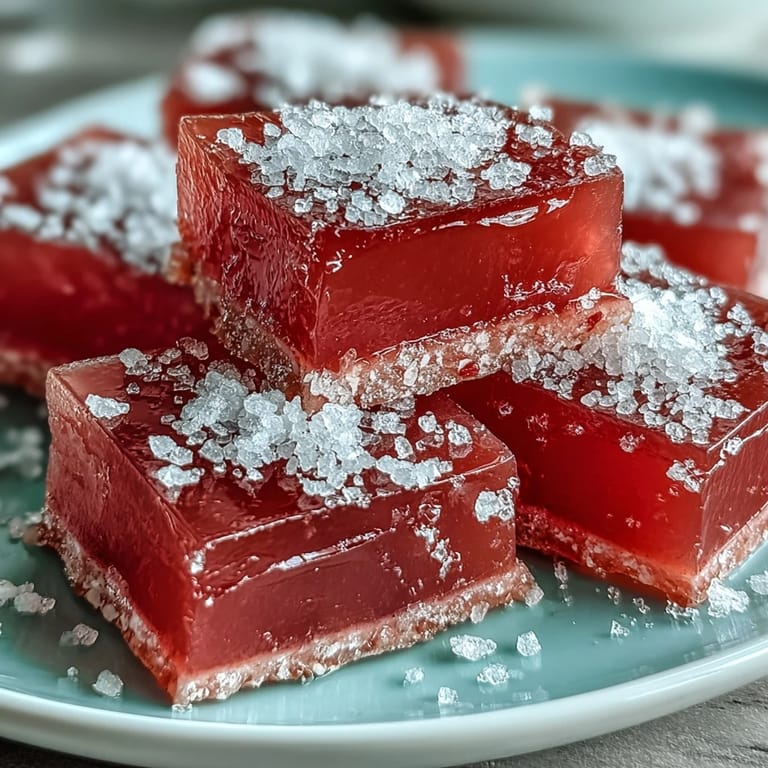
Save My aunt's kitchen in Goa always smelled like guava and lime, especially when she was making this jewel-toned confection that somehow tasted like sunshine captured in sugar. The first time she let me stir the pot, I was mesmerized by how the fruit transformed from a loose puree into something glossy and thick, holding its shape like a secret. She'd slice it into perfect squares and dust them with superfine sugar, and within minutes they'd disappear into eager hands. Now when I make it, that same magic happens, and I find myself standing by the cooling pan like I'm waiting for something precious to be ready.
I remember bringing a small box of these to my neighbor's book club, thinking they'd be a nice addition to the spread. Three women asked for the recipe before the meeting even ended, and one confessed she'd been craving something tropical but couldn't find it anywhere. That's when I realized this wasn't just a candy—it was a conversation starter, a tiny moment of joy on a plate.
Ingredients
- Ripe guava (pink or white): About 800 grams, peeled and deseeded—the pink ones tend to be sweeter and give you that gorgeous coral color, but white guavas work beautifully too if they're fully ripe and fragrant.
- Water: Half a cup to help soften the guava and create steam, making the cooking gentler and more even.
- Granulated sugar: 450 grams balances the tropical tartness of the fruit, though you might adjust this based on how sweet your guavas naturally are.
- Fresh lime juice: Two tablespoons brings brightness and prevents the confection from tasting cloying, cutting through the richness beautifully.
- Unsalted butter: Two tablespoons plus extra for greasing—this adds silkiness and a subtle richness that makes the texture melt on your tongue.
- Superfine sugar (optional): For dusting the finished pieces, adding a subtle crunch and sparkle if you like that contrast.
Tired of Takeout? 🥡
Get 10 meals you can make faster than delivery arrives. Seriously.
One email. No spam. Unsubscribe anytime.
Instructions
- Set yourself up for success:
- Grease your 8x8-inch square pan with butter and line it with parchment paper, leaving a bit of overhang so you can lift the whole batch out later. This small step saves you from wrestling with a knife and makes the finished pieces look clean and intentional.
- Soften the guavas gently:
- Place your chopped guava and water in a heavy-bottomed saucepan over medium heat and let it simmer for about 15 minutes until the fruit falls apart easily when pressed. You'll notice the kitchen filling with that distinctive tropical sweetness, which is your signal that things are progressing beautifully.
- Make it silky smooth:
- Blend or food process the cooked guava until completely smooth, then push it through a fine sieve to catch any stubborn seeds or fibers. This step feels a bit fussy, but it's what gives you that luxurious, velvety texture rather than a grainy one.
- Cook down the mixture:
- Measure out 2 cups of your puree and return it to the saucepan with the sugar and lime juice. Stir constantly over medium heat with a wooden spoon or heatproof spatula—this constant movement keeps everything cooking evenly and prevents sticking on the bottom.
- Watch for the moment of transformation:
- After 30 to 40 minutes, the mixture will suddenly look noticeably thicker and begin pulling away from the sides of the pan. This is when you add the butter and keep stirring until everything becomes glossy and so thick it holds its shape when you lift the spoon.
- Transfer while the magic is hot:
- Immediately pour the hot mixture into your prepared pan and smooth the top with a spatula—if you wait too long it'll start to set in the saucepan. Let it cool at room temperature for a full hour; patience here makes all the difference.
- Cut with confidence:
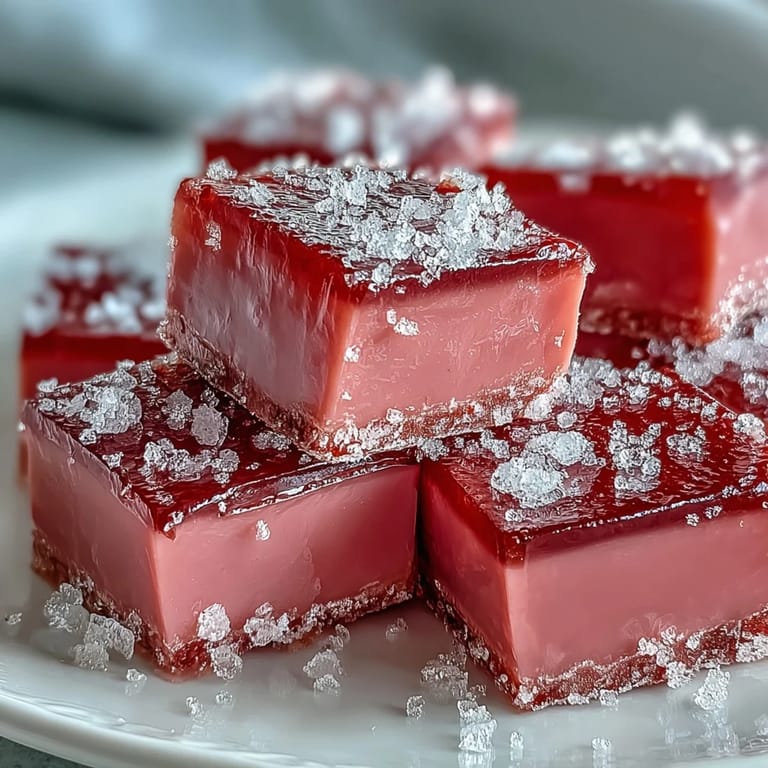
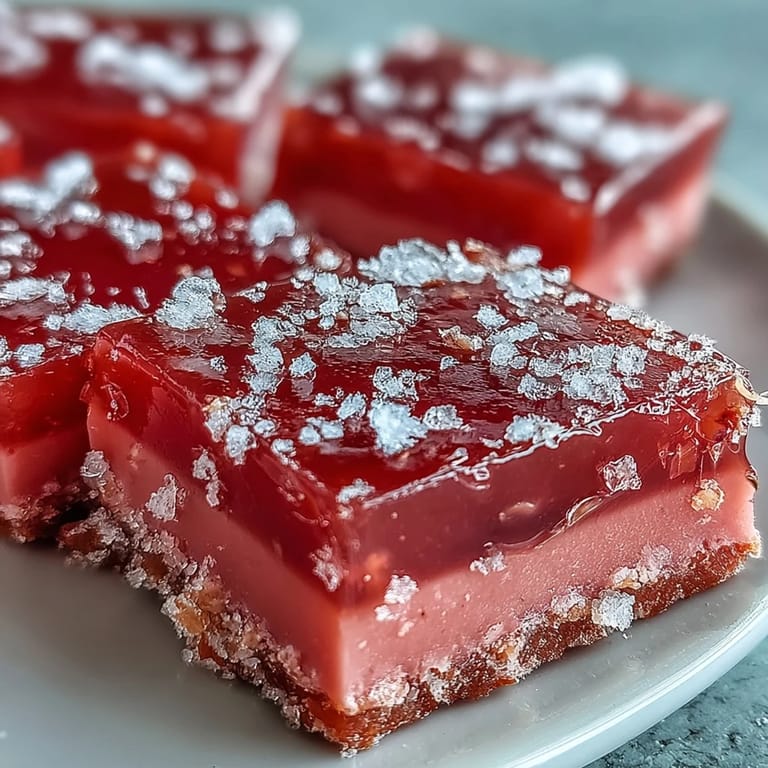
- Once set, lift the entire block out using the parchment overhang, then cut into squares or diamonds with a knife you've greased with butter to prevent sticking. If you want the sparkly finish, roll each piece in superfine sugar while it's still slightly warm so it adheres nicely.
 Save
Save One afternoon, my sister came home exhausted from work and found a small plate of these waiting on her desk with a cup of tea. She bit into one, closed her eyes for a moment, and suddenly she wasn't tired anymore—she was transported somewhere warm and bright. That's when I understood that food like this isn't about technique or perfection; it's about creating a small pocket of comfort that someone can hold in their hand.
The Guava Question
Choosing the right guavas makes a real difference here. You want fruit that's fully ripe—skin that yields slightly to pressure, a fragrant smell that's unmistakably tropical, and flesh that's soft enough to break apart easily. Pink-fleshed guavas tend to be naturally sweeter and give you that gorgeous jewel-toned color, but don't dismiss white varieties if they're perfectly ripe; they have their own delicate charm and sometimes a slightly tangier profile that's wonderful.
Why the Constant Stirring Matters
This mixture is forgiving in some ways but demands attention while it's cooking. The constant stirring does two things: it ensures the sugar dissolves evenly without burning on the bottom, and it helps water evaporate uniformly so you get that thick, glossy consistency instead of something watery in the middle and dense at the edges. It's meditative work, honestly—the kind of cooking that slows you down and makes you present in your kitchen.
Storage, Serving, and Subtle Variations
These keep beautifully in an airtight container at room temperature for up to two weeks, though they rarely last that long in my house. They're perfect with afternoon tea, alongside soft cheeses on a dessert platter, or tucked into a gift box for someone who deserves something special. You can adjust the texture to your preference too—cook a bit longer for something firmer that holds its shape perfectly, or reduce the cooking time by a few minutes if you prefer a softer, more pâte-like consistency that almost melts on your tongue.
- If you can't find superfine sugar for dusting, pulse regular granulated sugar in a food processor a few times until it's finer and more delicate.
- For a dairy-free version, swap the butter for vegan butter in equal quantity—the texture comes out nearly identical.
- These are naturally gluten-free, making them a thoughtful choice when you're cooking for friends with dietary restrictions.
 Save
Save This simple candy is proof that some of the most elegant things come from letting good ingredients do their job, stirred with patience and finished with a touch of lime. Once you make a batch, you'll find yourself making it again.
Recipe FAQ
- → What makes guava cheese distinct from fruit preserves?
Unlike traditional preserves, guava cheese cooks down until extremely thick and holds its shape when cut. The concentrated fruit puree transforms into a firm, sliceable confection with an intense tropical essence and smooth, fudge-like texture.
- → Can I use either pink or white guava varieties?
Both varieties work beautifully. Pink guava yields stunning ruby-red squares with slightly more pronounced floral notes, while white guava produces pale amber pieces with a milder, sweeter profile. Choose based on visual preference and fruit availability.
- → How do I know when the mixture is ready to set?
The mixture is ready when it thickens considerably, pulls away from the pan sides while stirring, and forms a cohesive mass that holds its shape. A dollop dropped on a cold plate should set quickly without spreading. This glossy stage indicates perfect setting consistency.
- → What's the purpose of adding butter to the fruit mixture?
Butter enriches the confection, adding subtle creaminess and helping achieve that coveted glossy finish. It also prevents the mixture from becoming overly sticky and makes cutting clean squares much easier once set.
- → How long will guava cheese stay fresh?
Properly stored in an airtight container at room temperature, guava cheese keeps beautifully for up to two weeks. The high sugar content acts as a natural preservative. For longer storage, refrigerate for up to a month, though bringing to room temperature before serving enhances texture.
- → Can I make this dairy-free?
Absolutely. Substitute the butter with high-quality vegan butter or coconut oil. The setting properties remain similar, though coconut oil may add subtle tropical notes that complement guava beautifully. Grease the pan with your chosen dairy-free alternative.